
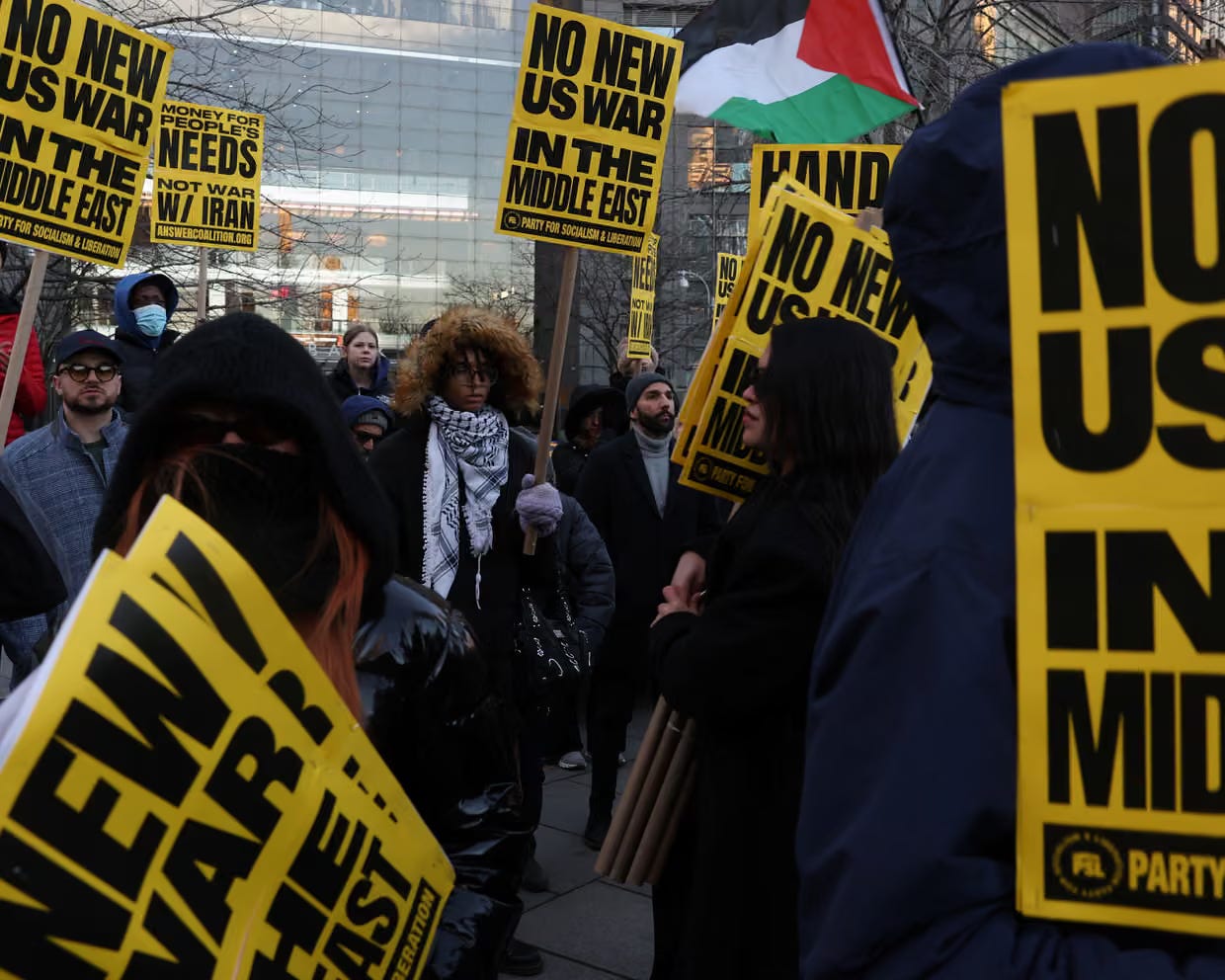
Americans Are Asking for Affordable Housing and Healthcare — Not Another Costly War with Iran.
As Washington deepens its military posture in the Middle East, mounting evidence shows Americans’ most urgent needs remain unmet at home.
In living rooms, pharmacies, and crowded offices across the United States, a quiet crisis has been unfolding for years.
Rents have climbed beyond reach for millions of families. Emergency rooms remain the default healthcare provider for too many working Americans. Medical debt continues to haunt households long after the hospital visit ends. And in poll after poll, voters have delivered a consistent message: fix what’s broken at home.
Yet, a few days ago, Washington chose a different priority.
The US, alongside Israel, launched a sweeping military strike on Iran — a move that has dramatically escalated tensions in the Middle East and raised the specter of another prolonged conflict. Officials describe the operation as necessary and targeted. Critics warn it could become the opening chapter of yet another costly entanglement.
But beyond the geopolitical chessboard lies a more uncomfortable question — one this investigative review cannot ignore:
Why does war funding repeatedly move faster than solutions to America’s domestic crises?
The Strike That Changed the Calculus
On Saturday, coordinated U.S.–Israeli strikes hit multiple targets across Iran, including sites in and around Tehran. Defense officials framed the operation as a pre-emptive move against Iranian military capabilities, particularly missile infrastructure.
The scale of the strike was significant. Hundreds of targets were reportedly hit. Within hours, Iran retaliated with missile and drone launches toward Israeli territory and U.S. assets in the region, confirming what many analysts feared: escalation was not hypothetical — it was immediate.
The killing of Ayatollah Ali Khamenei, Iran’s Supreme Leader, during the strikes further raised the stakes, transforming what might have remained a limited exchange into a potentially historic flashpoint.
Behind closed doors in Washington, officials insist the operation was necessary.
Outside those rooms, many Americans are asking whether the country is once again sliding into a familiar and costly pattern.
Following the Money
Investigative review of past U.S. military engagements reveals a consistent trend: initial operations often begin with limited funding requests, only to expand dramatically over time.
Even before full cost projections for the current Iran operation are available, defense budget analysts warn that sustained regional escalation could quickly push expenditures into the tens — or hundreds — of billions.
History provides the warning signs.
Post-9/11 conflicts in Iraq and Afghanistan ultimately cost the United States trillions over two decades when long-term care, interest payments, and veterans’ services were included. Each conflict began with assurances of limited scope.
Each grew.
Today’s operation may or may not follow that path. But the structural incentives inside Washington — rapid supplemental funding, emergency authorizations, and broad executive war powers — remain firmly in place.
Meanwhile, domestic programs continue to face gridlock.
The Domestic Crisis Washington Can’t Ignore

While military planners map strike options overseas, millions of Americans remain trapped in economic conditions that policymakers have struggled to resolve.
Housing
Home prices remain elevated in many regions
Rental affordability has worsened in major metros
Housing supply shortages persist
Healthcare
The U.S. still has some of the highest per-capita healthcare costs in the so-called developed world
Medical debt affects tens of millions of Americans
Prescription drug prices remain a top voter concern
This is not partisan rhetoric. It is documented economic pressure.
Interviews with housing advocates, healthcare economists, and budget watchdogs reveal a shared concern: domestic investments move slowly through Congress, while military funding often advances with far fewer procedural obstacles.
That imbalance is now under a national spotlight.
Inside Washington’s Justification

The Trump administration officials argue the Iran strikes were driven by national security necessity, not budgetary preference. According to defense briefings, intelligence assessments indicated growing Iranian missile capabilities and potential regional threats.
Supporters of the operation emphasize three key points:
Deterrence requires credible force
Allowing adversaries to advance unchecked can create larger future conflicts
Protecting regional allies remains a core U.S. commitment
These arguments reflect a long-standing bipartisan national security doctrine.
But critics — including some former military officials — say the United States must confront a difficult truth: military solutions often carry unpredictable and expensive second-order effects.
And those effects rarely stay overseas.
Early Signs of Economic Blowback
Even in the first days following the strikes, warning signals have begun to appear.
Energy markets reacted nervously amid fears of disruption in the Strait of Hormuz, through which a significant portion of global oil flows. Any sustained instability there could translate directly into higher gasoline prices for American consumers.
Defense analysts also note that sustained regional tensions typically trigger:
Increased force deployments
Expanded intelligence operations
Heightened naval presence
Emergency appropriations
Each step adds cost.
Each step increases the risk of mission creep.
The Public Mood Is Shifting

Recent public sentiment data shows a growing gap between Washington’s foreign policy focus and voters’ domestic priorities.
Across political affiliations, Americans consistently rank the following among top concerns:
Cost of living
Healthcare affordability
Housing access
Economic stability
Foreign military engagement typically ranks lower unless direct U.S. security threats are perceived.
That disconnect does not mean Americans oppose all military action. It does mean tolerance for open-ended conflict has declined sharply since the early 2000s.
Veterans’ groups, in particular, have become more vocal about the long-term human and financial costs of prolonged engagements.
The Risk of a Wider War


Perhaps the most urgent concern is what comes next.
Iran’s retaliatory strikes signal that the confrontation is already entering a dangerous feedback loop. Regional actors, including Hezbollah, have issued sharp warnings. Any miscalculation could widen the conflict dramatically.
Military historians note that escalation cycles often follow a familiar pattern:
Limited strike
Retaliation
Expanded targeting
Broader regional involvement
The current moment sits precariously between steps two and three.
If the conflict expands, the domestic consequences — economic and political — will expand with it.
What Accountability Requires Now
An investigative review of this moment leads to a difficult but necessary conclusion:
The United States cannot have an honest conversation about national security without also confronting domestic trade-offs.
Americans are not wrong to demand both safety abroad and stability at home. But history shows that prolonged military engagements inevitably compete with domestic priorities for political attention, budgetary space, and public trust.
Right now, that tension is reaching a breaking point.
Before You Click Away!
This is the moment for public engagement — not passive observation.
If you believe domestic investment must take priority…
If you believe Congress must exercise stronger oversight…
If you believe the nation cannot afford another open-ended conflict…
Then silence will not move policy.
Call your senators.
Call your House representative.
Demand clarity on the scope and cost of this military action.
Ask where the same urgency is for affordable housing and healthcare.
Members of Congress track constituent calls closely. Volume matters. Pressure matters. Public attention matters.
Democracy does not respond to whispers.
It responds to sustained, organized voices.
The Bottom Line

The strikes on Iran have already reshaped the geopolitical landscape. Whether they become a brief confrontation or the opening phase of a longer conflict remains uncertain.
What is certain is this:
Americans are watching more closely than they once did.
They are calculating costs more carefully.
And they are increasingly unwilling to separate foreign policy decisions from their economic reality at home.
Washington may view this moment primarily through a national security lens.
But across the country, millions of Americans are asking a more grounded question:
Can America finally address the crises inside its own borders — before committing to another costly conflict abroad?
The answer will not come from press briefings.
It will come from public pressure, congressional oversight, and the collective voice of citizens who refuse to let domestic priorities remain permanently postponed.


