
‘Blatant theft’: Legal Experts Condemn Trump’s $1.8 Billion Anti-Weaponization Fund.
Bipartisan critics and constitutional experts warn the controversial fund could ultimately benefit January 6 defendants and Trump allies.
A mounting legal and political controversy surrounds the $1.776 billion “anti-weaponization” fund established by Donald Trump’s Justice Department to compensate individuals who claim they were harmed by politically motivated government actions. However, former Justice Department officials and legal scholars have sharply criticized the initiative, describing it as a corrupt arrangement and a taxpayer-funded “slush fund” that primarily serves Trump and his MAGA supporters.
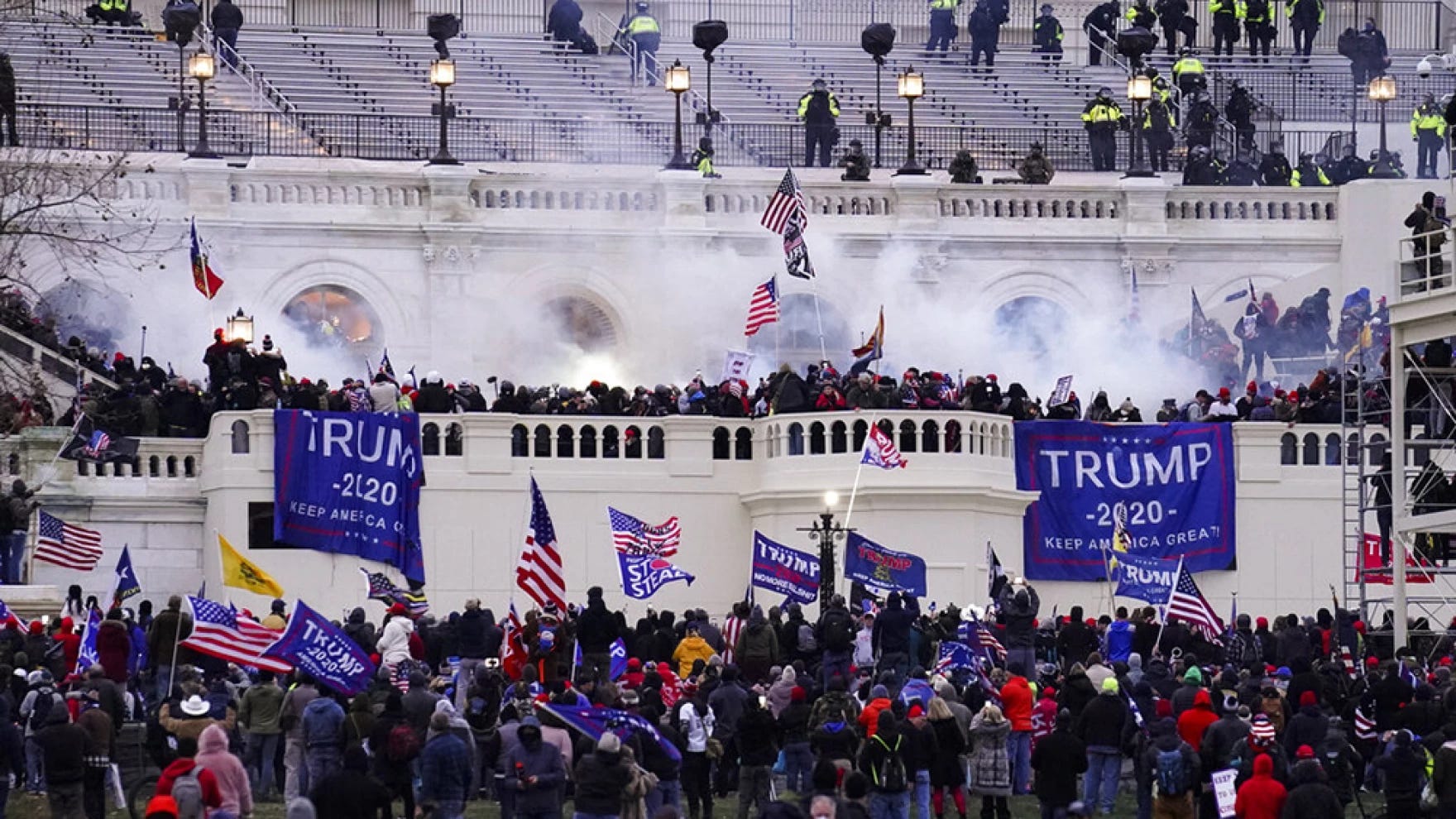
Lawmakers from both political parties, along with numerous legal experts, have challenged the fund’s legitimacy, arguing that it lacks transparency and could provide financial benefits to individuals involved in the January 6 Capitol attack. Some of those individuals have already indicated they intend to seek compensation through the program. Critics also contend that the initiative reinforces Trump’s repeated allegations that the Biden administration improperly used federal agencies to target him and his allies.
Opposition to the fund has intensified since Acting Attorney General Todd Blanche announced its creation on May 18 as part of a settlement resolving Trump’s $10 billion lawsuit against the Internal Revenue Service over the 2019 disclosure of his tax records. Detractors have focused particular attention on an accompanying provision within the agreement that would prevent the IRS from pursuing any ongoing tax investigations involving Trump, his sons, or businesses associated with the family.
The legal battle surrounding both the fund and its controversial addendum continues to expand. On May 27, a bipartisan coalition of 35 former federal judges petitioned a federal court in Miami to reopen the case that led to the settlement. The group urged the court to investigate whether the unusual agreement between Trump and the Justice Department involved fraudulent conduct. According to the former judges, the creation of the settlement fund itself may constitute what they described as a “fraud on the court.”
In a dramatic development just two days later, on May 29, the Miami judge overseeing the matter agreed to reopen Trump’s lawsuit against the IRS. The court will now examine whether the parties involved—including the Justice Department—misled the court and whether the settlement arrangement was, as critics allege, based on deceptive representations.
In a separate legal challenge, a federal judge in Virginia responded to a lawsuit brought by a former January 6 prosecutor who was dismissed by the Justice Department, along with several individuals and organizations that claim they have been targeted by the Trump administration. On May 29, the judge issued a temporary order preventing any further steps toward establishing the fund or distributing money from it until at least a June 12 hearing.
To date, no compensation has been paid out, as the program remains in the process of being organized.
The structure of the fund has also come under scrutiny from opponents who argue that it lacks adequate transparency. Critics have focused particularly on provisions that grant Trump broad authority over the fund’s governance, including the power to remove any member of the five-person board responsible for determining payouts without cause. Blanche is expected to appoint all five board members, with one appointment to be made in consultation with Congress.
On Monday, the Justice Department stated that it would comply with the court’s ruling issued the previous Friday, which temporarily halted the fund’s implementation.
That same day, amid increasing criticism from judges, lawmakers, and political leaders in both parties—including Senate Majority Leader John Thune—Axios reported that the initiative was effectively dead “for now,” citing two anonymous sources familiar with the matter.
Speaking to ABC News, Trump acknowledged that the courts currently hold the deciding role in the fund’s future.
“We are subject to the courts,” Trump said. “At this moment, that’s what it is. If a court doesn’t allow it, and right now a court has it held up, what can you do?”
Former Justice Department officials have remained among the program’s harshest critics, questioning both its legality and the lack of clarity surrounding how it would operate.
Michael Bromwich, who previously served as the Justice Department’s inspector general, condemned the initiative in blunt terms.
“Everything about the $1.776 billion fund is crazy and corrupt,” Bromwich said, pointing to what he described as the enormous amount of money involved, uncertainty over who would qualify for compensation, and a complete absence of transparency regarding how funds would ultimately be awarded.
Bromwich further argued that the anti-weaponization fund—created by Todd Blanche, Trump’s former criminal defense attorney—amounts to “an attempted political payoff to criminals” and could potentially benefit individuals who committed acts of violence while supporting Trump.
According to Bromwich, the program inverts traditional concepts of accountability.
“People who attacked and injured law enforcement personnel become heroes and victims; the law enforcement personnel and prosecutors who made righteous cases against lawbreakers become villains, and are targeted for firing and investigation,” he said.
Donald Ayer, a former deputy attorney general who served during the administration of President George H.W. Bush, was equally critical.
“This is outright theft,” Ayer said. “Trump and his DoJ have decided that they’re going to give money away to his supporters who will claim some sort of personal abuse when they, in fact, have been the abusers.”
Ayer also objected to the settlement provision involving the IRS.
“This blank check immunity from IRS inquiries of Trump, his family, and affiliates can only happen when due process and the rule of law have failed,” he said.
Trump, however, has vigorously defended the initiative, insisting—without providing evidence—that the fund is intended to assist individuals who were mistreated by what he describes as a politically motivated Biden administration.
According to the Justice Department, the fund would be authorized to provide formal apologies and financial compensation to individuals who can demonstrate that the federal government wronged them. Department officials have also emphasized that applications would be open to everyone and that there would be “no partisan requirements” for eligibility.
When unveiling the program, Blanche argued that federal institutions should never be used as political weapons.
“The machinery of government should never be weaponized against any American,” Blanche said, adding that the department’s goal was to address past injustices and prevent similar actions from occurring in the future.
Critics note that Blanche reportedly faced sharp questioning during a closed-door Senate hearing shortly after the fund was announced. They also argue that his efforts to reassure lawmakers have largely consisted of vague promises regarding future public disclosures.
Meanwhile, several prominent Trump supporters, including former Proud Boys leader Enrique Tarrio and other individuals connected to the January 6 Capitol attack, have publicly welcomed the initiative and signaled their intention to seek compensation through the fund.
Opposition to the proposal has emerged from both parties. While congressional Democrats have broadly denounced the fund, several Republicans have also expressed concern about its purpose and design.
Appearing on CNN’s “State of the Union” on May 24, Republican Senator Thom Tillis of North Carolina dismissed the rationale behind the initiative, describing its mission of funding so-called anti-weaponization efforts as “stupid on stilts.”
“I call it a payout pot for punks,” Tillis said. He further characterized the proposal as “politically tone deaf” and argued that whoever was responsible for creating it should be dismissed. Tillis also stressed that individuals convicted by a jury or those who pleaded guilty to assaulting police officers should not be eligible for compensation.
Former Vice President Mike Pence voiced similar objections during appearances on CBS and NBC programs on May 31. Pence described the proposal as “deeply offensive,” particularly because it could result in payments to people involved in the January 6 riot, and urged the Trump administration to abandon the idea altogether.
Democratic Senate Minority Leader Chuck Schumer of New York has also emerged as a vocal opponent of the initiative. In a message circulated to fellow lawmakers, Schumer characterized the fund as an unprecedented example of presidential self-interest.
“Trump’s nearly $2 billion MAGA slush fund is his most brazen act of self-dealing yet and one of the most corrupt schemes ever launched by a president,” Schumer wrote. “Senate Democrats will not let it stand.”
Resistance to the proposal is also taking shape in the House of Representatives. Republican Congressman Brian Fitzpatrick of Pennsylvania and Democratic Congressman Tom Suozzi of New York are reportedly working together on legislation designed to stop the fund from being implemented altogether. In addition, two police officers who were assaulted during the January 6 attack while attempting to prevent rioters from disrupting Congress’s certification of Joe Biden’s election victory have filed a lawsuit seeking to block the program.
In an unexpected development, CNN reported on May 26 that several individuals who have been targeted by Trump and his allies—including former Capitol riot prosecutors who lost their jobs and other dismissed federal officials—are considering applying for compensation through the same fund. Bromwich told CNN that one of his clients, former FBI Deputy Director Andrew McCabe, is seriously weighing that option. McCabe was frequently criticized by Trump during his first term because of his involvement in investigations related to Russian election interference.
Former Prosecutors Warn the Fund Threatens Democratic Norms and the Rule of Law
A number of former federal prosecutors have argued that the proposed fund poses broader risks to democratic institutions and the legal system itself.
Bruce Green, a former federal prosecutor who now teaches at Fordham University, said the initiative effectively turns fundamental democratic principles upside down.
“This all stands the rule of law and democracy on its head,” Green said. “The administration has subverted the democratic process in 2026 to reward people who tried to subvert the democratic process in 2021.”
Green also criticized the manner in which the money would be distributed, arguing that the proposal bypasses the traditional legislative process through which government funds are normally authorized.
“Ordinarily, before the government distributes taxpayer money, there is a democratic process,” he said. “Congress establishes the program after an opportunity for public discussion. In this case, by contrast, the executive branch intends to draw nearly $2 billion from the Treasury without congressional appropriation, using the settlement of a lawsuit that the government never answered and almost certainly could have defended.”
Barbara McQuade, the former U.S. attorney for Eastern Michigan and now a law professor at the University of Michigan, described the fund as a striking example of political self-dealing.
According to McQuade, the initiative not only benefits Trump’s political allies but also reinforces what she considers a false narrative that the Biden administration engaged in politically motivated prosecutions.
“The creation of this fund is a blatant example of self-dealing corruption,” McQuade said. “It not only enriches Trump’s political allies, but also advances the false political narrative that the Biden administration engaged in lawfare.”
She further warned that compensating individuals convicted of violent offenses connected to January 6 could have serious consequences.
“If this fund is used to reward people who assaulted Capitol police officers or committed other violent crimes for which they were convicted in court, it will send a message that vigilante violence is welcome as long as it aids the party in power,” McQuade said. “This is antithetical to the rule of law.”
McQuade also challenged the legality and relevance of the settlement provision that shields Trump and his associates from future IRS scrutiny.
“There’s just no basis for the addendum to this agreement to forbid the IRS from ever auditing or bringing tax claims against Trump,” she said. “That remedy is entirely unrelated to his claim regarding the leak of his tax returns. Settlements must resolve the claim alleged. This is just a gift, pure and simple.”
Former federal prosecutor Mimi Rocah, who currently teaches at Fordham University and has written extensively about the Justice Department, argued that the fund rests on a premise that lacks factual support.
Rocah said too many people have accepted the claim that the Biden Justice Department improperly pursued cases against political opponents, despite a lack of evidence to support that assertion.
“This fund is based on a myth that people seem too willing to accept,” Rocah said. “The idea that the Biden DoJ was improperly bringing cases against all sorts of people it shouldn’t have simply didn’t happen. It’s a Trump political talking point that has now become embedded within the Justice Department.”
She also expressed skepticism about assurances that the program would be administered fairly.
“Blanche is willing to claim that this will be open to everyone and not a biased fund,” Rocah said, “but no one believes that.”
Looking ahead, Bromwich suggested that the controversy surrounding the anti-weaponization fund reflects a broader pattern within the current Justice Department.
“There is apparently nothing this Justice Department won’t do to please the president,” Bromwich said. “The weaponization fund is only the latest—and most corrupt—episode.”


Maybe they all need to go🤬
It’s For the People by The People. This is all crap. We have cowards in our government. Not all of you we know the ones that are not cowards.