
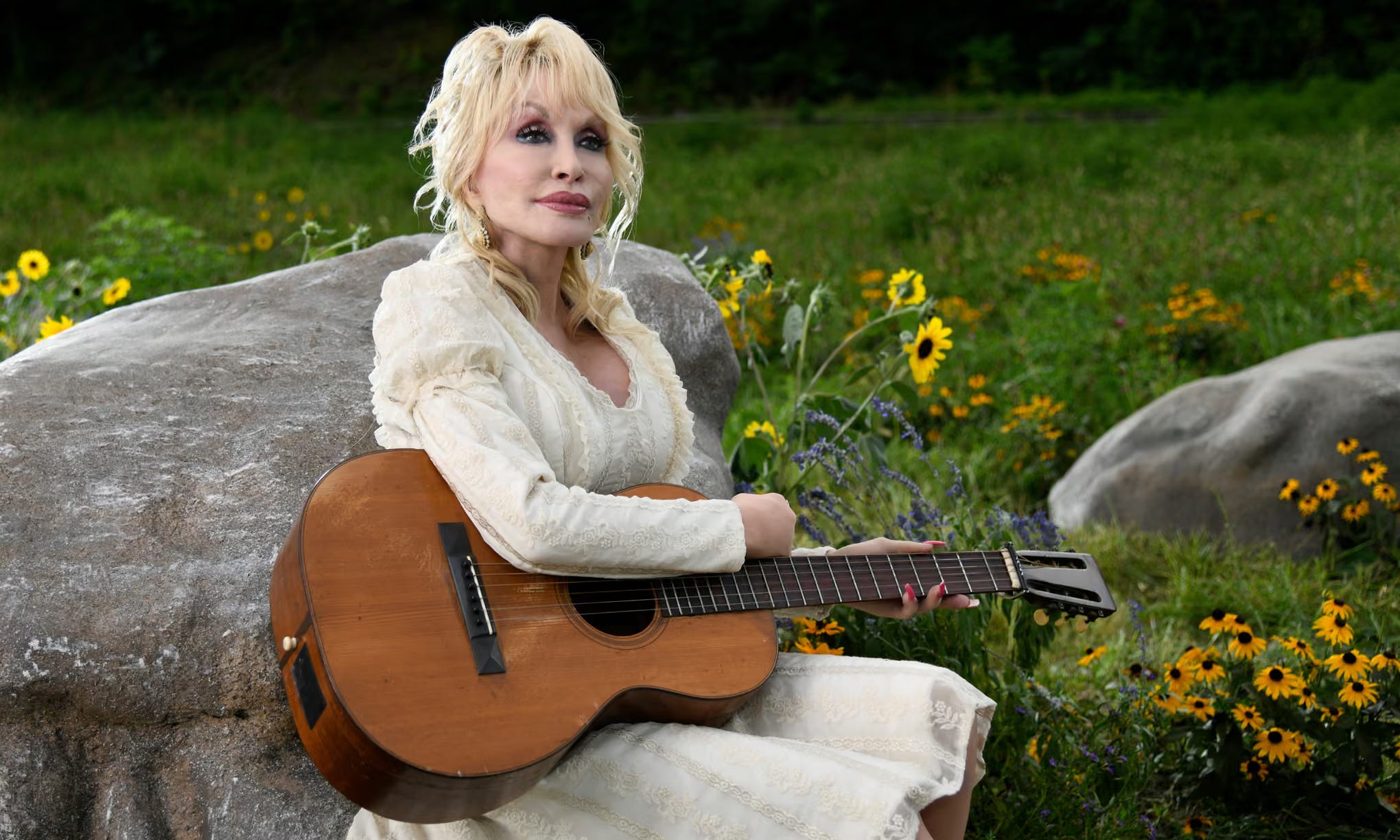
Dolly Parton, the country music legend whose extraordinary career took her from a one-room cabin in Tennessee to global superstardom, has died at the age of 80.
Her death was announced by her nephew, Bryan Seaver, on Instagram.
The news came only days after Parton had spoken about her health and the ambitions she still hoped to fulfil. After more than six decades of music, movies, business and philanthropy, she remained focused on what she wanted to accomplish next.
It was characteristic of a woman who spent her life refusing to be defined by where she started or limited by what she had already achieved.
Parton became one of the greatest singer-songwriters in country music history. Her remarkable catalogue included Jolene, I Will Always Love You, Coat of Many Colors, Here You Come Again and 9 to 5.
Her songwriting combined memorable melodies with vivid storytelling about love, jealousy, poverty, heartbreak, ambition, and perseverance. Famously, Jolene and I Will Always Love You, two songs that would become enduring standards, emerged from the same remarkable period of creativity.
Parton ultimately scored 25 No. 1 singles on Billboard’s country chart and built a career that reached far beyond country music.
But her songs were only one part of the Dolly Parton story.
She was also an actress, producer, entrepreneur, and major philanthropist, while her towering blonde hair, rhinestones, flamboyant clothes, and quick wit made her one of entertainment’s most recognisable personalities.
Behind that carefully constructed image was a formidable businesswoman who understood both her audience and the value of owning her work.
From Poverty to Nashville
Dolly Rebecca Parton was born on January 19, 1946, in Tennessee and raised in poverty in the Great Smoky Mountains.
She was the fourth of 12 children born to Avie Lee and Robert Lee Parton. Her father worked as a farmer and construction labourer, while her mother raised their large family.
Those childhood experiences became an important source of Parton’s songwriting.
Her beloved Coat of Many Colors recalled her mother sewing a coat for her from scraps of fabric. Rather than portraying poverty simply as deprivation, Parton transformed the experience into a story about love, dignity and understanding the difference between monetary wealth and genuine value.
Music entered her life early.

After singing in church, Parton began appearing on local television at age 10. By 13 she had recorded her first single and performed at Nashville’s Grand Ole Opry, where Johnny Cash introduced her.
Parton already believed she would become a star.
After graduating from high school in 1964, she moved to Nashville and initially found success writing songs for other performers.
She was eventually signed as a recording artist, although early efforts to market her as a pop singer failed. When she was allowed to pursue country music instead, her career began to take off.
Her debut album, Hello, I’m Dolly, arrived in 1967.
That same year, Parton joined country star and television personality Porter Wagoner. Their professional partnership introduced her to a much larger audience and helped establish her nationally.
In 1971, Joshua became Parton’s first solo country No. 1.
Then came the songs that changed everything.
Jolene and I Will Always Love You
Released in 1973, Jolene became one of Parton’s defining recordings.
Rather than attacking the beautiful woman she feared might take her partner, Parton’s narrator pleaded with her. The vulnerability and desperation of the performance helped transform a relatively simple story of jealousy into one of country music’s most enduring songs.
Then came I Will Always Love You.
Parton wrote the song while preparing to end her professional partnership with Wagoner. Instead of anger, she created an affectionate farewell expressing gratitude while acknowledging that it was time to leave.
Her recording reached No. 1 on the country chart in 1974 and did so again with a new recording in 1982.
The song achieved an even greater second life in 1992 when Whitney Houston recorded it for The Bodyguard. Houston’s version became one of the biggest-selling singles in music history and introduced Parton’s songwriting to another generation.
By the late 1970s, Parton was expanding beyond traditional country.
Her 1977 album Here You Come Again became a major crossover success, while its title track helped bring Parton to mainstream pop audiences and earned her Grammy recognition.
Then, in 1980, came another career-defining moment.
Working 9 to 5
Parton starred alongside Jane Fonda and Lily Tomlin in the workplace comedy 9 to 5, playing one of three women confronting an oppressive and sexist boss.
Parton also wrote and performed the movie’s title song.
With its instantly recognisable rhythm and lyrics about workers struggling to get ahead while enriching those above them, 9 to 5 became a major crossover hit, reaching No. 1 on the US pop chart.
The song earned Parton an Academy Award nomination for Best Original Song.
Her acting career continued throughout the 1980s. She appeared with Burt Reynolds in The Best Little Whorehouse in Texas, Sylvester Stallone in Rhinestone, and alongside an acclaimed ensemble of actresses in Steel Magnolias.
Music remained central.
In 1983, Parton and Kenny Rogers recorded Islands in the Stream. Written by the Bee Gees, the duet topped the US pop chart and became another enduring classic.
Four years later, Parton joined Emmylou Harris and Linda Ronstadt for Trio, a celebrated collaboration built around their extraordinary harmonies.
She later recorded Honky Tonk Angels with Loretta Lynn and Tammy Wynette before reuniting with Harris and Ronstadt for Trio II in 1999.
Parton continued reinventing herself into the new century, releasing acclaimed bluegrass projects and collaborating with younger generations of musicians, including Brad Paisley, Kesha and her goddaughter Miley Cyrus.
In 2022 she released Run, Rose, Run, connected to the novel she co-wrote with James Patterson.
After being inducted into the Rock & Roll Hall of Fame, Parton responded in typically ambitious fashion by making a rock album. Rockstar, released in 2023, featured numerous major guest artists and demonstrated that even deep into her career, she remained interested in trying something new.
Building the Dolly Parton Empire
Parton was also a remarkably successful entrepreneur.
With her former manager Sandy Gallin, she founded Sandollar Productions, which became involved in projects including Buffy the Vampire Slayer and the Father of the Bride films.
Her most famous business venture, however, was Dollywood.
In 1986, Parton became involved with the Tennessee attraction then known as Silver Dollar City Tennessee. Renamed Dollywood, it developed into one of the state’s leading tourist destinations.
The wider Dollywood business eventually expanded into accommodation, entertainment and a water park, while creating employment and investment in the region where Parton had grown up.
Her wealth increasingly became a vehicle for philanthropy.
The Dollywood Foundation was established in 1988, initially providing educational support and scholarships in her native Sevier County.
Then came the project that would become one of Parton’s greatest legacies outside music.
Millions of Books for Children
In 1995, Parton launched the Imagination Library.
Her inspiration was personal: Parton’s father could not read or write, and she had witnessed how severely illiteracy could limit a person’s opportunities.
The programme began by mailing a free, age-appropriate book every month to young children in Sevier County from birth until age five.
It eventually expanded across the United States and internationally, reaching children in Canada, the United Kingdom, Australia and Ireland.
Over the following decades, hundreds of millions of books were distributed.
For Parton, the programme was about more than teaching children to read. Receiving a book bearing their own name could also give children a sense that somebody valued them.
Her philanthropy extended much further.
Parton supported conservation efforts involving bald eagles, contributed money to healthcare facilities in Tennessee and supported HIV/AIDS-related causes.
Following the devastating 2016 wildfires in the Great Smoky Mountains region, she established the My People Fund, providing direct financial assistance to families who had lost their homes.
She also spoke in support of Black Americans protesting racial injustice and expressed support for LGBTQ+ people, including transgender Americans.
In 2022, Amazon founder Jeff Bezos awarded Parton his $100 million Courage and Civility Award to support charitable giving.
A Million-Dollar Contribution to COVID Research
Parton’s philanthropy gained worldwide attention during the COVID-19 pandemic.
In 2020, she donated $1 million to Vanderbilt University Medical Center to support coronavirus research.
The contribution supported research associated with the development of Moderna’s COVID-19 vaccine.
The idea that Dolly Parton — country singer, movie star and theme-park entrepreneur — had also helped fund important vaccine research surprised some people.
For those who had followed her charitable work, it was less surprising.
Again and again, Parton used the wealth created by her music and businesses to invest in education, healthcare, disaster relief and communities in need.
Love and Loss
One of the most enduring relationships in Parton’s life existed largely away from the spotlight.
She married Carl Dean in 1966, two years after arriving in Nashville.
While Parton became one of the world’s most recognisable entertainers, Dean largely avoided public life.
Their marriage lasted nearly six decades. They renewed their vows in 2016 to celebrate their 50th anniversary.
Dean died in March 2025 at age 82.
His death deeply affected Parton. She later spoke about the demands of caring for him and acknowledged that she had sometimes neglected her own health while focusing on her husband.
Health concerns increasingly affected Parton’s schedule during the final period of her life.
Yet she continued to reassure fans and remained focused on future projects.
Only days before her death, she was still discussing things she hoped to accomplish.
An American Original
Dolly Parton’s legacy can be measured in No. 1 records, Grammy Awards, films, businesses, charitable donations and hundreds of millions of books placed in children’s hands.
But statistics alone cannot explain why she became so beloved.
Parton understood contradiction.
She created an exaggerated appearance while remaining remarkably authentic. She laughed at herself without allowing others to diminish her. She escaped poverty without pretending that her childhood had never happened.
Instead, she transformed where she came from into part of what she gave the world.
Her mother’s handmade coat became a song.
Her father’s inability to read helped inspire a global literacy programme.
The Tennessee mountains became part of her music and eventually home to a business empire bearing her name.
And a young woman who arrived in Nashville determined to become a star ultimately became something much larger.
Before Dollywood, Hollywood and international celebrity, Dolly Parton was a songwriter.
She wrote about jealousy and called it Jolene.
She wrote a goodbye and called it I Will Always Love You.
She wrote about working people and called it 9 to 5.
Those songs travelled around the world and across generations.
Parton spent her life refusing to believe that her greatest accomplishment had already happened.
Even at 80, after a career encompassing music, movies, business and extraordinary philanthropy, she was still looking forward.
She still had things she wanted to achieve.
And perhaps that is a fitting final image of Dolly Parton: after accomplishing more than she could have imagined as a child in the Tennessee mountains, she was still dreaming about what might come next.


I’ll miss her terribly ‼️😱😭
Nooooooooooooooo