


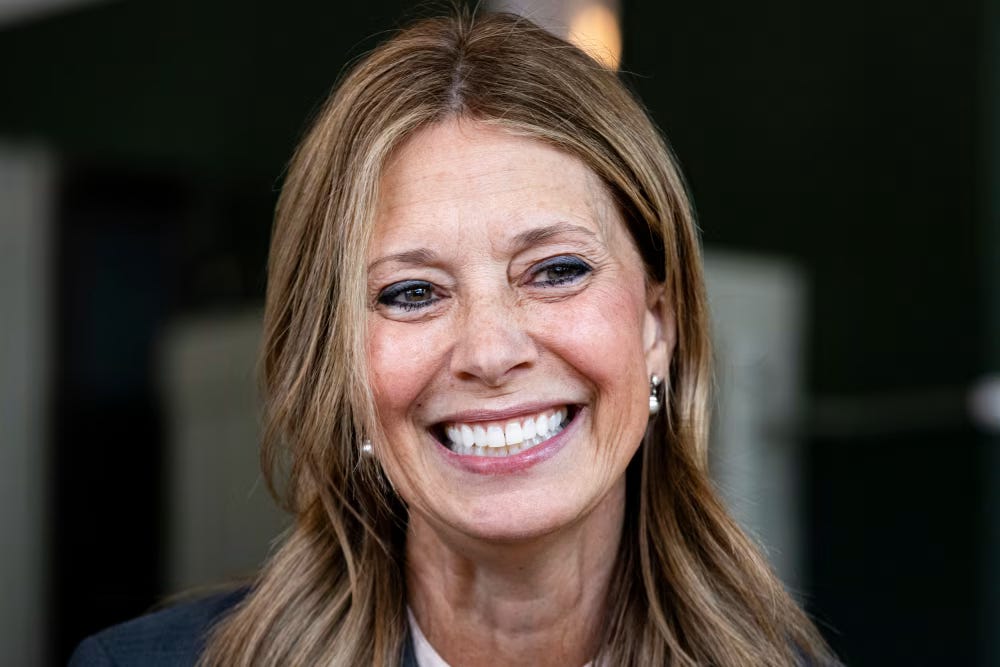
Democrat Amy Acton has won Ohio’s gubernatorial election, defeating Republican businessman Vivek Ramaswamy and becoming the first woman elected governor in the state’s history.
Acton, 60, also becomes the first Democrat to win Ohio’s governorship since Ted Strickland in 2006, marking a significant political upset in a state that has increasingly favored Republicans and supported Donald Trump in three consecutive presidential elections.
Although former Lt. Gov. Nancy Hollister briefly served as governor for 11 days in 1999 after George Voinovich entered the U.S. Senate, Acton is the first woman to win the position through an election.
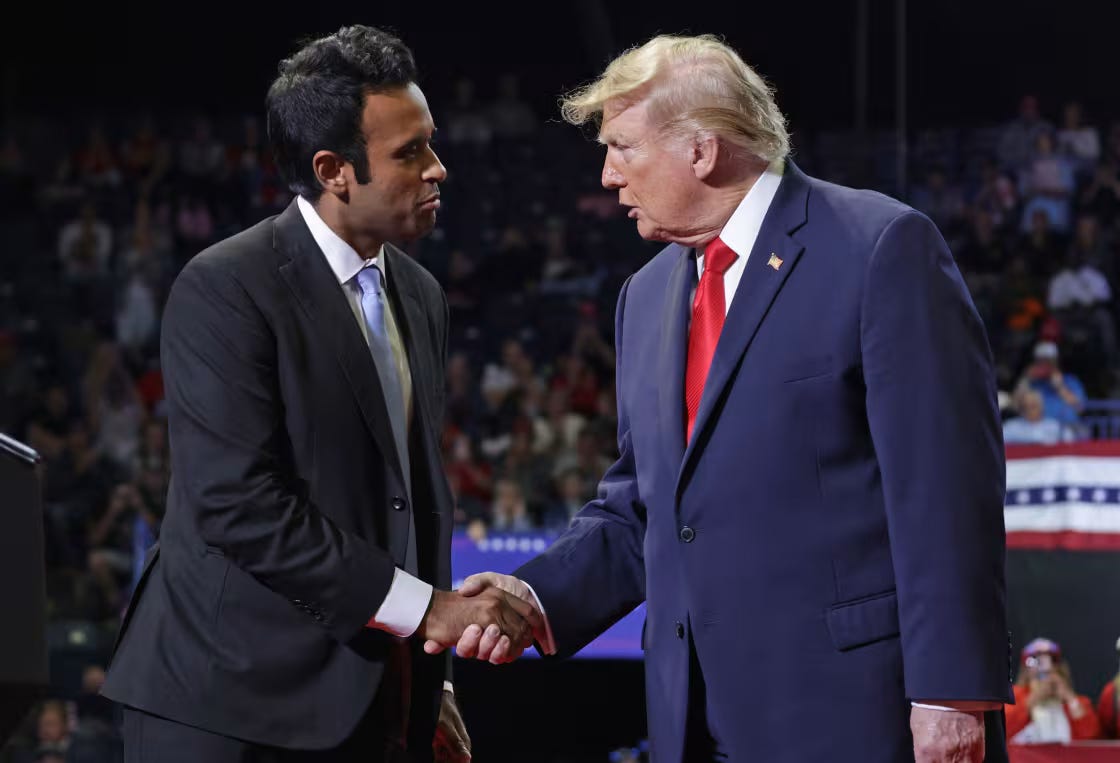
Her victory comes despite Ramaswamy’s endorsement from Trump and support from prominent Republican strategists associated with the president and Vice President JD Vance.
Acton will replace term-limited Republican Gov. Mike DeWine, under whom she served as Ohio’s health director during the early stages of the COVID-19 pandemic.
The contest grew increasingly expensive and contentious as polls suggested Democrats had a realistic opportunity to reclaim the governor’s office after nearly 20 years.
Neither candidate had previously held elected office. Ramaswamy, 41, unsuccessfully sought the Republican presidential nomination in 2024 before entering Ohio’s gubernatorial race.
Tensions intensified during the campaign’s final weeks when Acton declined to debate Ramaswamy. Her campaign manager defended the decision, saying she had no interest in giving a platform to someone the campaign considered dishonest.
The race took a particularly controversial turn two weeks before Election Day when Ramaswamy’s campaign announced a $4 million advertising effort featuring Acton’s estranged mother, Donna Arthur.
In the advertisement, Arthur accused her daughter of dishonesty and urged Ohio voters to reject her candidacy.
Acton has said she has not communicated with her mother in nearly 50 years and has accused her mother’s former husband of sexually abusing her during childhood.
Although the advertisement did not directly reference those allegations, it sparked widespread criticism from Democrats and Republicans, including DeWine, who objected to the use of Acton’s painful family history for political purposes.
Ramaswamy refused to withdraw the advertisement or apologize.
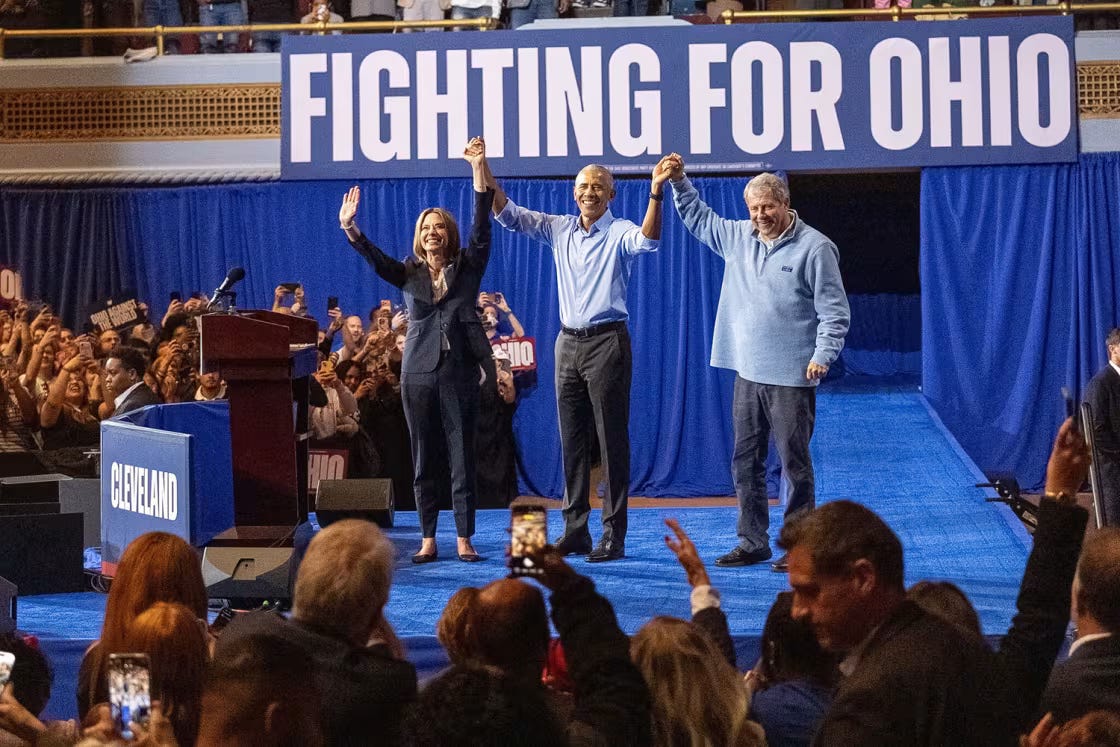
At an October 24 campaign rally in Cleveland alongside former President Barack Obama, Acton accused her opponent of deliberately exploiting her childhood in an attempt to rescue his campaign.
Ramaswamy campaigned on promises to lower property taxes and gradually eliminate Ohio’s income tax. He invested substantial personal resources in the race, while an allied super PAC received millions of dollars from wealthy supporters, including Elon Musk and Jeffrey Yass.
Acton emphasized her experience serving in a Republican administration as evidence of her ability to work across party lines. She presented herself as a moderate while portraying Ramaswamy as politically extreme.
She also highlighted her upbringing in poverty in Youngstown, contrasting her background with Ramaswamy’s considerable wealth as voters struggled with rising living costs.
Democrats repeatedly criticized Ramaswamy’s use of private jets while traveling across Ohio, turning his expensive transportation choices into a recurring campaign issue.
Some Republicans also expressed frustration with his preference for luxury travel.
Ramaswamy additionally faced racist and religiously prejudiced attacks online related to his Indian American heritage and Hindu faith. He publicly acknowledged the hostility and said he had removed social media applications from his phone.
Throughout the campaign, Republicans targeted Acton’s record as Ohio’s health director during the COVID-19 pandemic.
Her prominent role in the state’s pandemic response had made her widely recognizable, but it also attracted criticism over school closures, business restrictions, and other public health measures.
DeWine, who held final authority over those decisions, subsequently defended Acton against what he described as unfair criticism of her pandemic service.
Acton also faced scrutiny over a 2019 domestic dispute involving her husband that prompted a police response.
She was never charged with a crime and described the incident as a verbal disagreement concerning her demanding work schedule.
Republican campaign advertisements highlighted details from the police report, including references to alcohol and prescription medication. Acton’s campaign disputed suggestions that she was intoxicated and said the medication was part of her longstanding medical routine.
Trump personally traveled to Ohio to campaign for Ramaswamy, praising his intelligence and commitment to the state despite their rivalry during the 2024 Republican presidential primary.
Speaking at an October 3 rally in Vandalia, Trump acknowledged that Ramaswamy had been a difficult political opponent before becoming an ally.
Despite that presidential support, Ramaswamy was unable to secure victory.
Acton’s election represents a major breakthrough for Ohio Democrats and a historic milestone for women in political leadership, bringing an end to nearly two decades of Republican control of the governor’s office.