

California Billionaire Tax Push Advances to Ballot as Political Battle Intensifies.
Proposal for a one-time 5% tax on billionaires in the state is opposed by Silicon Valley tech titans and Gavin Newsom.

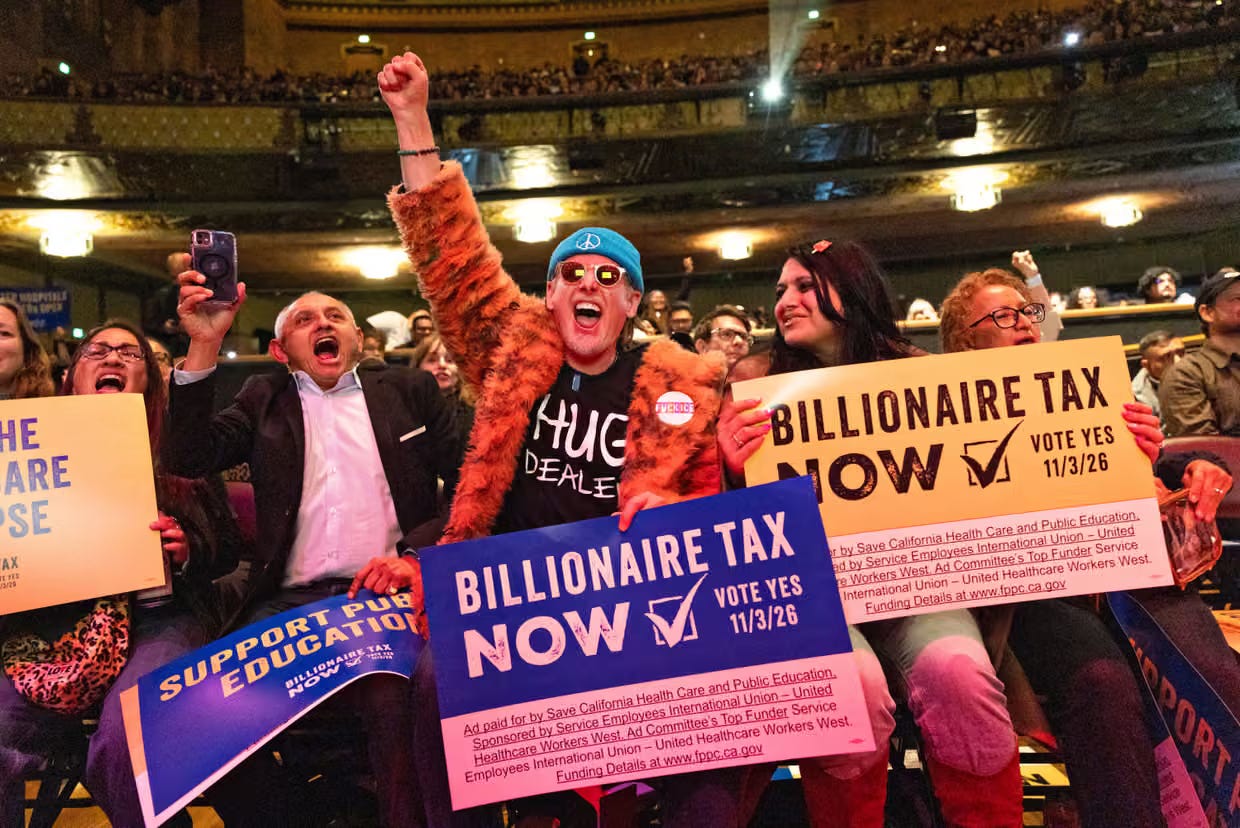
A controversial proposal to impose a one-time tax on California’s wealthiest residents is moving closer to voters, after supporters announced they have gathered enough signatures to secure a spot on the November ballot.
Backed by the Service Employees International Union–United Healthcare Workers West, the initiative has surpassed the required threshold, with organizers reporting more than 1.5 million signatures—well above the 870,000 needed. The measure has quickly evolved into one of the state’s most polarizing political fights, drawing fierce opposition from powerful tech executives and Governor Gavin Newsom.
At the center of the debate is a proposal to levy a one-time 5% tax on billionaires’ total assets, including stocks, businesses, artwork, and intellectual property. Supporters argue the tax would help offset federal cuts to healthcare programs affecting low-income residents—cuts enacted under former President Donald Trump. The measure would apply retroactively to individuals classified as billionaires as of January 1.
California, home to more billionaires than any other state, relies heavily on high-income earners for revenue. Nearly half of its personal income tax collections come from the top 1%, making the stakes of the proposal especially high for the state’s financial future.
Opponents, including some of Silicon Valley’s most influential figures, have mounted an aggressive campaign to block the measure. Leaders tied to companies such as Google, Meta, LinkedIn, Reddit, and DoorDash have collectively poured tens of millions into opposition efforts. Among the most notable contributions, Alphabet co-founder Sergey Brin has reportedly donated tens of millions to a political action committee working to defeat the tax, while former CEO Eric Schmidt has also contributed millions.
Some wealthy individuals have already begun shifting assets or investing in properties outside California, fueling concerns about a potential economic ripple effect. Critics warn that the tax could accelerate an exodus of high-net-worth residents, potentially costing the state significant tax revenue at a time when budget uncertainties already loom.
Governor Gavin Newsom has emerged as one of the proposal’s most prominent critics, arguing that a state-level wealth tax could harm California’s economic standing as the world’s fourth-largest economy. He has pledged to fight the measure, signaling the issue could become a defining political challenge as he eyes a potential 2028 presidential run.
The proposal has also exposed divisions within Democratic circles. While Newsom and moderate voices remain opposed, progressive leaders—including Senator Bernie Sanders—have embraced the initiative, framing it as a model for addressing wealth inequality nationwide.
Supporters of the tax dismiss fears of a mass billionaire departure as overstated. They argue the measure represents a practical response to a growing healthcare crisis, emphasizing its potential to stabilize hospitals, keep emergency rooms open, and maintain essential services for vulnerable communities.
Business groups, however, remain unconvinced. Organizations backed by major donors, including tech billionaires, warn that the proposal could weaken California’s economy, discourage investment, and ultimately increase costs for working families.
As the measure heads toward a likely ballot showdown, California voters now face a high-stakes decision—one that could reshape the state’s economic landscape and influence national conversations about taxing extreme wealth.
Thanks for the update! I am involved with local Indivisible and Swing Left groups in my area and we've been trying to get signatures for weeks now. WooHoo!!!!