Coco Gauff Falls to Elise Mertens at China Open After Facing Racist Abuse: The Ugly Reality Black Women Athletes Should Never Have to Endure.
Exposing the hostility Black women athletes continue to endure and raising urgent questions about racism, accountability, and equality in professional sports.
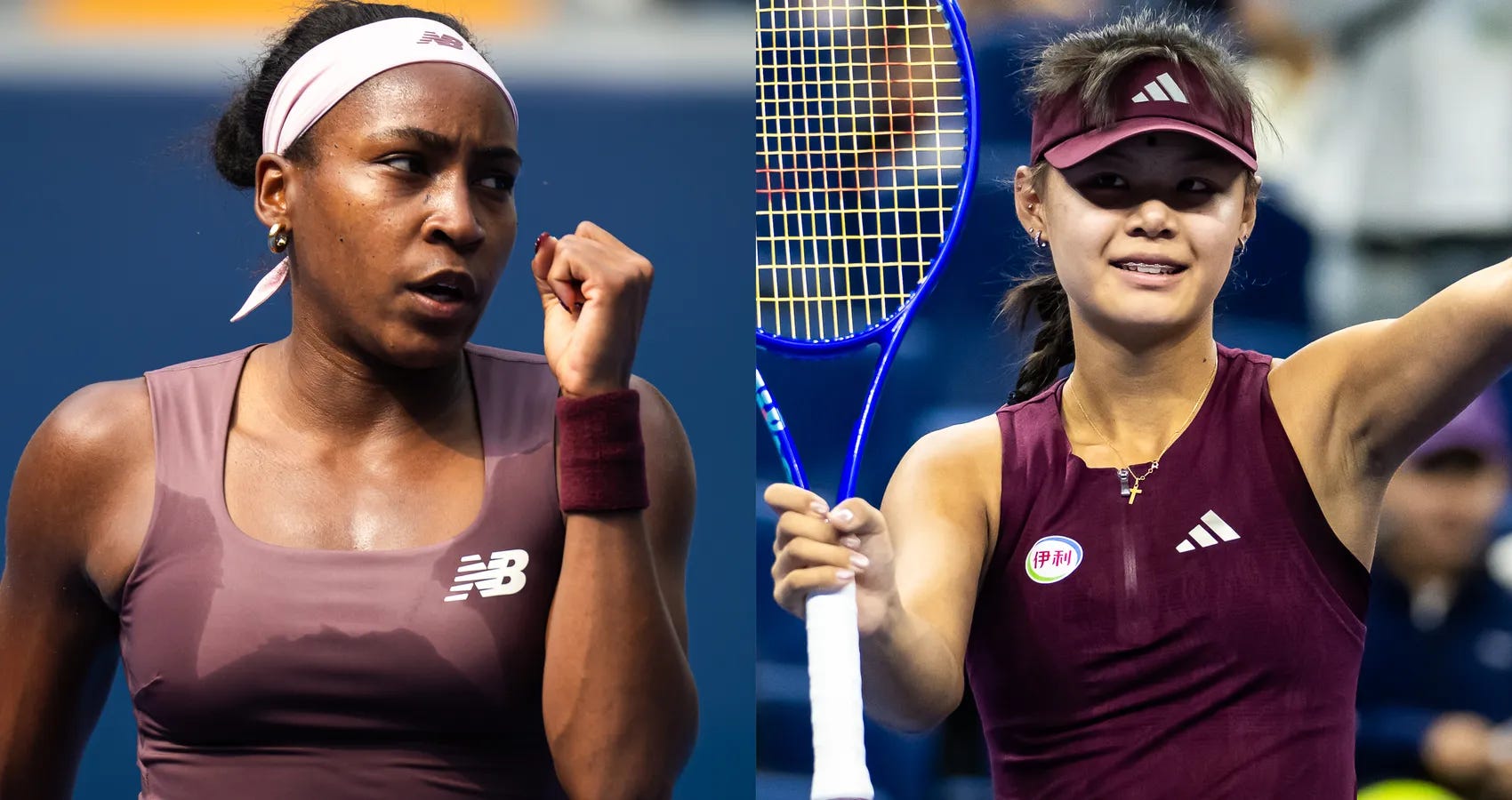
Coco Gauff lost in straight sets to Elise Mertens on Wednesday. Photograph: Lintao Zhang/Getty Images.
BEIJING — Coco Gauff arrived on court Wednesday with a formidable opponent across the net, but the circumstances surrounding her China Open appearance extended far beyond tennis.
The fourth-ranked American suffered a 6-3, 6-3 defeat to Belgium’s Elise Mertens, a player she had beaten in all five previous encounters. Gauff struggled throughout the match, committing numerous errors before acknowledging that she was running out of energy.
The defeat came days after the 22-year-old publicly condemned racist messages directed at her following a controversial umpiring decision.
Although there is no established evidence that the abuse contributed to her performance, the events have renewed attention to a disturbing reality: Black women athletes are often expected to withstand not only the physical demands of professional competition but also hostility directed at their identities.
Losing is an unavoidable part of sports. Racism should never be accepted as another occupational hazard.
A Controversial Point That Unleashed Something Far More Disturbing.
The controversy began Monday during Gauff’s match against Chinese player Sun Xinran.
Sun Xinran vs Coco Gauff.
Late in the opening set, Gauff stopped playing after electronic advertising boards surrounding the court flickered during a rally. Sun appeared positioned to win the point, but the chair umpire ordered it replayed.
The decision prompted disagreement, an ordinary occurrence in a sport where officiating judgments can influence matches.
What followed, however, went far beyond legitimate criticism.
“Hey everyone, you can dislike me or disagree about what happened without being racist,” Gauff wrote on X. “The amount of racist comments/dms I’ve received in the last few hours is insane. Lastly, I‘m not a cheater or a thief.”
Coco Gauff lost in straight sets to Elise Mertens on Wednesday. Photograph: Lintao Zhang/Getty Images.
Her response exposed a distinction that should never require explanation: questioning an athlete’s conduct is legitimate; attacking her because of her race is not.
Spectators may disagree with Gauff’s decision to stop playing or question the umpire’s ruling. Such debates belong in sports.
But none justifies racial abuse.
The troubling question is why criticism of a Black woman athlete can so quickly become an attack on her identity, integrity, and belonging.
An Exhausted Gauff Struggles Against a Determined Mertens.
Against Mertens, Gauff’s difficulties were evident.
Elise Mertens of Belgium, right, is congratulated by Coco Gauff of the United States after the fourth round of the women’s singles match at the China Open tennis tournament in Beijing, Wednesday, Oct. 7, 2026. (AP Photo/Achmad Ibrahim)
She surrendered her serve four times, committed 34 unforced errors compared with Mertens’ 11, and recorded eight double faults against her opponent’s two.
Four double faults came during the final game of the opening set, handing Mertens a decisive advantage.
Trailing 4-1 in the second set, Gauff told her team she had “no energy” and felt as though she might pass out.
“I kind of felt like she was dropping a bit in energy,” Mertens said. “I tried to push myself. But I know she’s a great competitor. It’s never done against her.”
The Belgian deserved credit for a disciplined performance, securing her first WTA 1000 quarterfinal appearance in five years.
“She’s an incredible player, of course. I knew it was going to be a very tough match,” Mertens said.
Her victory improved her record against top-10 opponents this season to 3-3, following significant wins over Jasmine Paolini at the Italian Open and Elena Rybakina at Wimbledon.
Mertens’ achievement should not be diminished by the controversy surrounding Gauff. One athlete delivered an impressive victory; another endured a difficult conclusion to an exhausting tournament.
The Burden Black Women Athletes Should Not Have to Carry.
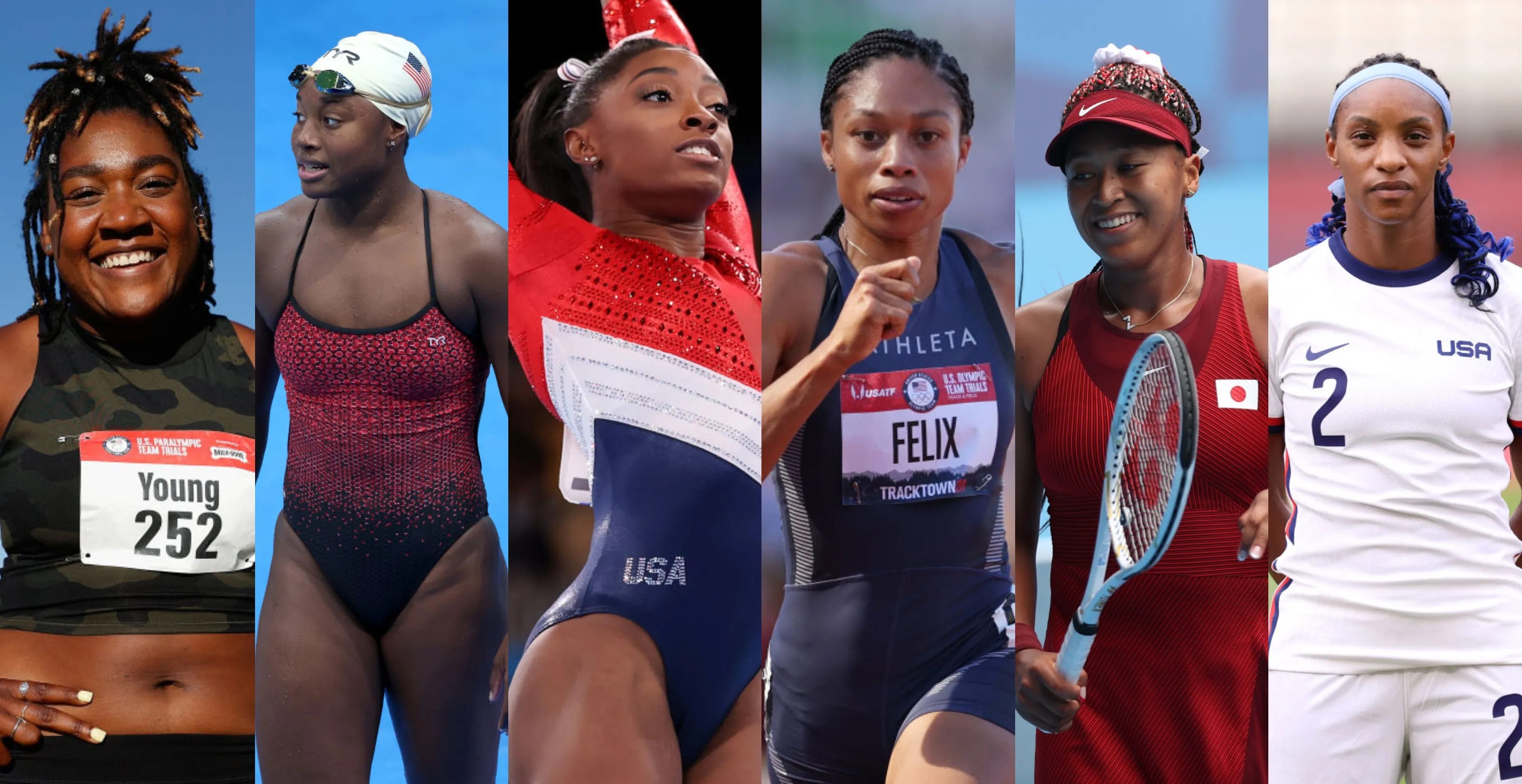
Black women athletes. Credit: The Women Post Studio.
Gauff’s experience raises a question extending beyond tennis: Why are Black women athletes still forced to defend their humanity in spaces where their professional achievements should speak for themselves?
For generations, women have fought for recognition, equal opportunity, and respect in sports. Black women have frequently confronted additional barriers, including racial stereotypes and discriminatory treatment.
From Serena Williams to Naomi Osaka, prominent Black women in tennis have faced intense scrutiny, sometimes accompanied by racialized commentary about their appearance, behavior, or character.
Their experiences are not identical. Nevertheless, the persistence of racist abuse reveals a problem sporting institutions cannot dismiss as isolated online misconduct.
Gauff is a professional athlete entitled to compete without racial degradation. Her ranking, earnings, and international recognition do not diminish that entitlement.
There is something profoundly troubling about a sporting culture that celebrates Black women’s resilience while expecting them to absorb hostility as proof of their toughness.
Resilience is admirable. But it should never become an excuse for institutions to avoid confronting abuse.
The responsibility for ending racism cannot rest primarily on those targeted by it.
The Women Post is a reader-supported publication. To receive new posts and support my work, consider becoming a free or paid subscriber.
Athletic Excellence Should Not Require Emotional Invincibility.
Modern professional athletes compete in an environment where public scrutiny rarely ends with the final point.
Social media offers opportunities to connect with supporters but also allows harassment to reach athletes directly, often without meaningful accountability.
A disputed call can become a viral controversy.
A disappointing performance can trigger personal attacks.
An athlete who responds may face further criticism simply for speaking publicly.
For Black women, these pressures can be compounded by racial hostility.
Tennis authorities should establish stronger reporting systems for discriminatory harassment, cooperate with digital platforms to address serious offenders, and provide psychological support for affected players.
Social media companies must also be held accountable for how effectively they respond to racist abuse.
These measures would not eliminate discrimination, but they would demonstrate that protecting athletes is an institutional responsibility rather than an individual burden.
The objective is not to shield professional players from criticism. Sports depend on debate, accountability, and passionate supporters.
The objective is to ensure that criticism never becomes a disguise for discrimination.
Gauff Withdraws From Wuhan to Prioritize Recovery.
Coco Gauff said she could not see the ball and felt like she was going to pass out during her Beijing defeat to Elise Mertens. Zhang Lintao / Getty Images
Later Wednesday, Wuhan Open organizers announced that Gauff had withdrawn from the upcoming tournament, where she was the defending champion.
“After a long year, my body needs some time to rest and recover,” Gauff said in a statement shared by organizers.
Her withdrawal underscores the physical demands of a professional tennis calendar requiring international travel, intensive competition and sustained elite performance.
It would be premature to attribute her exhaustion or withdrawal to the racist abuse. Gauff herself cited the demands of a long season.
Nevertheless, athlete welfare must encompass physical recovery and emotional well-being.
Choosing rest should never be mistaken for weakness, particularly for Black women athletes who are so frequently expected to demonstrate exceptional strength.
Gauff is scheduled to represent the United States against Hungary in a Billie Jean King Cup playoff in her hometown of Delray Beach, Florida, on November 21–22.
Elsewhere in Beijing, six-time Grand Slam champion Iga Swiatek defeated American teenager Iva Jovic 6-1, 6-3 and will next face Mertens.
Tennis Must Draw a Clearer Line Between Criticism and Racism.
Gauff’s Beijing exit will appear in tournament records as another straight-sets defeat. The statistics will show her double faults, unforced errors and lost service games.
They will not capture the larger questions raised by the racist abuse she experienced.
Professional athletes must remain accountable for their performances. Their decisions can be challenged, mistakes examined and conduct debated.
But racial hostility has no legitimate place in those discussions.
A Black woman should not have to defend her right to dignity whenever controversy surrounds her career.
Gauff’s public response was significant because she acknowledged the right to disagree while refusing to accept discrimination.
That is a principle tennis authorities, fans, sponsors and social media companies must defend consistently.
The sport has made important strides in celebrating women’s achievements. Yet progress cannot be measured solely through championships, prize money or sponsorship agreements.
It must also be measured by the environment in which Black women compete and the protection they receive when facing hostility.
Mertens earned her victory, and that result deserves recognition.
But the racist abuse directed at Gauff should not disappear into the next tournament headline.
Because an athlete’s right to dignity should never depend on whether she wins, loses or makes a decision spectators happen to agree with.
Until that principle is consistently upheld, the fight for equality in professional sports remains unfinished.
The Women Post is a reader-supported publication. To receive new posts and support my work, consider becoming a free or paid subscriber.