



Democrat Annie Andrews has scored a stunning victory in South Carolina’s Senate race, defeating Republican Sen. Darline Graham, who was appointed earlier this year to replace her late brother, longtime Sen. Lindsey Graham.
Andrews, a pediatrician, becomes the first Democrat to represent South Carolina in the Senate in more than 20 years. Her victory marks a significant political upset in a state President Donald Trump carried by more than 17 percentage points in 2024.
Graham, a former state government administrator, was appointed in July by Gov. Henry McMaster following the sudden death of her brother, a five-term senator who had been a prominent figure in Washington.
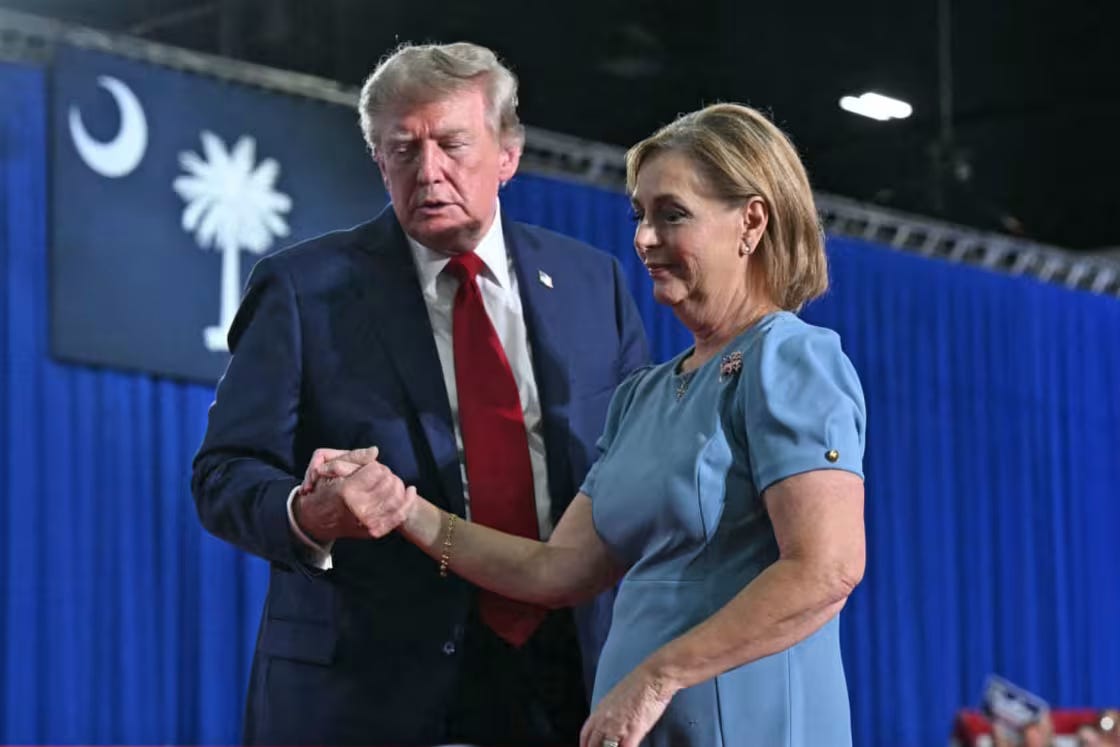
After entering the race for a full term, Graham faced questions about her command of key policy issues. During a Republican primary debate, she acknowledged being “not that informed on national security,” although she ultimately secured her party’s nomination.
Initially considered an unlikely Democratic pickup, the race became increasingly competitive as Graham’s vulnerabilities emerged. In September, the Cook Political Report shifted its assessment from “solidly Republican” to “likely Republican.”
Andrews also gained a substantial financial advantage. During the final pre-election fundraising period, her campaign collected more than $4 million, largely through online contributions, and spent over $4.6 million in just two weeks. Graham, meanwhile, raised approximately $90,000 and spent $65,000.
Outside political organizations poured millions into the contest. The Republican-aligned Senate Leadership Fund invested $13 million to support Graham, while the Democratic-aligned Senate Majority PAC announced a last-minute $750,000 digital advertising campaign.
The candidates clashed during an October debate, with Graham portraying Andrews as unwilling to challenge progressive Democrats. Andrews countered that Graham would simply support Trump’s political agenda.
Gun rights also became a contentious issue. Although Andrews expressed support for the Second Amendment, Graham highlighted her previous role as a senior adviser to Everytown, a prominent gun violence prevention organization.
Graham additionally accused Andrews of changing her positions on transgender rights, arguing that her Democratic opponent had repeatedly shifted her political stance.
The Republican candidate also publicly disagreed with Trump over his decision to waive sanctions against Russia, bypassing legislation named in honor of her late brother.
Graham argued that maintaining pressure on Moscow was essential to ending the war and lowering energy prices, expressing deep distrust of Russian President Vladimir Putin.
Her criticism came despite Trump’s plans to campaign on her behalf in South Carolina.
Ultimately, Andrews’ victory represents a remarkable Democratic breakthrough in a traditionally Republican stronghold, demonstrating how candidate vulnerabilities, campaign financing and shifting voter sentiment can reshape even the most unlikely political contests.