



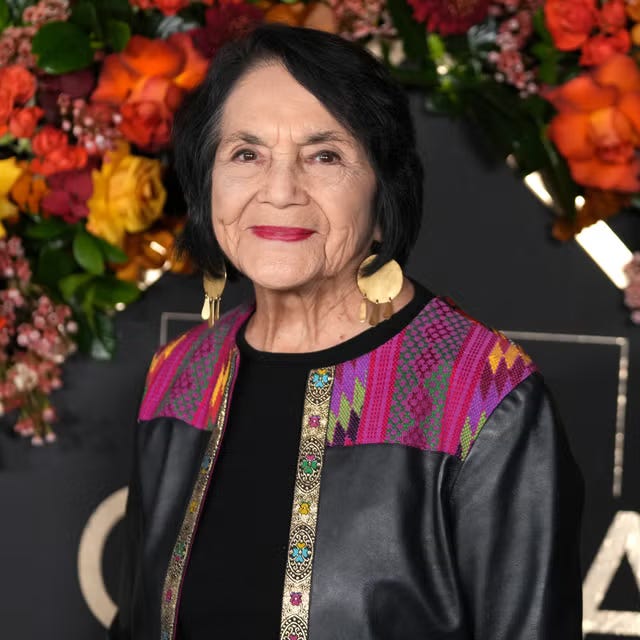
There are people who spend their lives waiting for the world to change.
And then there are people who refuse to wait.
Dolores Huerta belonged to the second group.
She did not inherit political power. She did not command a corporate empire. She did not begin her journey with the kind of influence that opens doors in Washington. What she possessed was something far more threatening to an unjust system: the conviction that ordinary people, when organized, could challenge extraordinary power.
For decades, Huerta stood alongside agricultural workers whose labor helped feed America while their own families struggled to survive. She confronted employers, challenged political leaders, organized boycotts, and helped transform the demands of some of the country’s most marginalized workers into a national movement for dignity.
Her family has announced that the legendary labor organizer and civil rights activist died in California at the age of 96.
Her passing represents more than the loss of a historic figure. It closes a remarkable chapter in American labor history, one written through sacrifice, resistance, and an unwavering belief that justice must extend to the people whose contributions society too often overlooks.
But perhaps the most important way to remember Dolores Huerta is not simply to celebrate what she accomplished.
It is to confront how much of the struggle she devoted her life to remains unfinished.
She Helped Feed a Nation’s Conscience


America has long celebrated the abundance of its agricultural industry. Its farms supply supermarkets, restaurants, and households across the country. Yet behind that abundance has always been a more uncomfortable reality: the workers responsible for harvesting the nation’s food have frequently been among those least protected by its economic prosperity.
Huerta understood this contradiction.
Born in New Mexico in 1930, she grew up with an awareness of working-class struggles. Her father had worked as a miner and farm laborer, and her eventual path into organizing reflected a belief that economic injustice was not an unfortunate accident but a condition that collective action could challenge.
Alongside César Chávez, Huerta co-founded the organization that became the United Farm Workers, helping build one of the most influential agricultural labor movements in American history.
Through strikes, consumer boycotts, negotiations, and public demonstrations, the movement challenged the conditions under which agricultural laborers worked.
Their demands were not extravagant. They were fundamentally human: better wages, safer workplaces, greater protection, and recognition that the people harvesting America’s food deserved to live with dignity.
Huerta was more than a supporting figure in this movement. She was an organizer, negotiator, strategist, and political force whose work helped turn labor grievances into collective demands that could no longer be easily dismissed.
And that distinction matters.
History has a habit of celebrating movements through the names of prominent men while reducing the women who helped build them to supporting characters.
Dolores Huerta’s life challenges that habit.
She was not merely standing beside history.
She was helping make it.
A Woman Who Refused to Remain in the Background
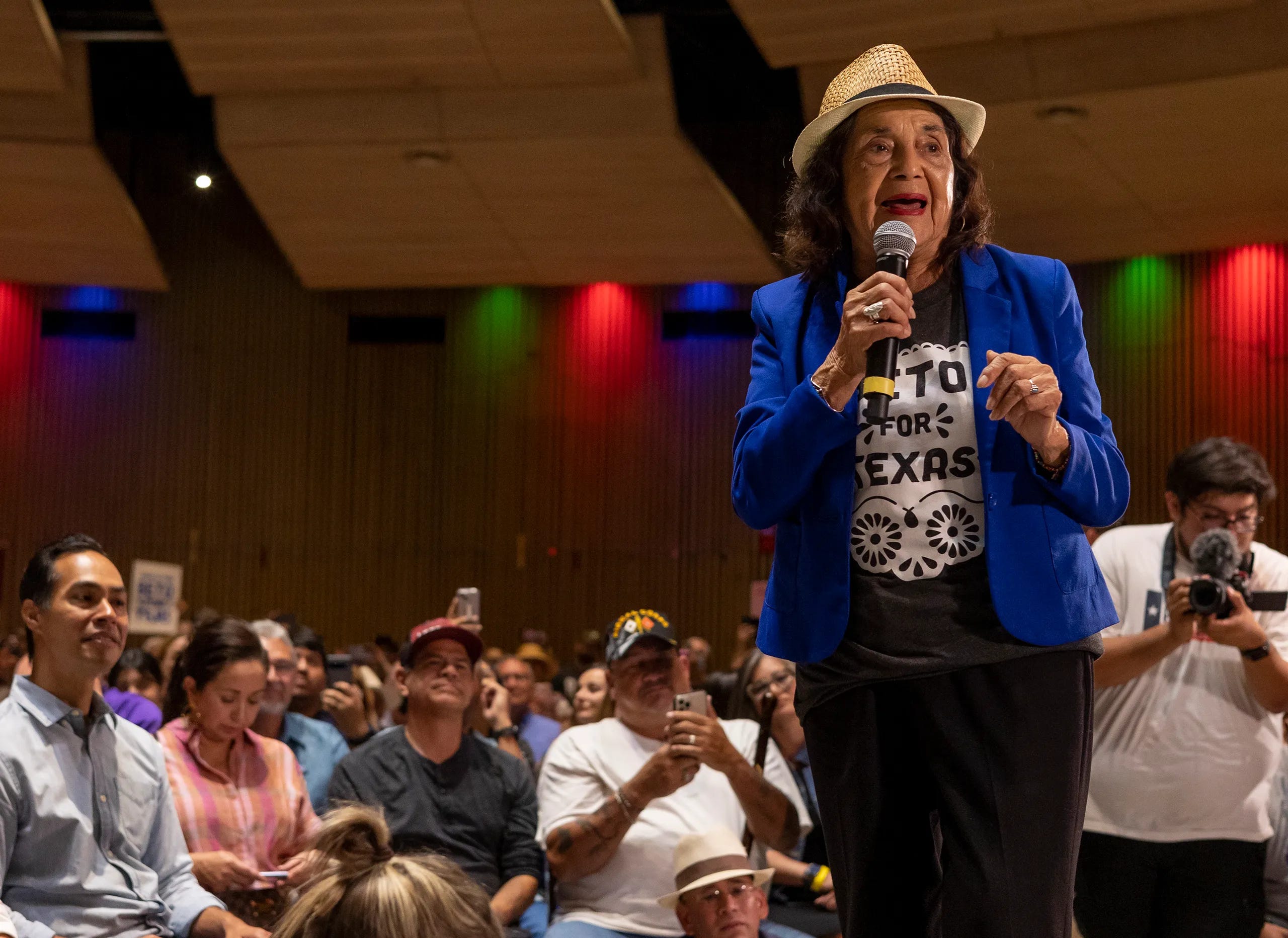
For women entering political and labor movements during the 1960s, fighting injustice often meant confronting discrimination on multiple fronts.
There was the inequality imposed by employers and institutions. There were racial and economic barriers. And there were the expectations placed on women even within organizations supposedly dedicated to liberation.
Huerta challenged those expectations through her leadership.
She demonstrated that women did not have to wait for permission to negotiate, organize, lead, or demand accountability. They could build institutions, shape national debates, and challenge the people who held power.
Her partnership with Chávez was influential but often contentious. Their disagreements were widely recognized as part of their working relationship, reflecting the forceful personalities and competing judgments involved in building a movement.
Yet Huerta’s contributions were never dependent on agreement with another leader.
Her political identity extended well beyond the union. She participated in Democratic presidential campaigns, supported Robert F. Kennedy in 1968, and later backed Barack Obama and Joe Biden.
She understood that protests could pressure institutions, but lasting change also required engagement with the political systems that shaped workers’ lives.
Her influence reached classrooms, communities, election campaigns, and generations of women who saw in her an example of leadership that did not require conformity.
She was proof that a woman could be uncompromising, politically effective, and unapologetically outspoken.
But her story also contains a painful truth about the personal costs women can face inside movements fighting for justice.
The Pain Behind the Public Legacy
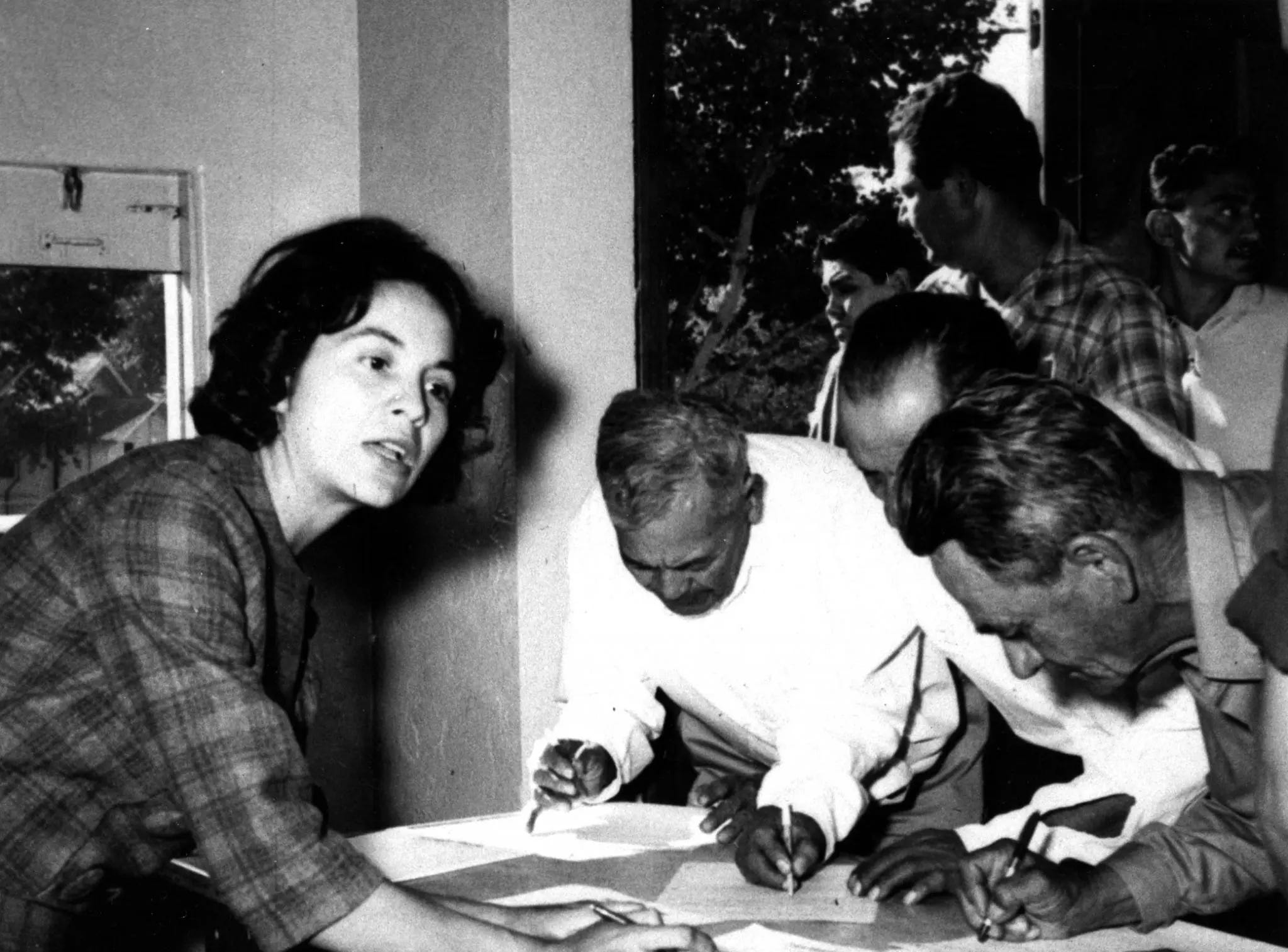
In March 2026, Huerta revealed an experience that complicated the public understanding of her decades-long partnership with Chávez.
Following an investigation into allegations of sexual abuse involving the late union leader, Huerta disclosed that Chávez had sexually assaulted her in the 1960s.
She described being pressured into sex during one encounter and being forced against her will during another. She explained that she had remained silent partly because she feared that exposing the abuse would damage the farmworkers’ movement and that those around her might not believe her.
Her disclosure exposed a painful contradiction: a woman who devoted her life to fighting exploitation had herself experienced abuse within the leadership of a movement dedicated to justice.
It is a contradiction that deserves serious examination, not because it diminishes her accomplishments, but because it reveals the enormous personal sacrifices that can remain hidden behind celebrated political movements.
How many women have been expected to protect institutions at the expense of their own well-being?
How many have remained silent because speaking out might threaten a cause they believed in?
And how often has society celebrated powerful men without fully examining the experiences of the women who worked alongside them?
Huerta’s decision to speak publicly late in her life was another act of courage. It challenged the notion that protecting a movement’s reputation should take precedence over confronting harm.
Her experience also reminds us that movements fighting oppression are not automatically free from it.
True justice requires accountability, including when the people responsible for wrongdoing are admired, influential, or historically significant.
Three Words That Became a Global Declaration
Among Huerta’s most enduring contributions were three Spanish words that traveled far beyond California’s agricultural fields.
Sí, se puede.
Yes, we can.
The phrase became synonymous with collective action and the belief that seemingly impossible victories could be achieved through determination and solidarity.
It inspired labor organizers, immigrant communities, civil rights advocates, and political campaigns.
Decades later, Barack Obama would embrace its English translation during his successful 2008 presidential campaign.
But the significance of Huerta’s words was never merely motivational.
They emerged from a struggle in which people with little institutional power confronted employers and political systems that appeared almost impossible to challenge.
For farmworkers facing low wages and difficult conditions, believing that change was possible was only the beginning. They still had to organize, negotiate, protest, and endure the consequences of demanding something better.
Huerta understood that hope without action could become another form of waiting.
Her message was not that progress would arrive simply because people believed in it.
It was that collective determination could become a force capable of changing the conditions under which people lived.
That distinction remains essential today.
Recognition Was Never the Final Victory
In 2012, President Obama awarded Huerta the Presidential Medal of Freedom, the highest civilian honor in the United States.
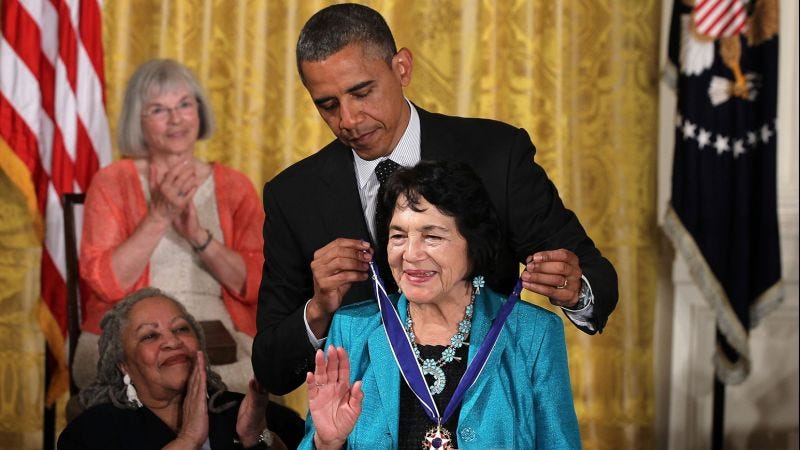
It was a moment of national recognition for a woman whose influence had been built largely outside traditional centers of power.
Schools were named in her honor. Her activism became part of the historical record. Her name joined those of the country’s most significant civil rights and labor leaders.
Yet Huerta’s work did not end with recognition.
Through the Dolores Huerta Foundation, she continued advocating for political participation, community organizing, education, and social justice. Even into her 90s, she remained engaged in campaigns involving workers, women, immigrants, and marginalized communities.
Her persistence offered an important lesson about the difference between receiving recognition and achieving the change one originally demanded.
An award can honor a lifetime of activism. It cannot guarantee that the problems an activist confronted have disappeared.
A school can carry the name of a civil rights champion while children in surrounding communities continue to experience inequality.
A nation can celebrate labor organizers from its past while still debating the rights, protections, and economic security of workers in its present.
Huerta’s legacy should therefore be measured not only by the honors she received but by the institutions she helped build, the rights she helped secure, and the generations she inspired to demand more.
The Responsibility Now Belongs to the Living


The death of a historic activist often produces a familiar sequence of public responses.
Tributes are issued. Photographs circulate. Political leaders praise courage and sacrifice. Institutions commemorate achievements that once challenged their predecessors.
There is value in remembrance.
But remembrance becomes incomplete when admiration replaces responsibility.
Dolores Huerta did not spend her life organizing farmworkers so future generations could simply admire photographs of demonstrations.
She fought because people needed better lives.
Her work challenged a society that depended on the labor of people it often treated as disposable. Her leadership confronted assumptions about who deserved political influence. Her advocacy demonstrated that women, including women from marginalized communities, could transform national conversations.
Those questions have not disappeared.
Who benefits from the labor that sustains modern economies? Who is denied meaningful protection? Whose leadership receives recognition, and whose contributions remain overlooked?
And perhaps most urgently, what happens when a society celebrates equality as an ideal but resists the changes required to make it real?
These are not merely questions about the past.
They are questions about the America that exists today and the country future generations will inherit.
Huerta’s life offers no promise that progress is easy, inevitable, or permanent.
Instead, it demonstrates that meaningful change requires people willing to organize when the odds are against them, confront injustice when silence is more convenient, and persist even when victory seems distant.
That is a demanding legacy.
And it is precisely why it matters.
Dolores Huerta’s Final Lesson: History Is Not Finished
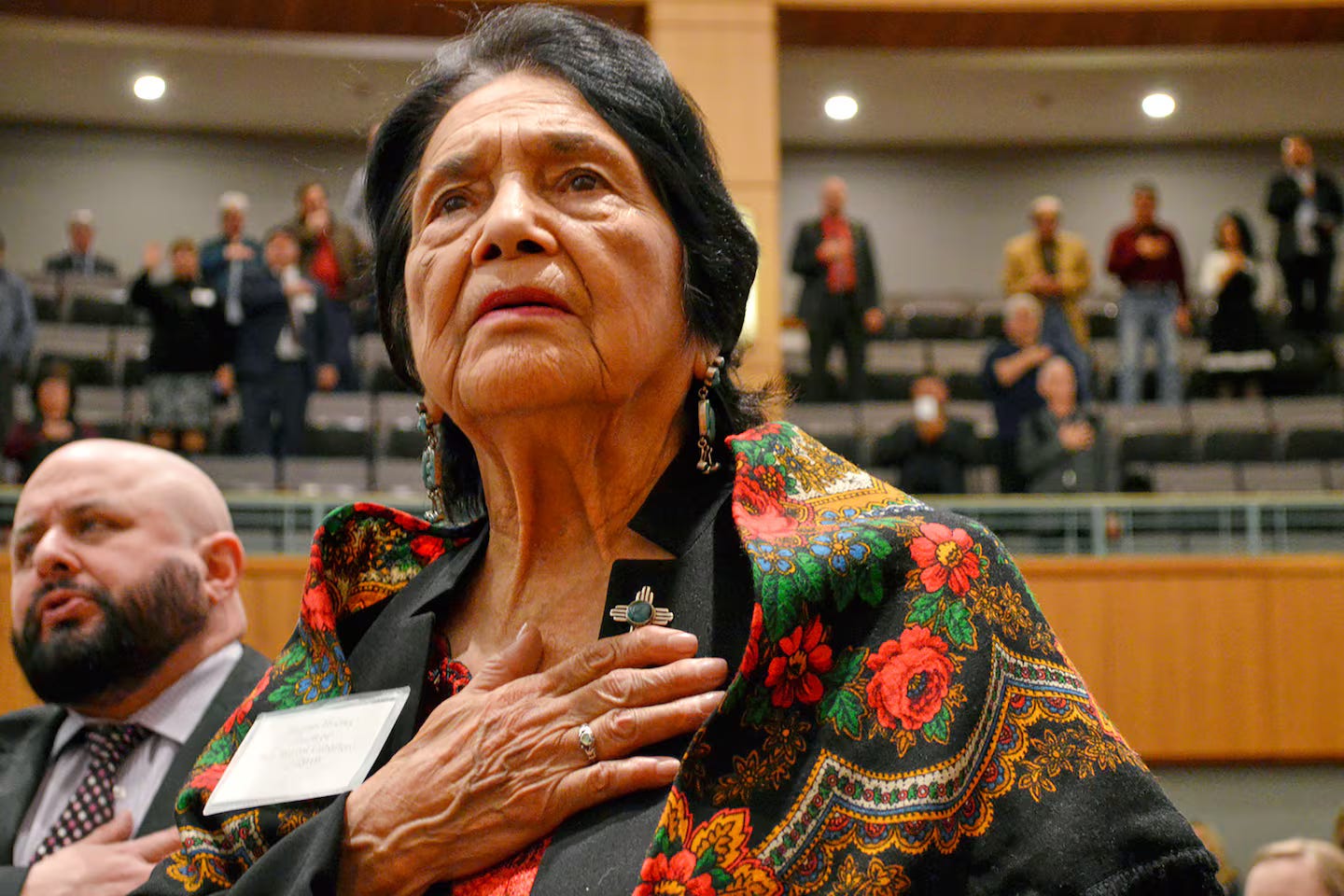
Dolores Huerta lived 96 years, long enough to witness profound changes in American society and to help bring about some of them.
She saw workers gain protections once considered unattainable.
She watched women challenge barriers that had restricted their political and economic influence.
She witnessed a phrase born in the struggle for agricultural labor rights become part of the language of presidential politics.
She also lived long enough to confront painful truths about the movement she helped create.
Her story was not one of uninterrupted triumph. It contained conflict, sacrifice, personal suffering, and difficult choices.
That complexity makes her legacy more human, not less extraordinary.
We do not honor women like Dolores Huerta by pretending they lived without pain or contradiction. We honor them by recognizing the full measure of their lives and refusing to separate their achievements from the realities they endured.
And perhaps the greatest tribute is to ensure that the struggles they confronted do not become permanent burdens passed from one generation to the next.
Because every generation faces a choice.
It can inherit the progress made by those before it and assume the work is complete.
Or it can recognize that the rights people enjoy today were often secured through the courage of individuals who refused to accept yesterday’s limitations.
Dolores Huerta chose to fight.
She chose to organize.
She chose to believe that people who had been denied power could discover it together.
Now, at 96, her life has come to an end.
But the question her work leaves behind is not whether she did enough.
It is whether the rest of us are prepared to do our part.
Sí, se puede.
Three words that helped change history.
And three words that remain a challenge to the future.
Dolores Huerta put up one hell of a fight, and she never stopped showing up. Ninety-six years, and a lifetime spent making room for people who had been denied a voice. What a legacy. Rest in peace, Dolores. ¡Sí, se puede! ❤️