



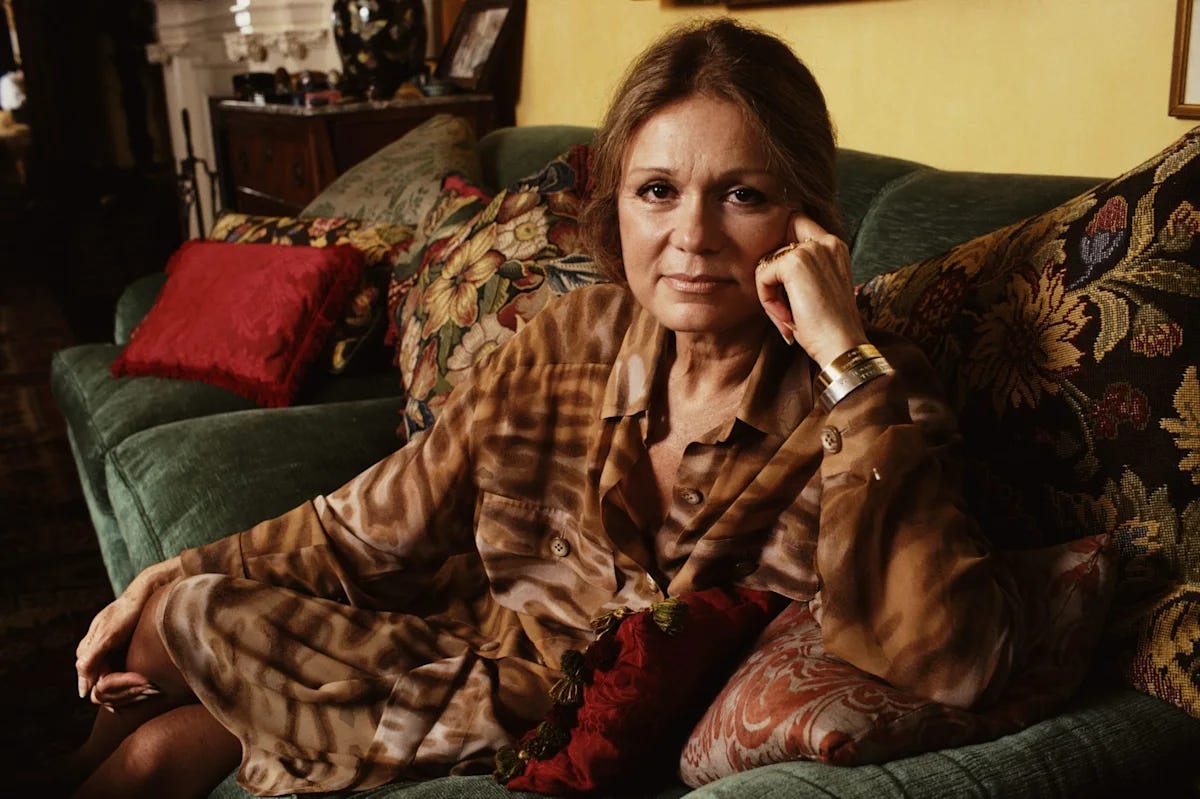
The pioneering journalist, activist and co-founder of Ms. magazine spent more than six decades challenging inequality and helping redefine what women could demand from society — and from their own lives.
Gloria Steinem, the groundbreaking journalist and feminist activist whose voice became inseparable from the modern struggle for women’s equality, has died at the age of 92.
Steinem died Wednesday at her home in New York City. Her death closes an extraordinary chapter in the history of the women’s movement — but not the movement she helped build.
For generations of women, Steinem represented something larger than one activist or one era. She represented the insistence that women should have the authority to determine the direction of their own lives.
She challenged a world in which women were routinely expected to accept fewer professional opportunities, less political power, unequal treatment in the workplace, and limited control over their reproductive lives.
And she did not merely write about those inequalities.
She organized against them.


For more than six decades, Steinem traveled, spoke, wrote, protested, and helped create institutions designed to turn feminist ideas into lasting social and political change.
Her life became intertwined with some of the defining battles over women’s rights in modern American history.
A journalist who refused to look away
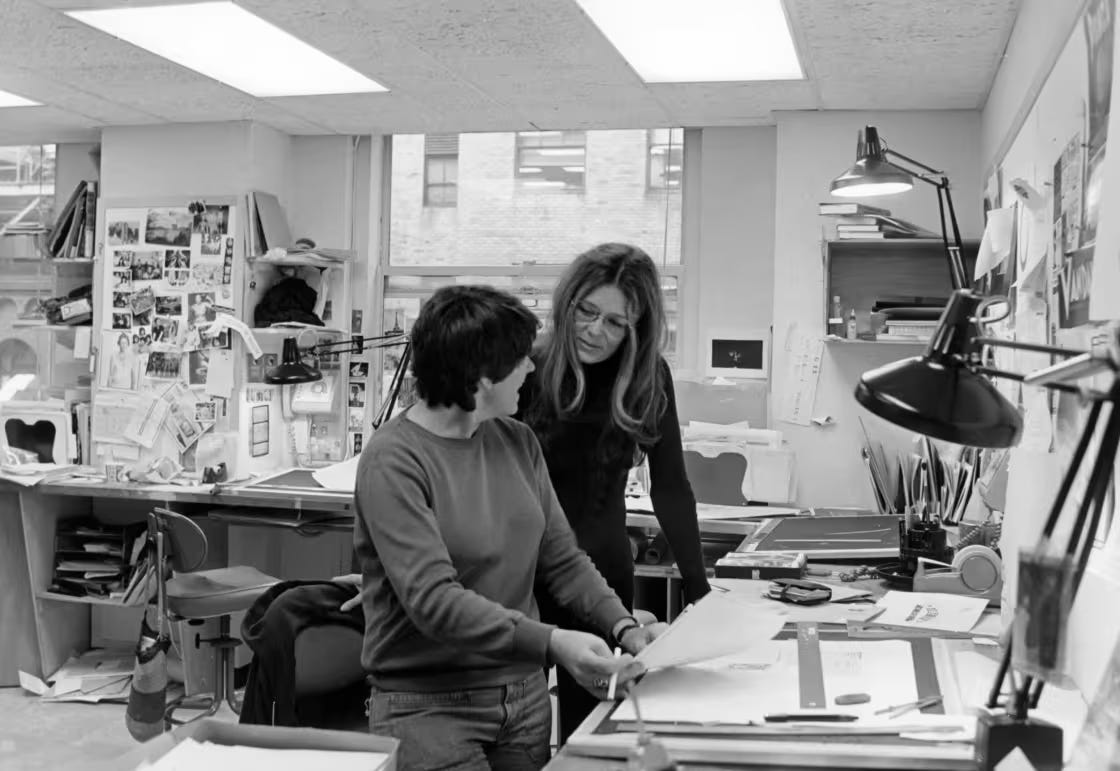
Before Steinem became one of America’s most recognizable feminist leaders, she was a young journalist trying to establish herself in an industry where women were often denied the same opportunities as men.
One assignment changed the trajectory of her career.
In 1963, Steinem went undercover as a Playboy Bunny for Show magazine.
She took a job at New York’s Playboy Club and documented what happened behind the glamorous image being sold to the public.
Her resulting exposé, “A Bunny’s Tale,” revealed the working conditions faced by the women employed at the clubs, including demanding appearance standards, uncomfortable uniforms, financial pressures, and the expectation that women maintain a cheerful persona for male customers regardless of what they were experiencing.
The story attracted national attention.
But Steinem would eventually move beyond simply documenting women’s experiences.
She became determined to change them.
In 1968, she helped found New York magazine and became a political columnist. The following year, her essay “After Black Power, Women’s Liberation” helped establish her as an important public voice in the growing feminist movement.
Her journalism increasingly became inseparable from her activism.
Helping women create their own platform
One of Steinem’s most enduring contributions came through publishing.
In the early 1970s, she helped launch Ms. magazine, creating a national publication where issues affecting women’s lives could be examined without being filtered primarily through traditional expectations of womanhood.
The magazine addressed subjects that mainstream women’s publications had often ignored or softened — including abortion, discrimination, equal pay, domestic violence, sexual politics and women’s representation.
It was more than another magazine.
It became part of the infrastructure of a movement.
At a time when women’s publications were frequently built around beauty, homemaking and relationships, Ms. helped demonstrate that women’s political, economic and social experiences deserved serious journalism.
Steinem understood that changing laws mattered.
But she also understood that changing the stories society told about women mattered.
Who gets heard matters.
Who gets published matters.
Who gets believed matters.
And who gets to define what a woman’s life should look like matters.
Her fight was also personal

Steinem’s commitment to reproductive freedom was connected to her own life.
After graduating from Smith College in 1956, she became pregnant at 22 while abroad. At the time, abortion remained illegal under most circumstances, and she eventually obtained the procedure in London.
For years, she kept that experience private.
She later spoke openly about it and became one of America’s most prominent advocates for reproductive rights.
Her activism would eventually encompass far more than abortion.
She fought for workplace equality, political representation, protections against domestic violence and child abuse, and greater recognition of the systemic barriers affecting women.
In 1971, she helped establish the National Women’s Political Caucus alongside other prominent leaders, including Bella Abzug, Shirley Chisholm and Betty Friedan, with the goal of increasing women’s participation and representation in political life.
Her message was fundamentally about power: women needed not simply to be represented in conversations about their lives but to be present where decisions were actually being made.
An unconventional beginning
The woman who would become an international symbol of feminism did not grow up surrounded by stability or privilege.
Gloria Marie Steinem was born March 25, 1934, in Toledo, Ohio.


Her father worked as a traveling antiques dealer, and the family spent considerable time moving around the country during Steinem’s childhood.
After her parents separated, she lived with her mother, Ruth, whose struggles with mental health had a profound effect on her daughter.
Steinem later reflected on watching her mother’s experiences and seeing the limited options available to women of her generation.
Those early experiences helped shape Steinem’s understanding of dependence, marriage, work and women’s autonomy.
She eventually attended Smith College, where she studied government — an unusual academic path for many women during the 1950s.
After graduating, she spent time in India before returning to the United States and pursuing journalism in New York.
The career that followed would help change the way millions of women understood their place in the world.
Becoming the face of feminism
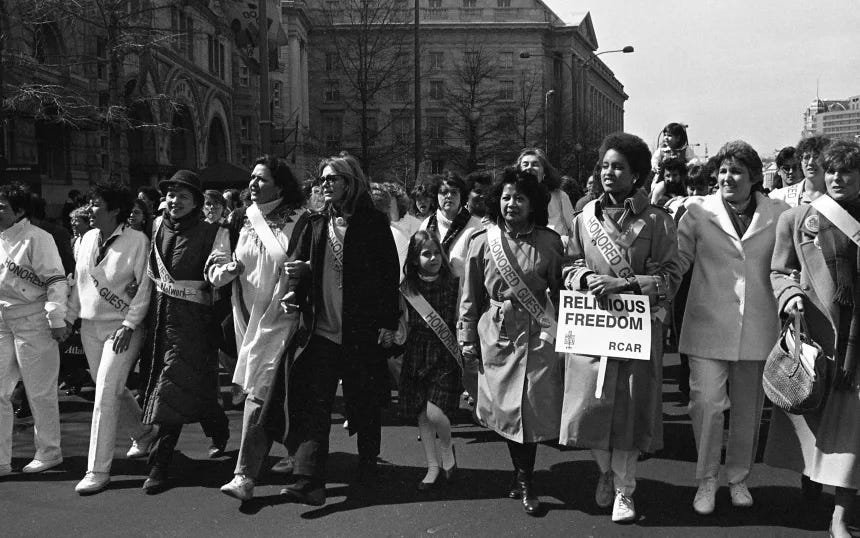
Steinem’s growing visibility made her one of the most recognizable figures associated with second-wave feminism.
That visibility was powerful, but it also came with criticism.
Her appearance sometimes became part of the public debate surrounding her activism. Critics — including some people within feminist circles — questioned whether her looks, clothing or celebrity distracted from the movement.
The scrutiny itself reflected something Steinem spent much of her career confronting: women in public life were frequently judged not only for what they said but for how they looked while saying it.
Steinem nevertheless remained highly visible.
She appeared on television, spoke at rallies, traveled extensively and continued writing.
Her influence extended beyond any single organization.
She helped build and support organizations devoted to women’s political participation, media representation and civil rights, while continuing to argue that feminism had to address overlapping forms of discrimination.
She also resisted the idea that feminism required women to make one particular set of life choices.
Freedom, in her view, meant having choices.
Marriage — on her own terms
Perhaps nothing illustrated that philosophy more personally than Steinem’s eventual decision to marry.

For decades, she had criticized traditional marriage laws and customs that historically restricted women’s independence.
Then, at 66, she married businessman and activist David Bale, the father of actor Christian Bale.
To some observers, the decision appeared contradictory.
Steinem saw it differently.
She argued that she had not fundamentally changed — marriage had.
The institution no longer automatically required an American woman to surrender many of the legal and financial rights that women of earlier generations had lost upon marriage.
Her decision reflected a central theme running through her life’s work: equality was not about telling women which choices to make.
It was about ensuring they had genuine choices to make in the first place.
Bale died in 2003, three years after they married.
Recognition came, but the work continued
Steinem accumulated some of the country’s most prestigious honors over her long career.
In 2013, President Barack Obama awarded her the Presidential Medal of Freedom, the highest civilian honor in the United States.
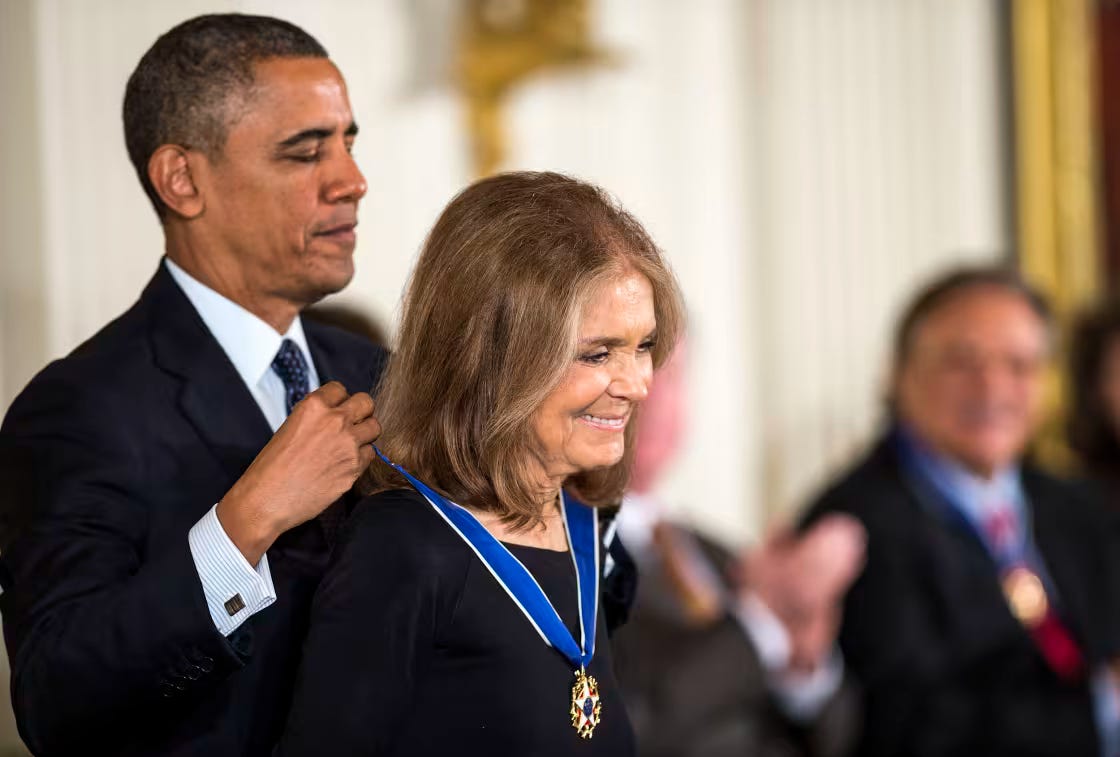
Her journalism also received significant recognition, and her life and activism were chronicled through books, documentaries, theater and television.
She authored numerous works, including Revolution from Within: A Book of Self-Esteem and her 2015 memoir, My Life on the Road.
Yet Steinem continued working long after she had become an historical figure herself.
Age did not remove her from the causes that had defined her.
She continued traveling, speaking and advocating into her later years.
That persistence may ultimately be as important to her legacy as her fame.
Gloria Steinem changed the question
Before women could demand different answers from society, someone had to challenge the questions women were being asked.
When will you marry?
Will you have children?
Can you balance a career and family?
Are women capable of leading?
Should women control their own reproductive decisions?
Why aren’t there more women in positions of power?
Steinem spent her life challenging the assumptions underneath those questions.
Her feminism was not built around the idea that every woman should live the same kind of life.
It was built around the belief that women should possess enough freedom, equality and power to decide for themselves.
That battle is far from finished.
Women continue to confront unequal pay, violence, political underrepresentation, discrimination and battles over reproductive rights in the United States and around the world.
But the landscape women inhabit today is profoundly different from the one Steinem entered as a young journalist in the 1950s and 1960s.
She helped make that difference possible.
She helped create organizations.
She helped create publications.
She helped create language for experiences millions of women knew intimately but had often been encouraged to endure privately.
Most importantly, she helped convince generations of women that inequality was not simply something they had to accept.
Gloria Steinem lived for 92 years.
For more than six decades of them, she pushed against the boundaries placed around women’s lives.
Her death marks the passing of one of feminism’s most recognizable pioneers.
But perhaps the greatest measure of her influence is that the questions she helped force into public life did not die with her.
They belong now to another generation.
And so does the responsibility to keep asking them.
She opened my eyes and changed the trajectory of my life as a young woman. I’m sorry she had to live to see what is happening now. Hopefully women globally will come together to turn the tide. I’ve always thought it possible. And likely the only option for a humane, respectful, and peaceful world.
But, oh, how I miss her astute observation on the state of women’s issues. We will remember you and your contributions.