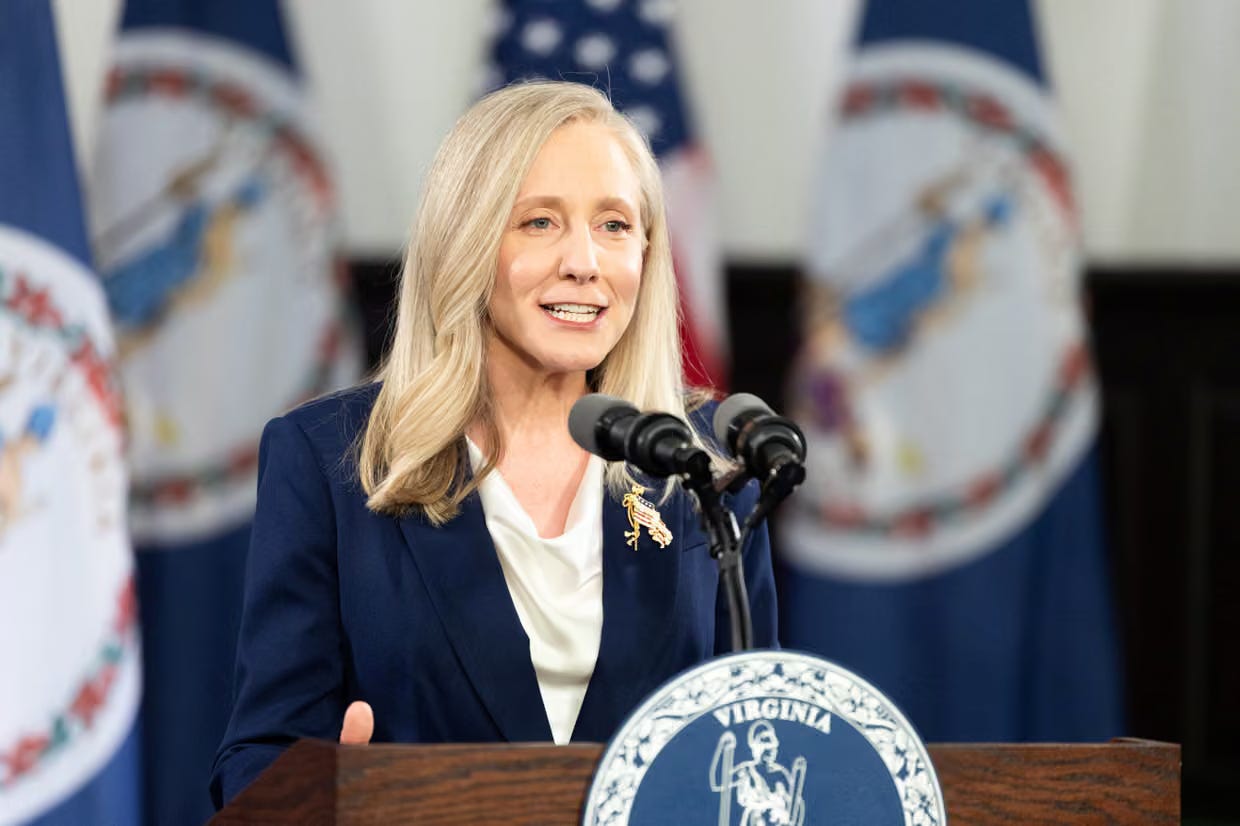
Governor Abigail Spanberger Signs Landmark Bill Pushing U.S. Toward Popular Vote Presidency.
Virginia joins a growing interstate effort that could ensure the White House goes to the candidate who wins the most votes nationwide.

In a move that could reshape the future of American elections, Abigail Spanberger has signed legislation bringing the United States one step closer to electing presidents by the national popular vote.
With the new law, Virginia officially joins the National Popular Vote Interstate Compact, aligning itself with 17 other states and the District of Columbia in a growing push to ensure that the candidate who wins the most votes nationwide becomes president.
The compact operates on a simple but transformative principle: participating states agree to award all of their Electoral College votes to the national popular vote winner, regardless of how their own state votes. However, the agreement will only take effect once enough states join to collectively control at least 270 of the 538 electoral votes—the number required to win the presidency. With Virginia’s addition, the total now stands at 222 electoral votes, bringing the effort significantly closer to that threshold.
So far, every state that has adopted the compact leans Democratic, including major players like California, New York, and Illinois. Still, momentum is building beyond traditionally blue states. Similar legislation has been introduced in key battleground states such as Arizona, Michigan, Pennsylvania, Wisconsin, Nevada, and New Hampshire—states that could ultimately determine whether the compact becomes reality.
The legal foundation of the agreement rests on two provisions of the U.S. Constitution. Article II grants state legislatures the authority to determine how presidential electors are chosen, giving states broad power over the process. Meanwhile, Article I permits states to enter into agreements with one another, though questions remain about whether congressional approval would be required. Legal experts anticipate that the compact would face intense scrutiny if it ever reaches full implementation.
Supporters argue the effort is long overdue. According to a 2024 survey by the Pew Research Center, 63% of Americans favor replacing the Electoral College with a national popular vote system, while just 35% oppose the change.
Advocates point to recent history as evidence of the system’s flaws. In both the 2000 and 2016 elections, George W. Bush and Donald Trump secured the presidency despite losing the popular vote. Critics argue that such outcomes undermine the principle of equal representation and distort the democratic process.
“This is about ensuring every vote carries the same weight, no matter where it’s cast,” said John Koza, who has long championed the initiative.
Advocacy groups echo that sentiment. Stand Up America, a leading supporter of the compact, says the current system overemphasizes a handful of battleground states while sidelining millions of voters elsewhere.
“The presidency should be decided by the will of the people as a whole—not by a narrow map of swing states,” said Christina Harvey. “This law brings us closer to a future where every American vote truly counts equally.”
While the compact has not yet reached the tipping point, Virginia’s decision marks a significant step forward in a decades-long effort to redefine how the nation chooses its leader—and raises the stakes in the ongoing debate over the future of American democracy.


So needed!!
