


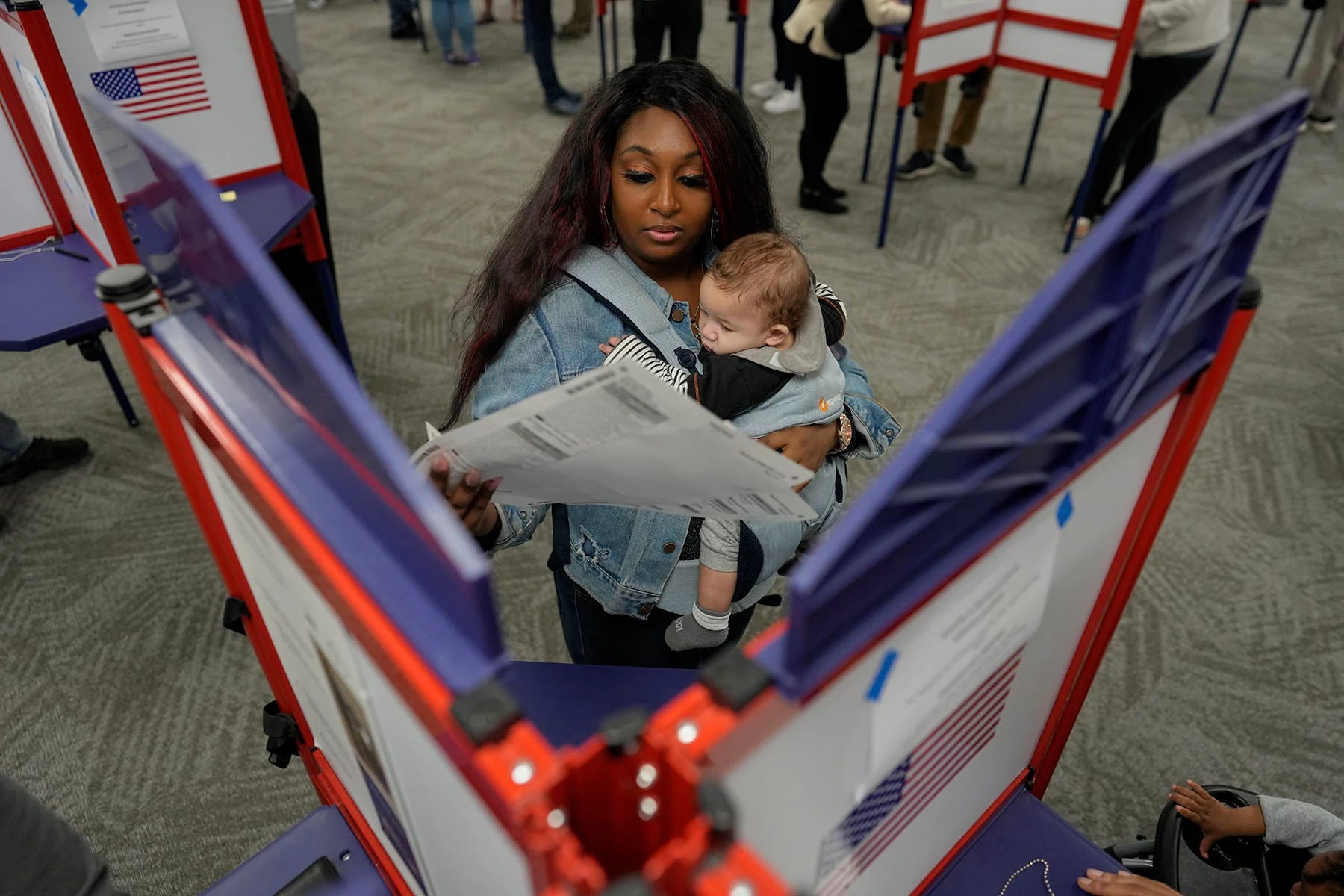
Election Day falls on November 3, but Americans have already been casting ballots in races across the country for several weeks.
Most states provide some form of early voting, whether in person or through mail-in ballots, allowing eligible voters to make their choices ahead of Election Day.
Here’s what voters should know about submitting their ballots and what happens once polling stations close.
What Should You Know Before Casting Your Ballot?
Voting procedures and deadlines vary from state to state, making it important to understand the requirements where you live.
Check your voter registration. Make sure you’re registered and that your current address is correct. Some states permit registration through Election Day, while others have already closed registration. Check your state’s deadlines if you’re uncertain.
Voting by mail? Confirm whether the deadline to request a mail-in ballot has passed.
Returning your ballot? If you haven’t mailed your completed ballot, review the available return options in your state.
Voting in person? Verify your polling location, as it may have changed since the previous election.
Identification requirements. Find out whether your state requires identification at the polls.
Prepare for possible delays. High voter turnout could mean waiting in line for several hours.
Most states maintain official election websites, frequently managed by the secretary of state’s office, where voters can find detailed information about voting procedures and eligibility.
How Can You Confirm Your Vote Was Counted?
Voters who cast their ballots early can track their ballot status in most states.
Some states also alert voters when their ballots contain errors, providing an opportunity to correct the problem through a process commonly called ballot “curing.”
What Rights Do Voters Have on Election Day?
Voting rights organizations encourage eligible Americans to understand their legal protections before heading to the polls.
Stay in line if polls close. If you are already waiting when the polls officially close, you still have the right to vote.
Request another ballot if necessary. Voters who make mistakes while completing their ballots can request a replacement.
Ask for a paper ballot. If voting equipment malfunctions, voters can request a paper ballot.
Consider a provisional ballot. Certain circumstances, including registration issues, may require voters to cast provisional ballots.
Anyone experiencing voting difficulties or seeking assistance can contact Election Protection, a national nonpartisan organization, at the 1-866-OUR-VOTE (1-866-687-8683) hotline.
How Are Election Ballots Counted?
Counting every ballot can take time, particularly in states with different processing requirements.
Some states prohibit election officials from beginning ballot processing until Election Day, while others allow processing as soon as ballots arrive. However, election results cannot be released before polling locations close.
Closely contested races may require additional counting before a winner can be determined. This can include provisional ballots submitted by voters who encounter registration problems, potentially extending the process.
Deadlines for mail-in ballots also differ. Some states require ballots to arrive by Election Day, while others accept ballots received afterward, provided they were postmarked by Election Day.
Because election laws and procedures vary across the country, results may become available at different times on election night or in the days that follow. These differences alone do not indicate election fraud or voter suppression.
How Is an Election Winner Determined?
The United States does not have a single nationwide organization responsible for collecting and announcing election results.
Instead, news organizations gather vote-counting data and use it to project election winners. Journalists and election analysts examine incoming results alongside historical voting patterns to determine when a candidate has secured enough support to win.
These projections can sometimes be made before every ballot has been received or counted.
At The Women Post relies on Decision Desk HQ to project election outcomes. According to Decision Desk, its projections consider several factors, including outstanding votes, the locations reporting results, and whether those ballots were cast early, by mail, or on Election Day.
Major television networks also maintain their own election projection teams, while many news organizations depend on the Associated Press and its established race-calling procedures.
However, a media projection does not officially finalize an election.
Even after a winner has been projected, election officials continue counting outstanding ballots, a process that may last several days or weeks. The results are subsequently certified by the appropriate election authorities, often at the local or county level.