
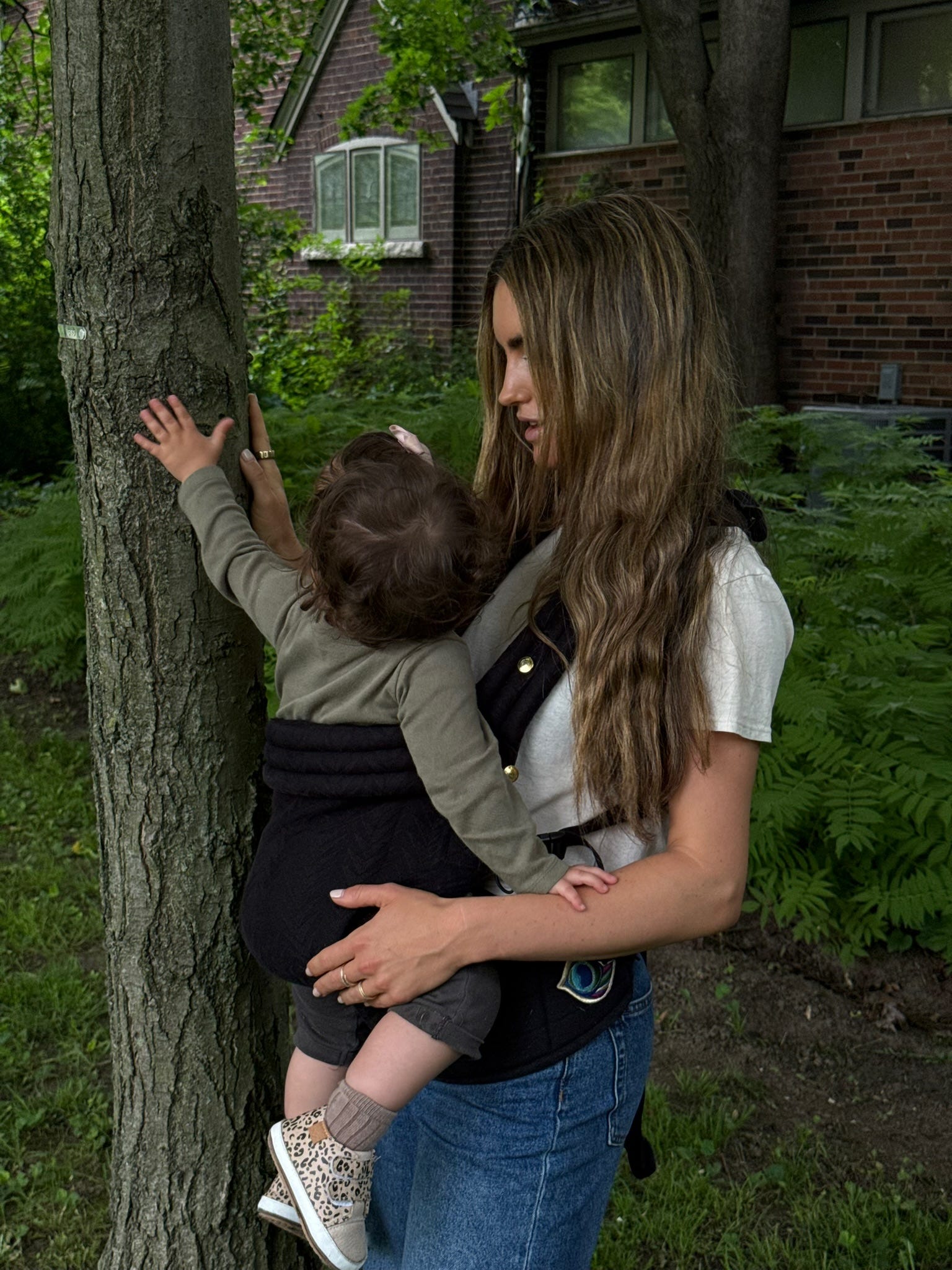
I Thought I Was Prepared For Postpartum. I Wasn’t. This Is How I’m Preparing For My Second.
Even with all the research, resources, and routines, nothing fully prepared me for the emotional reality of motherhood and postpartum — and this time, I’m approaching recovery differently.
I’ve spent nearly a decade formulating supplements, reading clinical research, and building a brand around the idea that what you put in your body matters. I’m the founder of Beekeeper’s Naturals. My job is quite literally to know what to take and when to take it. I have a long list of doctors, researchers, and functional medicine practitioners I can call on a Tuesday afternoon. I am lucky enough to have the resources to be more prepared than most for a major health event like pregnancy. When I was pregnant with my first, I prepared a lot. And I’m convinced it helped. From pre-conception through her birth, things went fairly smoothly.
Then postpartum hit me like a truck. I was so lucky to have a relatively smooth pregnancy and a beautiful birth. My immediate postpartum recovery, on paper, was textbook. But the weeks and months that followed dismantled me in ways I didn’t see coming, and no supplement protocol, diet, or exercise routine could make it okay.
There were the physical symptoms. I was wearing diapers for a month because I was bleeding heavier than any period I’d ever had.
Breastfeeding, which I thought would come naturally, was painful and all-consuming. For someone who is used to running around, the idea of being glued to the couch for a regimented feeding schedule was an adjustment. In the night, I’d wake up every two hours to feed. Soon, every two hours began to feel like every twenty minutes. I developed pelvic organ prolapse, which my OB told me over half of women get.
For months, I was terrified I’d never exercise or have comfortable sex again.
But the physical stuff, as hard as it was, I could have managed. I had the tools–the pelvic floor therapist, the diet, the supplement protocols–all of which, if you’re curious about, I break down in detail here. More what wrecked me was the psychological experience.
I started having dreams about tsunamis–these vivid, repeated nightmares where I watched my family get swept away, and I couldn’t do anything. I became so germophobic that it was consuming my day. I kept having these intrusive flashes of everything that could go wrong with my daughter, visceral images that would randomly pop up uninvited. Part of my brain recognized them as irrational. But I’d never experienced anything like them before, and I lean on intuition, so I couldn’t tell if my brain was warning me or breaking. I went down a rabbit hole I couldn’t pull myself out of.
It took a while to recognize this as postpartum anxiety.
One of my closest friends (we’ll call her Jen), who delivered two weeks after me, had been really vocal about her own postpartum depression, and watching her name it and get help was what finally permitted me to do the same. I spoke to my OB, got referred to a psychiatrist who specializes in postpartum, and was put on Zoloft. I’m someone who avoids pharmaceuticals whenever I can. I run a company built on natural health products, and now I needed a pharmaceutical drug to function. That felt like a specific kind of failure. But to all the women who pride themselves on always taking the natural solution, I’d say: don’t be an absolutist. Natural solutions and traditional medicine can do a lot, but sometimes Western medicine really does have the best solution for what you’re struggling with.
The Zoloft helped a lot. My hormones stabilizing over time also helped. But what really changed things was community. Besides my friend Jen, I found other moms who were honest about how hard it was.
No Reddit group, or curated Instagram feed (or Substack article for that matter!) can replace this kind of community, and I encourage every expectant mother to find theirs before they give birth. Sharing my experience with other recent mothers saved me more than any protocol I’d put together.
Now I’m pregnant again. This time with a boy. I just started my second trimester, and I carry more knowledge into this pregnancy than I did three years ago.
I know I want my thyroid checked early and often, because mine went sideways postpartum and directly affected my milk supply before anyone caught it.
I know I’ll explore hormone replacement therapy this time around, because the research on using low-dose estradiol patches and progesterone to support postpartum mood is finally catching up to what makes obvious biological sense.
Your estrogen goes from the highest levels your body has ever seen to postmenopausal range practically overnight, and experts are only now studying whether gently replacing some of it might help women feel like themselves again.
I know I want to build community from day one, not discover it at month three of postpartum out of desperation.
I know I need to have a more honest conversation with my team at work about what round two might look like, instead of projecting confidence I don’t actually have.
I’ll do the pelvic PT again. I’ll eat the nourishing, warming meals my mom made me in those early weeks. I’ll take the supplements, the fish oil, and the extra calcium I wish I’d added the first time. I’ll be more intentional about self-care in a way I completely dismissed before, because I thought rest was something you earned after you’d handled everything else.
I have more answers now. But the most important thing I’ve learned is that those answers might not be enough.
Postpartum is a major health event, and major health events don’t care how prepared you think you are. Having a boy is different. Your second is different. Every pregnancy, they say, is different. My body is about to run a completely different hormonal program than it did with my daughter, and no amount of founder-brain planning can control that. The first time around, I treated my recovery like a problem to solve. That framing made everything harder because it meant that when things didn’t improve on my timeline, I internalized it as something I was doing wrong. I wasn’t doing anything wrong. I was going through something enormous that didn’t care about my preparation.
“This time, I think what I need most is the willingness to stop researching and ask for help. To let someone bring me soup without feeling like I should be the one making it, to tell my husband it hurts instead of pushing through, to say I’m not okay without immediately presenting a plan for how I’m going to fix it.”
If you’ve ever believed that doing enough, knowing enough, preparing enough could let you manage your way through something unmanageable, I understand that instinct. It’s seductive, especially for women who are used to being the capable one in the room. But some experiences aren’t asking to be managed. They’re asking you to surrender a little. I’m still learning how to do that. But I’m going into the next round a little wiser.
About Carly
Carly Kremer is a mother, beekeeper, health advocate, and the founder of Beekeeper’s Naturals. Carly launched Beekeeper’s in 2016 with the mission to reinvent the medicine cabinet with clean, science-backed remedies from the hive and beyond. After struggling for years with an autoimmune condition, Carly discovered the power of clinically backed ingredients from the hive to support her health. Carly began working with doctors, scientists, and beekeepers to perfect formulas and clean sourcing practices that would adapt these ancient remedies for our modern lives. Today, one bottle of Beekeeper’s Immune Support Spray is sold every 15 seconds. In addition to her continued work with Beekeeper’s Naturals, Carly has become a passionate advocate for regulations to protect consumers and the environment from harmful chemicals.


Thank you for this article! It is amazing how difficult post partum can be. I suffered after both of my pregnancies, but still felt guilty for feeling so dark about motherhood. The good news is, my son is a doctor, my daughter is a veterinarian, and things do get easier! I’ll look forward to your article on peri- and-menopause when you get there…
Buckle up!