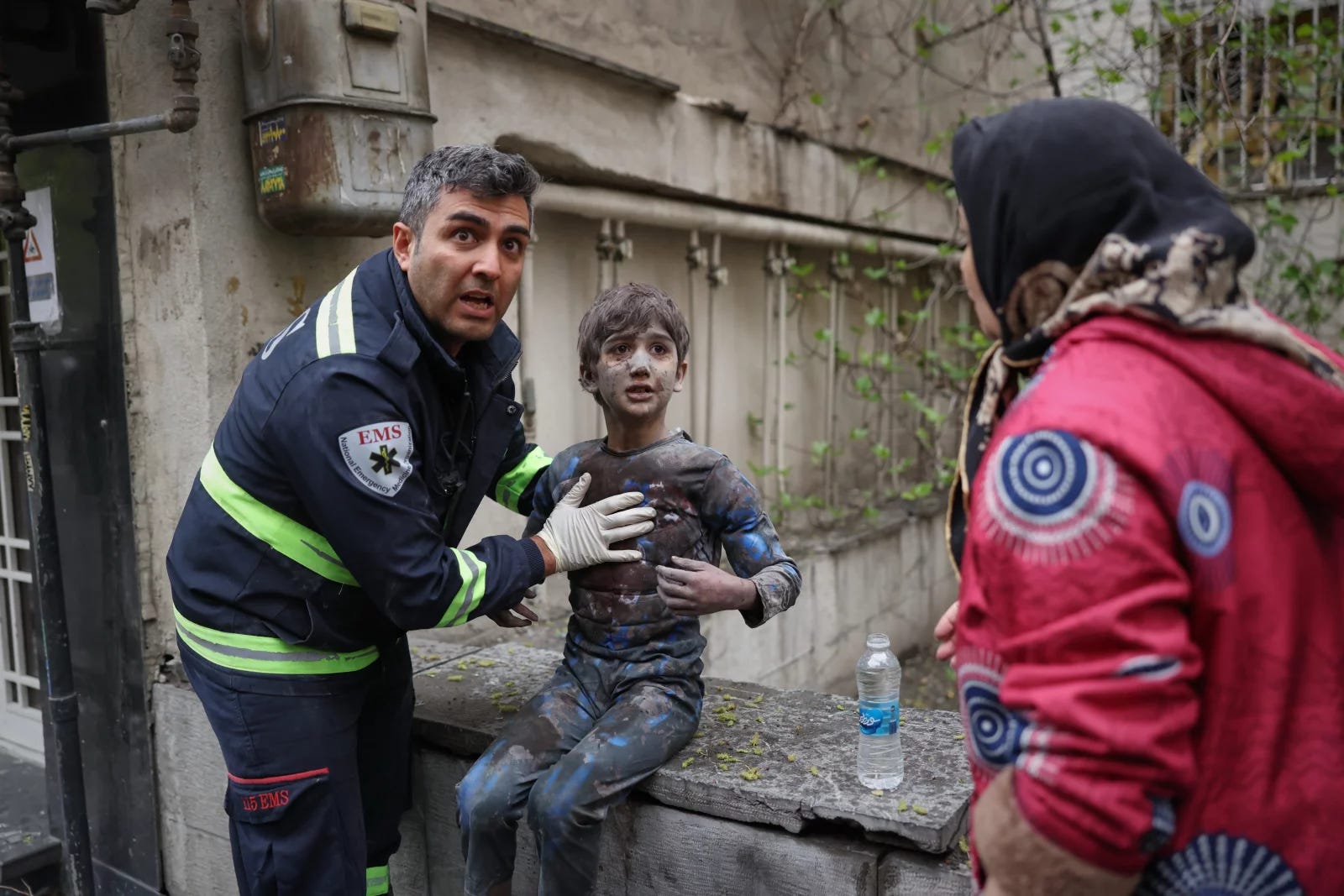
If Kamala Harris Were President: We Would Not Be at War with Iran.
A case for diplomacy over destruction—and how different leadership could have saved lives

The United States did not stumble into war with Iran. It chose it.
That distinction matters—because if war is a choice, then it can also be rejected. It can be delayed, de-escalated, or entirely avoided through leadership willing to pursue a different path.
And if Kamala Harris were president today, the United States would not be at war with Iran.
This is not speculation. It is a conclusion grounded in her record, her doctrine, and her consistent insistence that diplomacy must always come before destruction.
At a moment when missiles are flying, economies are rattling, and families are grieving, the contrast could not be more stark.
The War That Did Not Have to Happen
The current conflict began not with inevitability, but with authorization.

The decision to launch strikes against Iran was framed as a strategic necessity. But beneath that framing lies a simpler truth: the United States had options—and chose the most dangerous one.
There was no ticking clock forcing immediate action.
No unified international mandate demanding escalation.
No collapse so total in diplomacy that war became the only remaining tool.
Instead, there was a narrowing of imagination—a failure of restraint.
And that failure is now costing innocent lives.
Thousands have already been killed or displaced. Entire regions are on edge. The global economy is absorbing shockwaves from disrupted oil flows and rising inflation.
This is what happens when force replaces foresight.
Kamala Harris: A Different Doctrine
Kamala Harris has never been ambiguous about her approach to conflict.
She believes in American strength—but not in reckless displays of it. She has repeatedly argued that military power should be used sparingly, strategically, and only after every diplomatic avenue has been exhausted.
That is not a weakness. It is discipline.
Her worldview is rooted in a simple but powerful principle: “the true measure of leadership is not how quickly you can go to war, but how effectively you can prevent one.”
As vice president, Harris consistently supported multilateral engagement, coalition-building, and diplomatic pressure over unilateral escalation. She has warned against impulsive military decisions that risk spiraling into prolonged conflicts.
In the case of Iran, that philosophy would have defined the response from the very beginning.
Diplomacy Was Not Dead

At the time tensions escalated, diplomacy was not only possible—it was active.
Backchannel communications were ongoing. Regional actors were engaged in mediation. Signals from Iran indicated openness to negotiation, even amid rising tensions.
These were not empty gestures. They were opportunities.
Opportunities to pause.
To recalibrate.
To reduce risk.
But those opportunities required patience. They required leadership willing to withstand political pressure and resist the urge for immediate, dramatic action.
Kamala Harris has shown that patience.
She understands that diplomacy is not about quick wins—it is about long-term stability.
Under her leadership, those diplomatic channels would not have been sidelined. They would have been strengthened.
The Power of Restraint
Restraint is often misunderstood in American politics.
It is portrayed as hesitation. As a weakness. As a lack of resolve.
But in reality, restraint is one of the most difficult—and most important—forms of strength.
It requires the ability to absorb criticism, to delay gratification, and to prioritize outcomes over optics.
Launching strikes is easy.
Avoiding war is hard.
Kamala Harris has built her leadership identity around doing the harder thing.
In the face of rising tensions with Iran, she would not have rushed to authorize military action. She would have demanded clarity. Sought consensus. Extended timelines.
Not because she is unwilling to act—but because she understands the cost of acting too soon.
Lives That Could Have Been Saved
Every war is measured in human terms.

Behind every headline are people—soldiers, civilians, families—whose lives are forever changed or ended by decisions made far from the battlefield.
The current conflict is no different.
The lives of those 168 school girls and 17 of their teachers have been lost that did not need to be lost.
This is the clearest argument for why leadership matters.
If Kamala Harris were president, those lives would not be casualties of an avoidable war. They would still be intact—protected by a strategy that values prevention over reaction.
Diplomacy does not guarantee peace. But it dramatically reduces the likelihood of immediate violence.
And in that reduction lies the preservation of life.
Rebuilding Global Trust
Another cost of the war has been the erosion of international trust.
Allies have been forced to respond to a conflict they did not initiate. Some have expressed quiet frustration. Others have struggled to balance support with skepticism.
War isolates.
Diplomacy connects.
Kamala Harris understands that America’s strength is amplified through its alliances. She has consistently emphasized the importance of working with international partners—not bypassing them.
Under her leadership, the response to Iran would not have been unilateral escalation. It would have been coordinated pressure—economic, diplomatic, and strategic.
That approach does not just prevent war. It builds legitimacy.
And legitimacy is a powerful deterrent.
The Economic Fallout That Could Have Been Avoided
War does not stay contained on the battlefield. It spreads—into markets, into households, into everyday life.

The current conflict has already driven oil prices upward, contributing to inflation and economic instability. American families are feeling the impact through higher costs of living. Businesses are adjusting to uncertainty.
These are the hidden casualties of war.
They are not inevitable.
They are the result of decisions.
A diplomatic approach under Kamala Harris presidency would have mitigated these risks. By avoiding immediate military escalation, the United States could have stabilized markets, reassured allies, and maintained economic balance.
Instead, the world is now reacting to a crisis that did not need to exist.
Strength Without War
One of the most persistent myths in American politics is that strength is synonymous with military action.
It is not.


True strength lies in control. In precision. In the ability to achieve objectives without unnecessary destruction.
Kamala Harris represents that kind of strength.
She does not reject the use of force. But she refuses to treat it as the default solution.
In the case of Iran, that distinction is everything.
Because once force is used, it cannot be undone. Escalation becomes the new baseline. Options narrow. Consequences multiply.
By choosing diplomacy first, Harris would have preserved flexibility—and prevented the chain reaction that has now led to war.
A Clear Contrast in Leadership
The difference between war and peace often comes down to a single decision.
In this case, it was the decision to strike.
That decision was not inevitable. It was not forced. It was made.
And a different leader would have made a different choice.
Kamala Harris would have chosen diplomacy.
She would have extended negotiations, empowered mediators, and leveraged alliances to de-escalate tensions.
She would have prioritized lives over optics. Stability over spectacle.
And in doing so, she would have kept the United States out of war.
The Leadership We Needed
The war with Iran is not just a geopolitical event. It is a reflection of leadership.
It reveals what happens when restraint is abandoned, when diplomacy is sidelined, and when force is treated as the first option instead of the last.
But it also clarifies something else:
This outcome was not inevitable.
If Kamala Harris were president, the United States would not be at war with Iran. Not because the challenges would be any less complex—but because the response would be fundamentally different.
More measured.
More strategic.
More human.
In a world where every decision carries global consequences, that difference is everything.


Awomen🙏
Nice inflammatory headline.
The idea that the American money machine, with all of its greed, war incentives, oil interests, tech lust, and wicked appetite to rule the world, would just change… and based on what? Because the person in office would have a vagina and not a penis?
Because it’s not world-class idiot kamikaze motor-mouth Donald Trump? I can’t find the thread in your piece.
“More measured.” What is being measured?
“More human.” God, this is embarrassingly naive.
I’m glad you posted this. It sounds like it was written by a 14-year-old leaning heavy on ChatGPT and searching for attention.
If you argue that power suddenly becomes humane when it’s a woman, you are not saying anything serious. You are just confusing more people and not helping anyone.
Your page is cool. You seem like you could actually say something if you tried. You are probably a decent worker. But Jesus God, have we not learned that all of the politicians are crooked? How much longer do we have to endure this kind of blind ignorance?
What in the goddamn left-handed fuck do you think you are going to accomplish with an attention piece like this about a reptilian, power-sucking freak like Kamala Harris?
Stop being a coward and stand up like a person with an actual spine.
