Inflation Hits 4.2% as Trump Says ‘I Love the Inflation’ While Americans Struggle With Rising Costs.
Trump dismissed concerns over rising prices as inflation reached a three-year high, while higher energy costs linked to the Iran conflict continue to squeeze American households.

As millions of Americans grapple with rising grocery bills, expensive gas, and growing financial anxiety, Donald Trump offered a surprising response to the latest inflation figures: “I love the inflation.”
The remark came after new government data showed inflation jumped to an annual rate of 4.2% in May — the highest level in three years and the third consecutive monthly increase since the outbreak of the Iran conflict.
The comments are likely to raise fresh questions about whether Trump fully appreciates the economic strain facing ordinary Americans. While the White House insists the administration’s broader agenda remains on track, consumers are increasingly feeling the squeeze as prices climb and confidence deteriorates.
Before the conflict with Iran escalated, inflation stood at just 2.4% in February. Since then, energy markets have been rattled by the closure of the Strait of Hormuz, one of the world’s most important oil shipping routes, helping push inflation steadily higher.
Speaking from the White House on Wednesday, Trump dismissed concerns about rising prices.
“No, I love it. The numbers were great,” the president said.
He then pointed to US military actions in the region, claiming the administration had removed millions of barrels of oil from the market without Iran’s knowledge. Trump also made unverified claims about operations involving dozens of ships, arguing that his actions were helping manage global energy markets.
But for many Americans, the reality is harder to ignore.
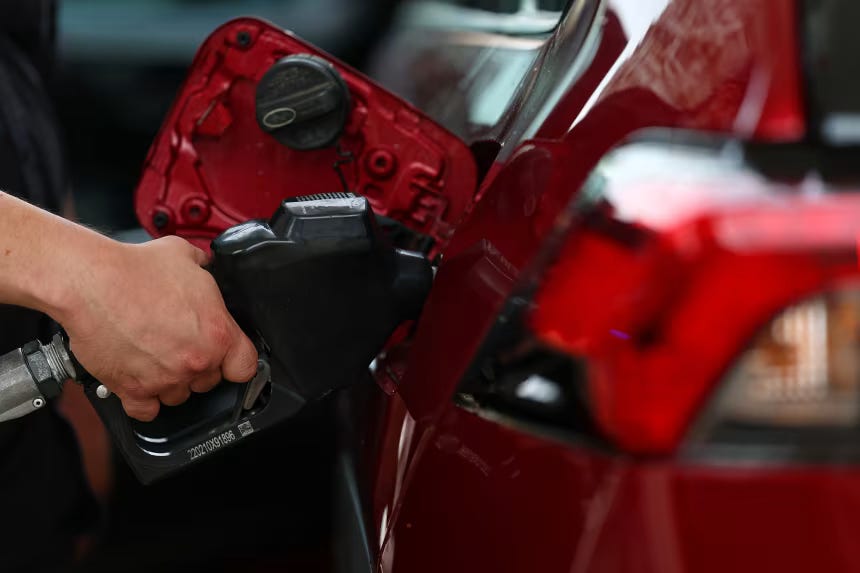
The latest inflation report showed that energy prices were responsible for roughly 60% of the monthly increase in consumer prices. Gasoline remains elevated at an average of $4.15 per gallon nationwide, while airline fares have jumped nearly 27% compared with a year ago. Food, clothing and household expenses have also continued to rise.
Even after excluding volatile food and energy prices, so-called core inflation rose 2.9%, suggesting broader price pressures remain embedded throughout the economy.
The White House sought to reassure consumers, describing the inflation report as “at-expectation” and arguing that temporary disruptions caused by Iran should not overshadow the administration’s broader economic achievements.
Officials highlighted falling prices for prescription drugs, cars and some insurance categories as evidence that Trump’s policies are benefiting consumers.
Yet the broader economic mood appears to be darkening.
Recent surveys from the Federal Reserve Bank of New York show households growing increasingly pessimistic about inflation, job prospects and their overall financial outlook. Consumer sentiment has also fallen to historic lows after months of deterioration.
The contrast is becoming harder to ignore: while the administration points to selective improvements, many Americans continue to report feeling worse off financially than they did just months ago.

The inflation surge now places additional pressure on the Federal Reserve as policymakers prepare for their next meeting. The central bank has spent years attempting to bring inflation back to its 2% target and has so far resisted calls to aggressively lower interest rates.
Trump, however, has repeatedly pushed for rate cuts and is expected to continue doing so despite rising inflation.
That stance raises another critical question: if inflation is accelerating and consumer confidence is falling, is now really the time to make borrowing cheaper?
Federal Reserve Chair Kevin Warsh has aligned himself with Trump’s view that rates should eventually move lower. But some economists warn that cutting rates too soon could risk fueling another wave of inflation just as households are already struggling with higher living costs.
Major financial institutions are becoming increasingly cautious. Goldman Sachs no longer expects the Fed to cut rates this year, while JPMorgan analysts have warned that energy shocks linked to the Middle East conflict could further erode household purchasing power if disruptions continue.
“The energy price spike is now raising inflation and generating a sharp squeeze on household purchasing power,” JPMorgan chief economist Bruce Kasman warned.
For Trump, who returned to office promising economic strength and lower costs, the latest inflation figures present a growing political challenge.
The president argues that his policies are working and that the current pressures are largely the result of geopolitical turmoil. Critics counter that Americans care less about explanations than outcomes — and outcomes are becoming increasingly difficult to defend as prices rise month after month.
With inflation climbing, consumer confidence weakening and interest-rate debates intensifying, many voters may soon be judging the administration on a simple measure: whether their paychecks are keeping up with the rising cost of living.


