
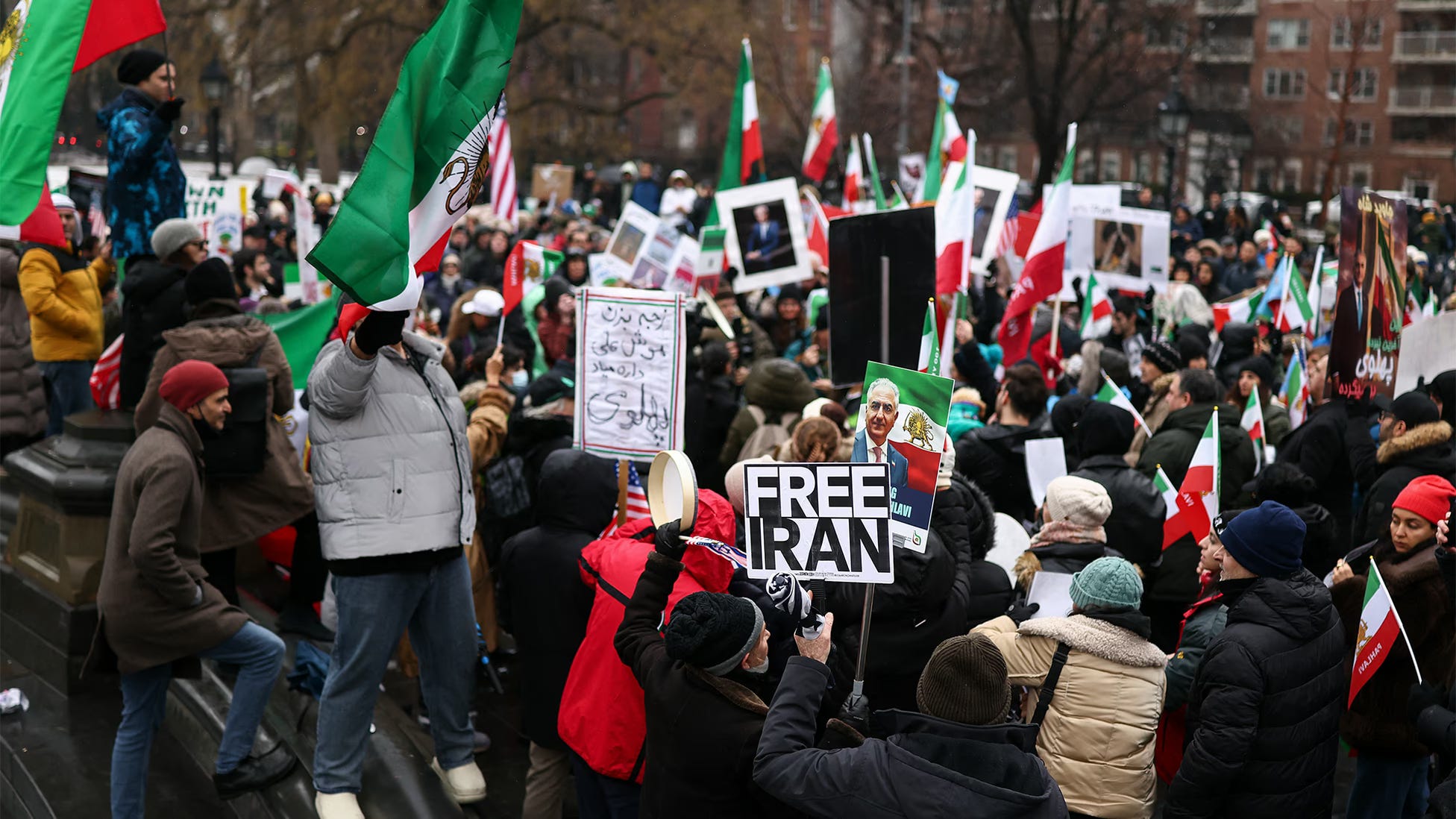
Iranians Plead for Trump’s Intervention: ‘This War Is for Our Freedom’ Despite Ayatollah’s Death.
Iranians appeal for liberation, but history shows foreign intervention often brings devastation, not freedom. The promise of rescue masks the pursuit of profit — and the human cost will be steep.
As bombs continue to fall across Iran and the region, a small but vocal segment of Iranians — both inside the country and among diaspora communities — have called on Donald Trump for intervention, arguing that only an American-led effort can secure their freedom. But this call, rooted in a profound sense of frustration with repression at home, ignores the bitter lessons of Iraq, Afghanistan, Libya, and other theaters of U.S. military involvement where promises of liberation devolved into long, costly conflicts.
The context for these calls is stark. On February 28, a joint military operation by the United States and Israel struck deep into Iran, killing Ayatollah Ali Khamenei, Iran’s Supreme Leader, in a dramatic escalation of tensions that have now erupted into open war. Trump’s administration hailed the strike as a milestone, urging Iranians to seize the moment and rise up against their government.
Yet even with Khamenei’s death, fighting continues, with Iranian forces retaliating and scores of civilians killed daily. Official tallies from aid groups and reporting organizations suggest that at least hundreds of civilians have died in the first days of the conflict.
In that violence, the very Iranians who hoped U.S. intervention would free them from repression are now confronted with a grim reality: foreign military force rarely delivers freedom — especially when it comes with missiles, explosions, and open warfare.
Echoes of Past Interventions
For decades, U.S. military engagement in the Middle East has followed a familiar pattern: justified publicly as a fight for freedom or security, but yielding long-term instability and immense suffering. From Iraq in 2003 to Libya in 2011, Western interventions have routinely displaced millions, empowered extremist actors, and left fragile societies in chaos.
In Iraq, the U.S. invasion toppled Saddam Hussein but unleashed sectarian violence and empowered militia groups that now perpetuate instability. In Libya, the overthrow of Muammar Gaddafi dismantled central authority, creating a vacuum filled by competing factions and fueling a migrant crisis. In Afghanistan, decades of U.S. military presence ended not with a stable democracy, but with the return of the Taliban. Iran’s current conflict threatens to replicate these patterns — except now on an even larger scale. And yet, some Iranians believe that a similar American force could yield a better outcome for them.


This desire for external rescue is understandable in the face of domestic repression and decades of authoritarian rule. Many who oppose Iran’s theocratic regime see foreign intervention as the only path to justice. But history shows that such interventions rarely serve the popular will. Instead, they answer the strategic and economic interests of foreign powers.
Trump’s Agenda: Power and Profit, Not Iranian Freedom
Donald Trump’s approach to the conflict has been consistent with his broader foreign policy: leverage military power to extract geopolitical advantage while framing action in moral terms. During the announcement of the strikes, Trump described Khamenei as “one of the most evil people in history” and urged Iranians to “take back your country” in the wake of the attack.
Yet beneath this rhetoric lies a clear strategic motive. The United States and its allies have long viewed Iran as a rival in the Middle East, and Trump’s fiercest supporters have encouraged escalation rather than negotiation. The strikes against Iran’s leadership and military infrastructure were justified as preventing nuclear development and reducing threats to U.S. forces and allies. Yet, critics argue that the real aim is far broader: to reshape the regional balance of power in favor of Washington and its partners in Tel Aviv and the Gulf states.
Even Trump’s own framing reinforces this. At press events, he has suggested that eliminating Iran’s leadership — not achieving peace — is central to his strategy. In one press briefing, Trump’s allies emphasized destroying ballistic missile capabilities and preventing future threats rather than addressing underlying grievances in Iranian society.
The financial stakes are also immense. Control over Middle Eastern oil and gas exports, influence within global markets, and leverage over international trade routes such as the Strait of Hormuz are all part of the broader geopolitical calculus. When Iranian missiles struck Gulf states and disrupted shipping lanes, global energy markets trembled, demonstrating how deeply the conflict now affects the international economy — and why major powers are so invested.
The Price Iranians May Pay

For ordinary Iranians, the unfolding war carries a heavy toll. Civilian casualties mount daily, with residential areas, schools, and hospitals struck amidst operations targeting military and governmental infrastructure.
The conflict has begun to widen, drawing in regional actors and threatening broader involvement from neighbors and militia networks.
As the violence expands, so does the risk that any hope for liberation will be overshadowed by widespread devastation. War’s brutality does not discriminate between autocracies and their citizens; civilians suffer regardless of ideology or intent when bombs rain down.
Even after Khamenei’s death, the fight persists, indicating that removing a figurehead does not necessarily end the war. Tehran’s interim governing body and security apparatus have vowed retaliation, launching missiles and drone strikes against U.S. and Israeli positions.
These reprisals feed a cycle of violence that threatens to engulf entire cities and draw in more nations.
A Misplaced Hope for Foreign Liberation
The notion that U.S. intervention might deliver freedom to Iranians ignores a crucial reality:
Foreign powers act according to their own interests, not the aspirations of oppressed populations.
In Iraq, calls for liberation in 2003 were soon drowned out by occupation, insurgency, and sectarian violence.
In Afghanistan, decades of foreign military engagement left millions of civilians displaced and contributed to political chaos.
Iran’s situation is no different. Even if some citizens celebrated the death of Khamenei — as has been reported among diaspora communities — that sentiment does not translate into a stable post-war future. Removing a ruler has never guaranteed freedom, especially when the social fabric is torn and external military forces control the narrative and the battlefield.
Moreover, external intervention may deepen domestic rifts, exacerbate economic hardship, and empower hardline factions with even more reason to resist foreign influence. History teaches that foreign military presence often inflames nationalist sentiment, making peace harder to achieve once the guns fall silent.
What Iranians and the World Must Learn


The most pressing lesson from Iraq, Libya, and Afghanistan is clear: military intervention is not a shortcut to freedom. Liberation through force is often liberation in name only, replaced by occupation, instability, and suffering. The hope that a foreign power will rescue a nation from autocracy must be weighed against the bloodshed and human cost that invariably follow.
For Iranians calling on Trump, this is a painful but necessary truth. Liberation, if it is to be genuine, must come from within — from internal struggles and reforms that embrace the voices of everyday citizens rather than from the bomb bays of foreign warplanes.
And for the international community, the focus should be on supporting diplomacy, humanitarian aid, and peaceful negotiations rather than military escalation. True freedom and sovereignty are not bestowed from abroad — they are built by the people themselves, often through great struggle but with far less destruction than war brings.
A Conflict Without Easy Answers
The war in Iran — now entering its first full week after joint U.S.-Israeli strikes — stands as a reminder of how quickly geopolitical ambitions can overshadow human lives. Iranians who once hoped for external intervention in the name of freedom now watch the devastation of their cities and families. The calls for Trump’s help, though born of despair and longing for change, overlook the bitter histories of past American interventions where the promise of freedom came with a devastating price tag.
As bombs continue to fall and casualties rise, the world must reckon with the reality that foreign intervention is not a panacea — it is a gamble with human lives. For Iranians and others looking to the West for salvation, the cost of that gamble may prove far steeper than they ever imagined.


I call bullshit !
This war is another illegal atrocity. He spends our money as if it is his and without regard to the cost for the American people. Trump has launched an America last regime and I’m sick to death of it. I want this bastard to be sued for every last cent he has stolen from us.