

Kamala Harris has launched one of her strongest attacks yet on Donald Trump, accusing him of making “empty promises”
She is accusing Trump of making “empty promises” and failing to deliver for Americans. Harris sharply criticised Trump’s record, policies and political agenda,


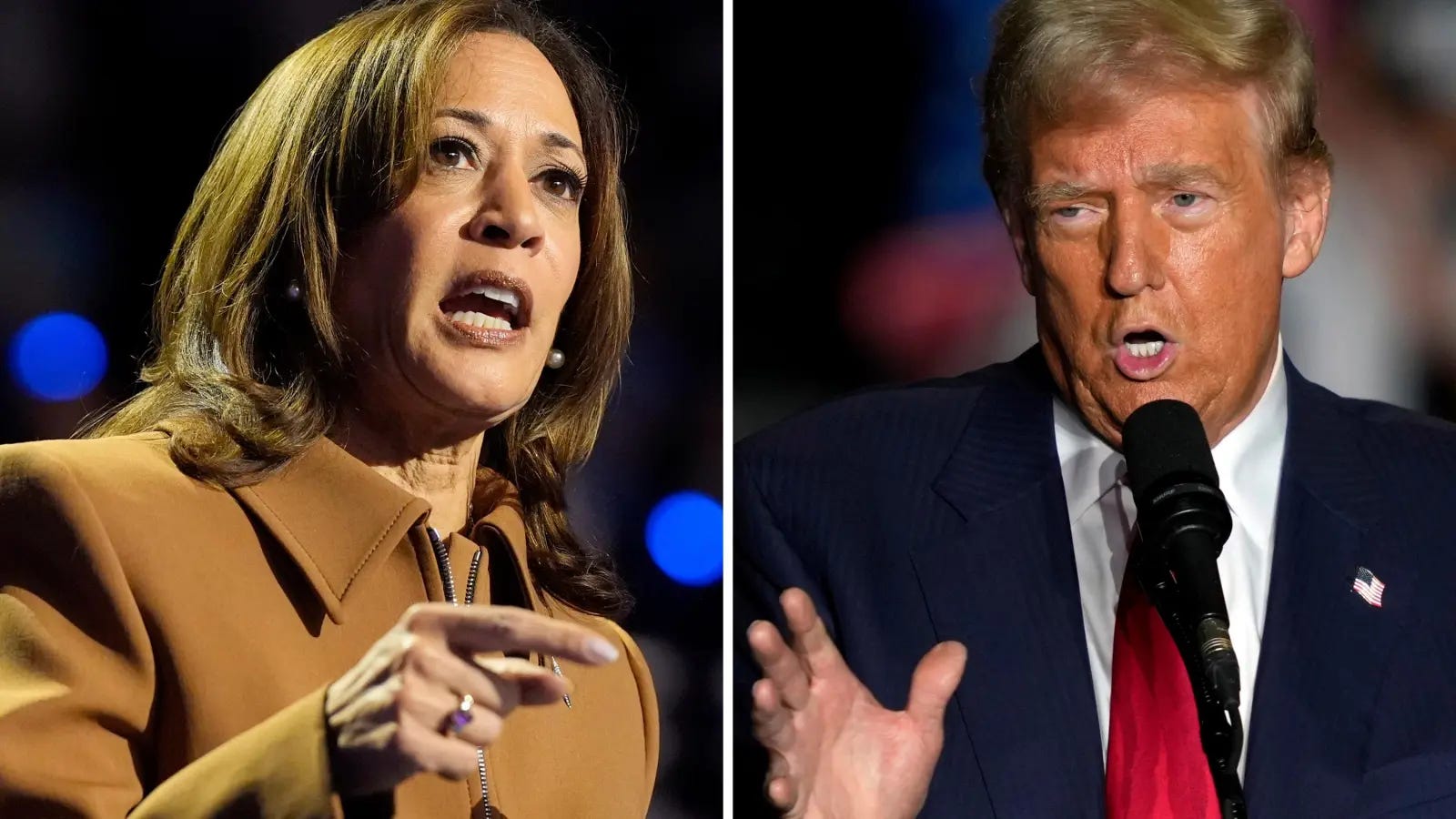
The former vice president is sharpening her attack on Donald Trump, arguing that his second presidency has failed to deliver the economic transformation he promised. But Harris is making a larger argument too: defeating Trump, she says, will require Democrats to confront the failures that made his political rise possible in the first place.
Kamala Harris is back on the attack.
More than a year and a half after Donald Trump defeated her and returned to the White House, the former vice president is increasingly stepping back into the national political conversation with a message that sounds less like a replay of the 2024 campaign and more like an argument about what America has experienced since.
Her target is Trump.
But her subject is something bigger: the promise of change.
Harris’s emerging argument is that Trump persuaded millions of Americans to see him as the man willing to break a political and economic system that had stopped working for them — only to return to power and fail to deliver the transformation he promised.
She has reduced that accusation to two words:
Empty promises.
“People are done with the status quo,” Harris has argued while discussing Trump’s political appeal. Trump, she said, returned by presenting himself as an agent of change but offered “empty promises to the American people.”
Now, as the country moves deeper into Trump’s second presidency and toward the 2026 midterm elections, Harris is attempting to turn those words into a broader indictment of the administration.
Her message is no longer simply: Trump is dangerous.
It is increasingly:
Trump said he would make your life better. Look at your life now.
That distinction could matter enormously.
Because for Democrats trying to regain political ground after their 2024 defeat, attacking Trump’s personality may no longer be enough.
Harris appears to understand that.
And this time, she is aiming directly at the promise that helped return him to power.
Trump as the ‘Change Agent’
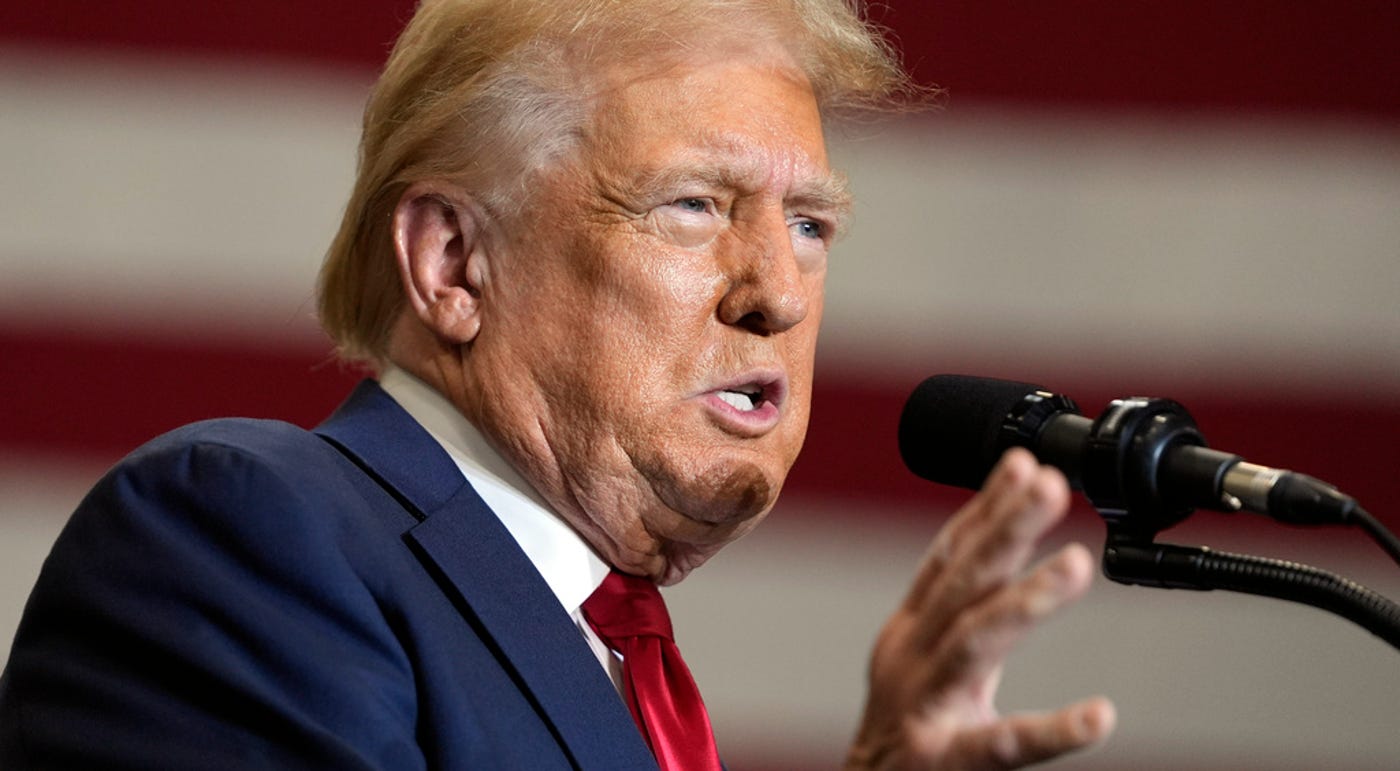
To understand Harris’s attack, it is necessary to understand something Democrats struggled with during the 2024 election.
Trump was not running merely as a Republican.
He was running against the system.
That was remarkable for a man who had already served four years as president.
Yet Trump successfully presented himself to millions of Americans as the candidate who would shake Washington again.
He promised to bring prices down.
He promised sweeping changes to immigration.
He promised to revive American manufacturing.
He promised to use tariffs to strengthen domestic industry.
He promised to put American workers first.
He promised peace through strength abroad.
And above almost everything else, he promised that Americans would become more prosperous.
The appeal was powerful because the dissatisfaction was real.
Many Americans were frustrated by inflation, housing costs, economic insecurity and a political establishment they believed was disconnected from their lives.
Harris now acknowledges that frustration more openly.
Her argument is not that voters were wrong to demand change.
Her argument is that Trump exploited that demand.
“People are done with the status quo,” she has said.
That may be one of the most important admissions in Harris’s post-election message.
She is effectively acknowledging that Trump did not create every grievance that fueled his political movement.
He inherited them.
Then he weaponized them.
‘Prices Are Up’
Harris’s economic attack is particularly significant because the economy helped Trump defeat her in 2024.
Now she is attempting to turn that weapon around.
She has argued that under Trump, prices, inflation and unemployment have risen, while healthcare has become more expensive for millions of Americans.
Some of that argument requires qualification.
Prices and inflation are not the same thing. Inflation measures the rate at which prices are changing; prices can remain historically high even while inflation slows.
But Americans are still experiencing meaningful price pressure.
The latest available Bureau of Labor Statistics figures show consumer prices were 3.5 percent higher in June 2026 than a year earlier. Food prices increased 3 percent over that period, while food consumed at home rose 2.7 percent.
Energy was considerably more painful.
Energy prices were up 15.7 percent year over year, while gasoline prices were 26.7 percent higher.
At the same time, June produced some relief: overall consumer prices actually fell 0.4 percent from the previous month.
That creates a more complicated picture than any political slogan can capture.
But politically, Harris does not need every price to be rising every month.
She needs voters to ask a simpler question:
Did Trump make life cheaper, as he promised?
For a president who returned to office partly because Americans were angry about the cost of living, that is a potentially dangerous question.
The Promise Is Becoming the Target
There is a strategic difference between attacking Trump for what he believes and attacking him for what he promised.
The first argument speaks primarily to voters who already oppose him.
The second potentially reaches people who voted for him.
That is where Harris’s “empty promises” argument becomes politically interesting.
She is not necessarily asking Trump supporters to suddenly embrace Democratic ideology.
She is asking them to audit the transaction.
You voted for change.
Did you get it?
You voted for lower costs.
Are things cheaper?
You voted for economic security.
Do you feel more secure?
You voted for a stronger America.
Does America feel stronger?
It is an attempt to separate Trump from some of the voters who put him back in the White House without first demanding that those voters admit they were wrong.
That could prove more effective than simply condemning them.
But Harris Is Doing Something Else
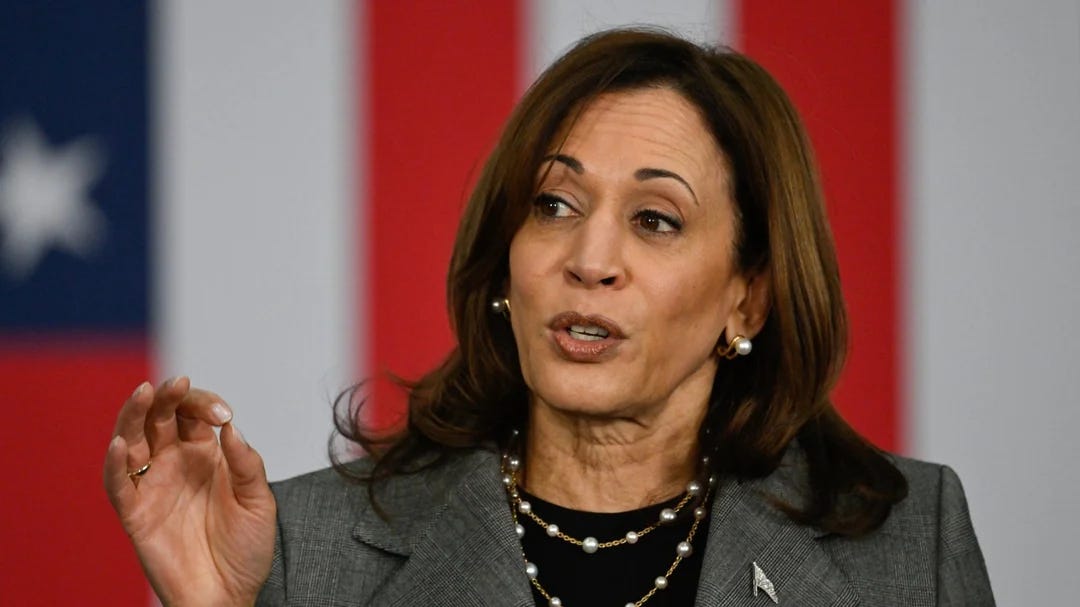
Harris’s most consequential argument, however, may not actually be about Trump.
She has also warned Democrats against pretending that removing Trump will magically repair America.
Trump and the MAGA movement, in her telling, are symptoms as much as causes.
She has pointed toward years of outsourcing and offshoring, financial deregulation, growing income inequality, a dysfunctional campaign-finance system and relentless partisan gridlock as deeper sources of public anger.
That is a much more uncomfortable argument for the Democratic Party.
Because it places some responsibility on the political establishment Harris herself has spent years inside.
For decades, communities watched factories disappear.
Workers watched companies move production overseas.
Families watched housing, healthcare and education become increasingly expensive.
Young Americans entered adulthood wondering whether they would ever afford homes.
Meanwhile, political campaigns grew more expensive, Washington became more polarized, and faith in institutions deteriorated.
Trump entered that environment promising disruption.
Harris’s argument now appears to be that Democrats cannot defeat Trumpism permanently by simply restoring the system that existed before Trump.
They have to change the conditions that made his message persuasive.
That is a far more ambitious proposition.
Harris Has Her Own Credibility Problem
There is an obvious complication.
Kamala Harris cannot talk about a failed status quo as though she were merely observing it from the outside.
She served as vice president for four years.
Before that, she served in the United States Senate.
She was the Democratic nominee for president.
Trump and Republicans will therefore have an easy response: if the system failed Americans, where was Harris?
That question cannot simply be dismissed.
Nor can Democrats ignore what happened in 2024.
Trump won.
Millions of voters heard Harris’s case against him and rejected it.
Any Harris comeback — whether as a party leader, campaign surrogate or possible future presidential contender — must therefore contend with the reasons her own message failed to persuade enough Americans.
Her latest approach suggests she may understand that.
Instead of portraying Trump as an inexplicable political phenomenon, Harris is increasingly acknowledging the grievances underneath his movement.
The challenge will be convincing voters that Democrats have solutions substantially different from the system they previously administered.
A New Digital Battlefield
Harris is not limiting this effort to speeches.
Earlier this year, she revived the digital operation that grew out of KamalaHQ, renaming it Headquarters and positioning it as a vehicle for Democratic organizing and online political communication.
The strategy is explicitly aimed at competing with the enormous conservative digital ecosystem that dominates large parts of the political internet.
Harris has argued that the right possesses a round-the-clock online “outrage machine” and that Democrats have failed to communicate effectively with younger Americans.
Headquarters is intended to help change that.
The project also keeps Harris in a politically interesting position.
She holds no elected office.
She is not currently the Democratic presidential nominee.
And she has not formally announced another campaign.
That gives her something she rarely possessed as vice president: political freedom.
She can attack.
She can experiment.
She can criticize Democrats as well as Republicans.
And she can begin defining what a post-Trump Democratic message might sound like without yet having to declare whether she wants to be the person carrying it into 2028.
The Shadow of 2028
Inevitably, every major Harris speech now carries another question.
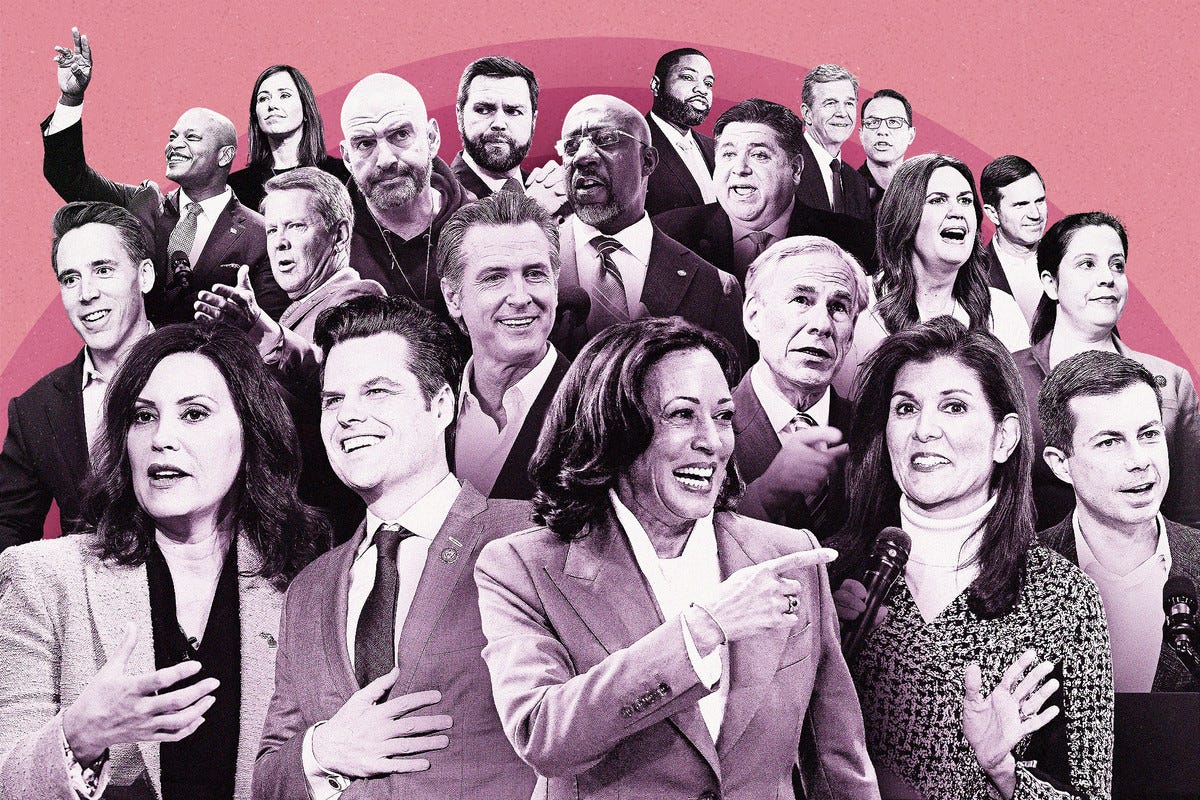
Is she running again?
There is no announced Harris presidential campaign for 2028.
But American presidential politics rarely waits for formal announcements.
Harris remains one of the most recognizable Democrats in the country. She has a national fundraising network, campaign infrastructure, governing experience and millions of supporters.
She also carries the burden of losing the 2024 election.
That makes her current political re-emergence consequential whether or not it ultimately becomes another presidential campaign.
She is trying to influence what Democrats say about Trump.
More importantly, she is trying to influence what Democrats say about America after Trump.
And that may be the larger significance of her attack.
Beyond Trump
For years, Democratic politics has often revolved around a straightforward proposition:
Stop Donald Trump.
Harris now appears to be arguing that this is insufficient.
Trump will eventually leave the political stage.
The anger that produced him will not.
The families worried about grocery bills will remain.
The workers worried about disappearing industries will remain.
The young people locked out of homeownership will remain.
The distrust of Washington will remain.
The resentment toward institutions will remain.
And unless those problems are addressed, another politician can arrive promising to tear everything down.
That is why Harris’s attack on Trump’s “empty promises” is ultimately more significant than another political insult between former rivals.
She is attempting to draw a distinction between promising change and producing change.
Trump persuaded enough Americans that he could do the former.
Harris wants voters to judge whether he has accomplished the latter.
The political danger for Trump is obvious.
The latest available government data show that Americans are still confronting inflationary pressure, with consumer prices 3.5 percent higher in June than a year earlier and particularly sharp increases in energy and gasoline costs.
The political danger for Harris is equally obvious.
Pointing out that Trump has not solved America’s problems does not prove that Democrats know how to solve them either.
And that may be precisely why her new argument matters.
This is no longer simply Harris versus Trump.
It is a fight over who can credibly promise Americans something different from what they already have.
Trump built his political movement by telling Americans that the system was broken.
Harris is increasingly conceding the point.
Where she sharply disagrees is over what should replace it.
Trump offered himself as the answer.
Harris is now asking Americans to examine the receipt.
And heading toward the 2026 midterms — with the battle over Trump’s second presidency intensifying and Democrats searching for a message capable of reaching beyond their existing coalition — that question may become increasingly difficult for the White House to avoid:
Kamala Harris is back on the attack: she was on a BOOK TOUR!!! She wasn’t there when we needed her the most. I will agree democrats (centrist) have to admit they screwed up and hopefully they will learn from it and MOVE ASIDE for the younger ones to take care of their mess. The progressives have been killing it. I’m sorry to say but I know a good amount of democrats that don’t want to hear her name. We need all the help we can get but if you send her out it may backfire on us. I was all for Kamala and voted for her but I felt betrayed and hurt when she decided to go on a book tour when we were all hurting and told we have to fight our a$$es off.
"Strongest attack yet" do yall... like Trump or something? This is a luke warm critique you lob at a colleague, not a "strong attack". I mean get serious. We don't need to context of the "change agent" campaign Trump ran to convince us this is some scalding, genius swipe at his legacy. In lieu of the institutions he's dismantling before our very eyes, this is nothing short of pathetic.