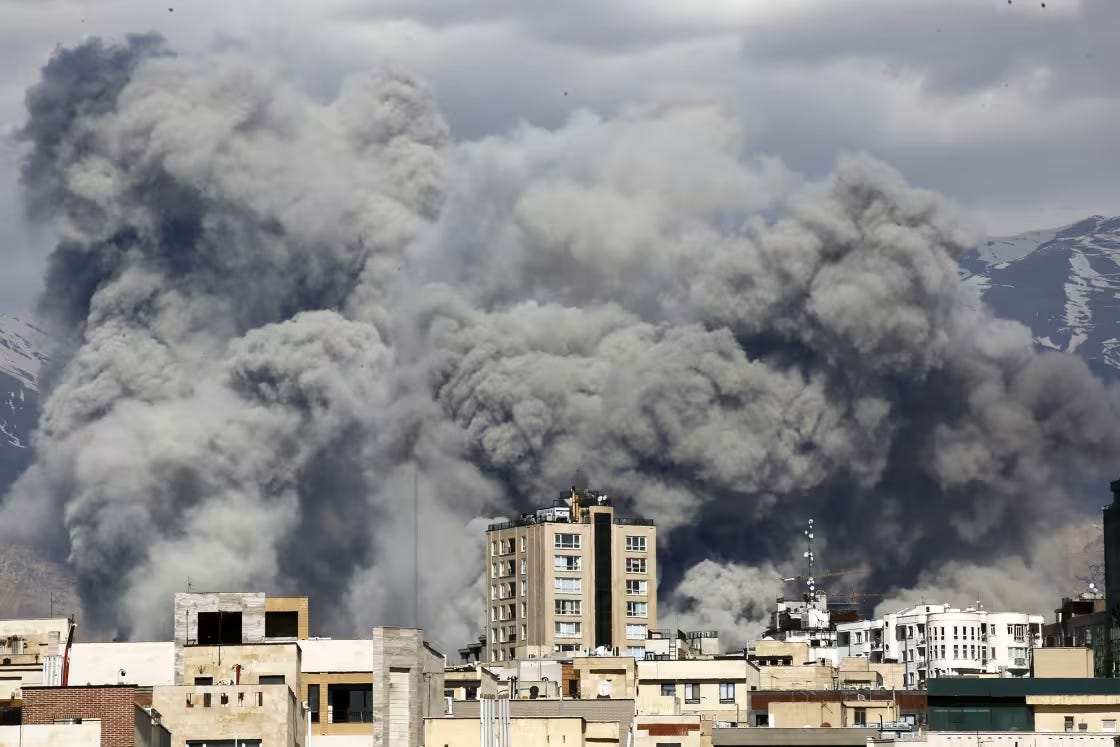
Nine Hospitals Seriously Damaged in Iran, Lawmaker Says — Civilian Toll Mounts as US–Israel Strikes Intensify
As US–Israel strikes intensify, civilians once again find themselves trapped beneath the machinery of modern warfare

At least nine hospitals across Iran have been “seriously damaged,” according to the semi-official Mehr News Agency, which cited a member of the Iranian parliament as US-Israeli bombing operations entered their third consecutive day.
“By attacking hospitals, international laws have been violated,” said Mohammed Beigi on Monday, describing what Iranian officials say is a widening pattern of strikes hitting civilian infrastructure.
Beigi also reported that five people were killed in a separate strike on Iran Street in central Tehran. Residential buildings in the area were left flattened or structurally unsafe, rendering multiple homes uninhabitable and sending families scrambling for safety in the aftermath.
While independent verification of each damage site remains ongoing, the reported hospital strikes — if confirmed — would raise serious legal and humanitarian concerns under international law, which strictly protects medical facilities during armed conflict.
A Dangerous Escalation
The United States and Israel launched coordinated military operations against Iranian targets on Saturday, dramatically escalating already volatile regional tensions. Officials in Washington and Tel Aviv have framed the strikes as necessary security measures aimed at degrading Iranian military capabilities.
But on the ground, the human consequences are becoming harder to ignore.
With each wave of airstrikes, the line between military objectives and civilian suffering appears increasingly blurred. Hospitals — places meant to preserve life — are now reportedly among the damaged sites. Residential neighborhoods are absorbing shockwaves that families neither caused nor can escape.
Tehran has responded with retaliatory attacks through its regional network of allied groups, raising fears that the confrontation could spiral into a broader regional conflict with devastating humanitarian fallout.
The Civilian Cost
War is often narrated through the language of strategy, deterrence, and geopolitical chess. What gets buried beneath those sterile terms are the ordinary lives caught in the blast radius.
If medical facilities are indeed being struck or severely damaged, the consequences extend far beyond the immediate explosions. Hospitals serve as lifelines during conflict. When they are crippled, the wounded have fewer places to go, emergency care slows, and preventable deaths rise quietly in the background.
In Tehran neighborhoods hit by recent strikes, families are now dealing not only with grief but displacement. Rubble where homes once stood tells a familiar story seen in conflicts across the Middle East: civilians paying the steepest price for decisions made far above their heads.
International humanitarian law is explicit: medical facilities and civilian infrastructure are afforded special protection. Any pattern of damage to such sites demands scrutiny, transparency, and independent investigation.
A Region on Edge


This latest round of violence threatens to push an already fragile region closer to sustained multi-front conflict. Iran’s network of regional allies — often described by Western officials as proxies — has already begun signaling potential escalation pathways.
Each new strike and counterstrike tightens the cycle.
For civilians across the region, the fear is not theoretical. It is immediate, visceral, and growing. Parents in Tehran, Tel Aviv, Beirut, and beyond are watching the same headlines with the same dread: how far will this go, and who will be left standing when it does?
The Questions Ahead
As the bombardment continues, several urgent questions remain unanswered:
Were all struck sites verified military targets?
What independent investigations will be allowed?
How many civilian casualties remain uncounted beneath the rubble?
And most critically: who is protecting the civilians now caught in the middle?
Military campaigns are often justified in the language of necessity. But history shows that when civilian infrastructure begins to crumble — hospitals, homes, neighborhoods — the long-term human damage can far outlast the stated military objectives.
For now, the strikes continue, the region holds its breath, and ordinary people on the ground are once again left to absorb the shock of decisions made in war rooms far away.


We are now Russia! 😡
