



The photograph of Elon Musk, Jeff Bezos, and Mark Zuckerberg sitting shoulder to shoulder at Donald Trump’s inauguration has suddenly acquired a different meaning. What once symbolized Silicon Valley’s embrace of presidential power now looks like a lineup of billionaires facing a Democratic Congress determined to challenge their influence.
At the time, the image captured an extraordinary alliance between political authority and unimaginable private wealth. Silicon Valley’s richest executives appeared convinced that Trump’s return would create an environment in which their companies could flourish, and their fortunes grow even larger. For a while, that calculation paid off. As artificial intelligence investments surged and Trump’s political influence appeared unshakable, their wealth climbed to staggering heights, with Musk’s fortune reportedly surpassing $1 trillion.
But Tuesday’s midterm elections exposed the risks of betting so heavily on one political movement. Democrats captured control of Congress, overturning Republican advantages in races once considered safely conservative. Democratic victories in gubernatorial contests, including traditionally Republican territory such as Texas, reinforced the scale of the political shift.
Voters frustrated by corruption and the growing influence of billionaires delivered a message that Washington can no longer ignore. Opposition to powerful technology companies, the rapid expansion of AI, enormous data centers, and increasingly intrusive surveillance systems helped fuel the backlash against Republicans.
Texas Democratic representative Greg Casar argued that voters had rejected Republicans partly because of their financial dependence on AI billionaires. His warning to Democrats was equally important: accountability must come before accepting the same corporate money.
Georgia senator Jon Ossoff, celebrating his re-election, directed his criticism toward Silicon Valley executives who invest in artificial intelligence while simultaneously warning that the technology could threaten humanity’s future.
Ossoff promised to bring Big Tech under control.

Massachusetts senator Ed Markey went further, suggesting that congressional investigators would need an extraordinary supply of paper to accommodate the subpoenas ahead.
For Silicon Valley, the message was unmistakable.
Democrats have promised investigations into major technology companies and restrictions on the construction of enormous data centers, potentially disrupting the infrastructure expansion on which the AI industry increasingly depends.
Over the past year, leading AI companies have raced to secure computing capacity through massive facilities packed with advanced semiconductor chips. These developments require extraordinary amounts of electricity, water, and physical space, often creating tension with the communities expected to accommodate them.
Public opposition has grown, and Democratic politicians have increasingly embraced restrictions on hyperscale data center construction.
Gina Hinojosa in Texas, Amy Acton in Ohio, and Keisha Lance Bottoms in Georgia have all supported temporary pauses on such developments.
Before You Continue!
The election may soon be over, but accountability is only beginning.
At The Women Post, we’re committed to amplifying voters’ voices, scrutinizing corporate influence, and holding elected officials accountable—including Democrats as they take control of both the House and Senate.
If you’re a free subscriber, consider upgrading to a paid membership for just $8 per month. Your support helps sustain our independent journalism and ensures that the voices of ordinary Americans remain central to the national conversation.
Because winning power is one thing. Being held accountable for how you use it is another.
For an industry accustomed to rapid expansion and favorable political treatment, those commitments represent a potentially significant obstacle.
Congressional investigations could prove even more uncomfortable.
Democrats have already signaled interest in examining the conduct of major technology corporations, with record-preservation requests reportedly directed toward Nvidia and Amazon.
And few executives present a more politically attractive target than Elon Musk.
The world’s richest man became one of Trump’s most visible supporters, investing enormous sums in Republican campaigns while playing a controversial role in the administration through the Department of Government Efficiency.

That initiative oversaw sweeping changes across federal agencies, including the dismantling of significant portions of USAID and reductions throughout the federal government.
With Democrats controlling congressional committees, Musk’s activities could become the subject of extensive investigations.
His political spending may also prove to have been a costly gamble.
Musk reportedly contributed approximately $450 million to support Republican candidates, including substantial backing for Ken Paxton in Texas. Yet the election delivered little of the political return he appeared to expect.
As Republican defeats accumulated Tuesday night, Musk remained unusually quiet. He subsequently deleted a social media message encouraging Americans to vote Republican.
By Wednesday morning, his attention appeared to have shifted toward another frontier.
“Datacenters in space are looking pretty good right now,” he wrote.
But even Musk’s ambitions beyond Earth may not escape political scrutiny.
Democrats could examine the reported multibillion-dollar combination of SpaceX and xAI, Musk’s artificial intelligence company responsible for Grok. The company’s reported $200 million military contract could also attract attention from lawmakers investigating the relationship between private technology firms and the federal government.
Mark Zuckerberg may soon find himself in familiar territory.
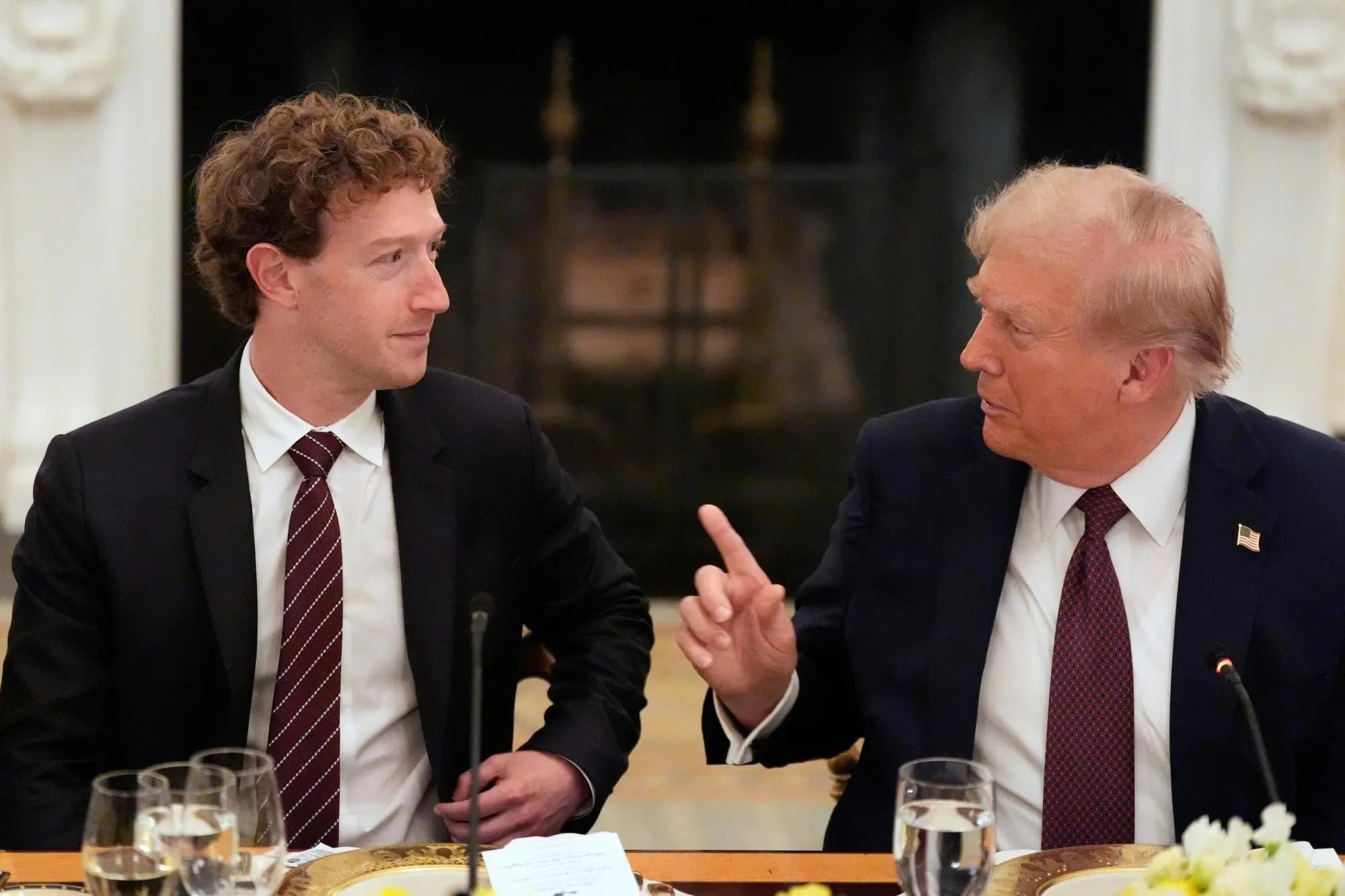
The Meta chief executive has already endured repeated congressional questioning over privacy, misinformation, and the influence of social media. A newly empowered Democratic Congress could bring him back before lawmakers.
Zuckerberg’s political repositioning during Trump’s second administration was difficult to miss.
He visited Mar-a-Lago, demonstrated Meta’s camera-equipped glasses to Trump, and eliminated the company’s diversity, equity, and inclusion initiatives as the administration intensified its opposition to DEI programs.
Those decisions raised questions about whether Meta’s corporate principles reflected genuine commitments or simply the political preferences of whoever occupied the White House.
Zuckerberg’s transformation extended beyond company policy. His embrace of mixed martial arts and appearances within the male-dominated podcast world became part of a broader public reinvention.
Whether those interests reflect personal conviction or calculated image management remains open to interpretation.
What is certain is that Zuckerberg may once again need to explain his company’s decisions to lawmakers who are considerably less sympathetic to Silicon Valley’s political maneuvering.
OpenAI chief executive Sam Altman faces his own challenges.
Altman, who also cultivated connections with Trump’s political circle, appeared to adopt a more cautious public position as election results emerged.

In a Tuesday evening statement, he emphasized that humanity must retain control over its future rather than surrendering authority to superintelligent systems, even if maintaining that control requires limiting AI development.
The language represented a striking contrast with the administration’s enthusiasm for accelerating artificial intelligence with fewer regulatory obstacles.
Whether Altman’s remarks reflect a genuine philosophical commitment or an attempt to adapt to Washington’s changing political environment remains uncertain.
For Silicon Valley’s wealthiest executives, however, the larger problem cannot be resolved through a handful of carefully worded statements.
After years of cultivating political influence, defending extraordinary concentrations of wealth, and promoting technologies that many Americans increasingly distrust, rebuilding public confidence will require considerably more than changing political allegiances.
The issues driving voter frustration remain painfully familiar: affordability, inequality, corruption, and the perception that the country’s most powerful institutions serve wealthy insiders before ordinary citizens.
Americans struggling with everyday expenses are unlikely to be reassured by billionaires celebrating another record-breaking increase in their personal fortunes.
And a technology industry that promises to transform humanity’s future must confront an uncomfortable question:
What good is all that extraordinary wealth and innovation if ordinary Americans are increasingly convinced that the system works only for those who already have everything?
Help Us Amplify Voters’ Voices
The election may soon be over, but accountability is only beginning.
At The Women Post, we’re committed to amplifying voters’ voices, scrutinizing corporate influence, and holding elected officials accountable—including Democrats as they take control of both the House and Senate.
If you’re a free subscriber, consider upgrading to a paid membership for just $8 per month. Your support helps sustain our independent journalism and ensures that the voices of ordinary Americans remain central to the national conversation.
Because winning power is one thing. Being held accountable for how you use it is another.