

Strong Men Don’t Need to Put Down Women to Make Themselves Powerful
When powerful women are treated as threats instead of equals, the problem isn't their ambition—it's the insecurity of those who feel challenged by it.

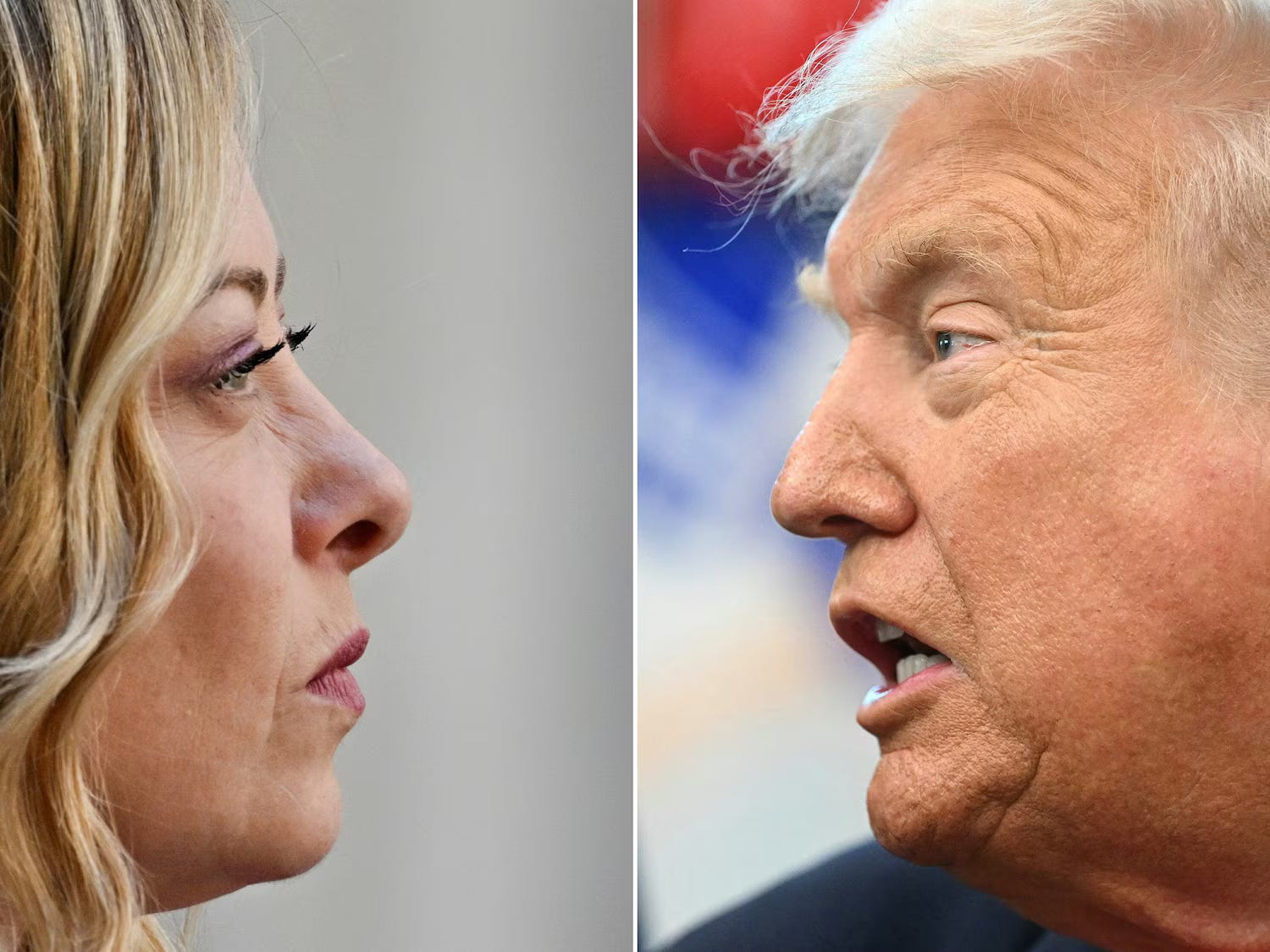
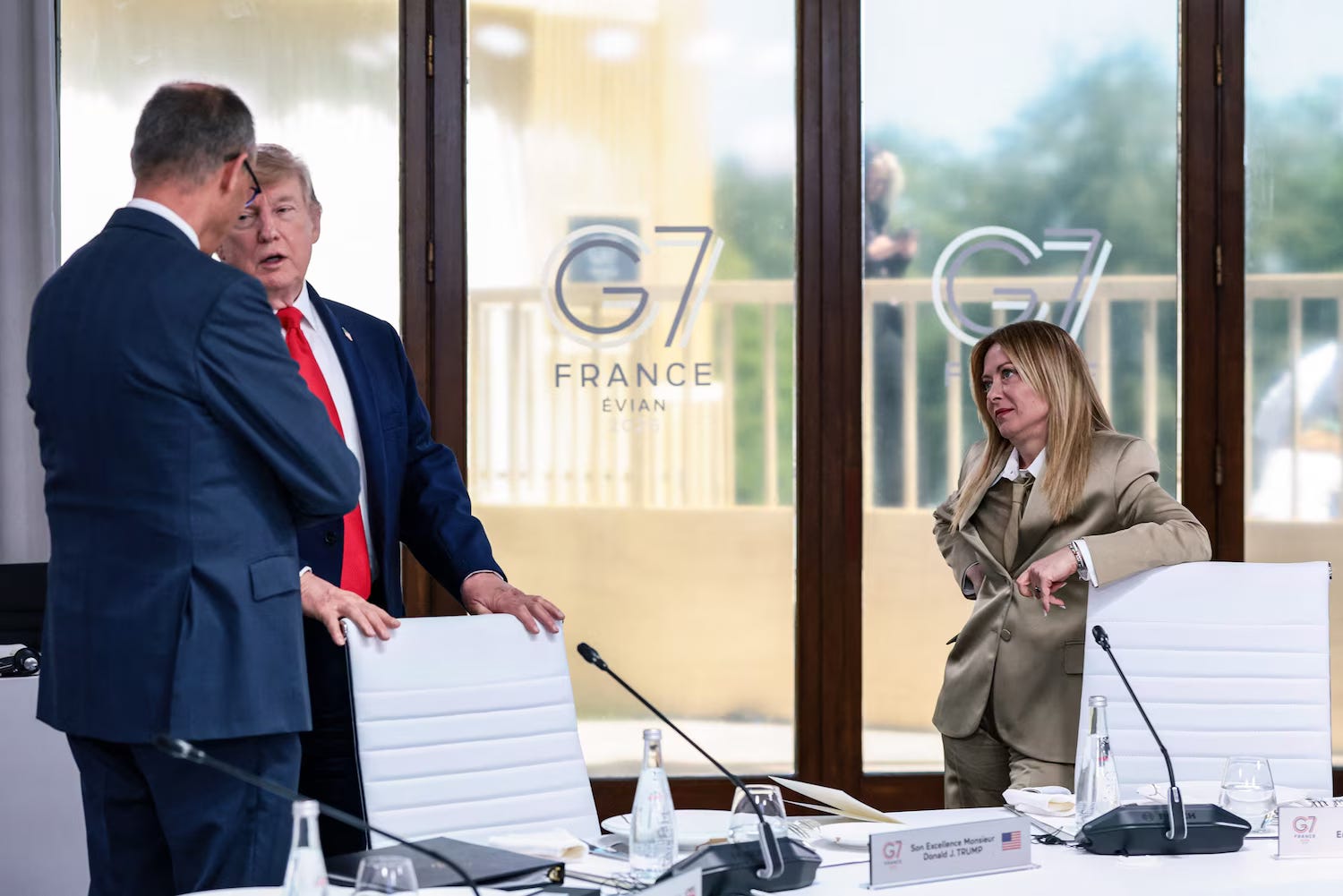
Remember when Donald Trump claimed Giorgia Meloni “begged” for a photo? the controversy wasn’t really about a photo. It was about something far older: the discomfort some men still feel when women possess power they cannot control.
A photograph taken during an international summit would normally disappear into the endless stream of political imagery that floods the news cycle every day.
Instead, one photo featuring Donald Trump and Italian Prime Minister Giorgia Meloni ignited a diplomatic spat last week, dominated headlines on both sides of the Atlantic, and reopened a familiar conversation about power, gender, and the ways influential women are often treated when they refuse to occupy a supporting role.
The controversy erupted after Trump claimed that Giorgia Meloni had repeatedly sought a photograph with him during the recent G7 gathering and that he eventually agreed because he “felt sorry” for her. The remark was vintage Trump—provocative, dismissive, and guaranteed to attract attention.
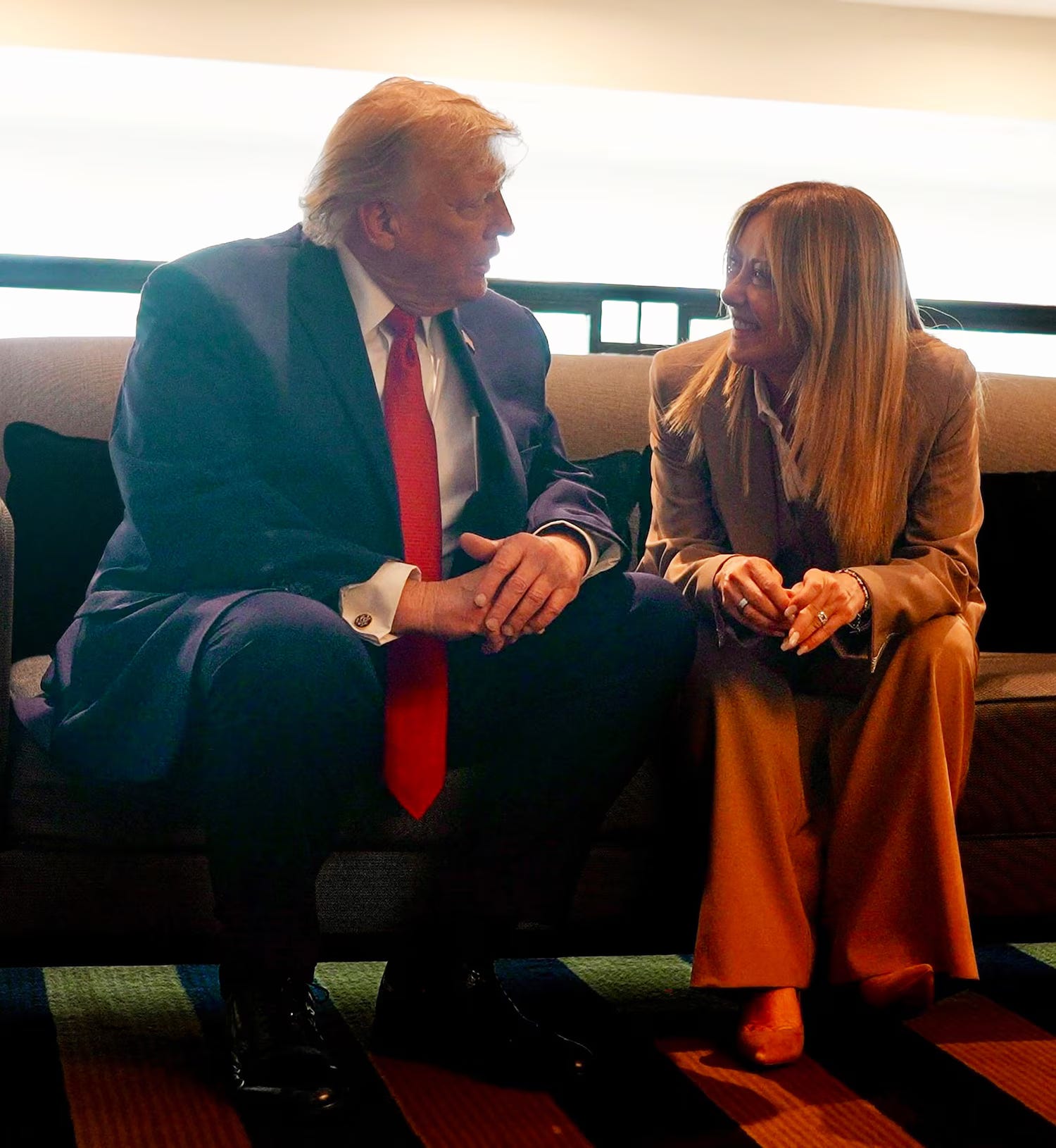
What made it different was Giorgia Meloni’s response.
The Italian prime minister did not laugh it off. Nor did she quietly ignore it.
Instead, she publicly rejected the claim as entirely fabricated and pushed back against what many Italians viewed as an unnecessary attempt to belittle both her and the country she represents.
“Neither Italy nor I ever beg,” she said.
The statement landed with force because it transformed what might have been dismissed as a personal disagreement into something larger. It became a dispute about dignity, respect, and the peculiar tendency of some powerful men to diminish powerful women.
To understand why the story resonated so strongly, it is important to recognize that the feud is not simply about two politicians exchanging barbs.
It is about a pattern.
For generations, women who have risen to positions of authority have encountered a remarkably consistent response. Their accomplishments are acknowledged, but often only briefly. Sooner or later, someone attempts to reframe the narrative.
The woman did not earn her success.
She was helped.
She was lucky.
She was chosen.
Or, as Trump’s comments implied, she was seeking validation from a more important man.
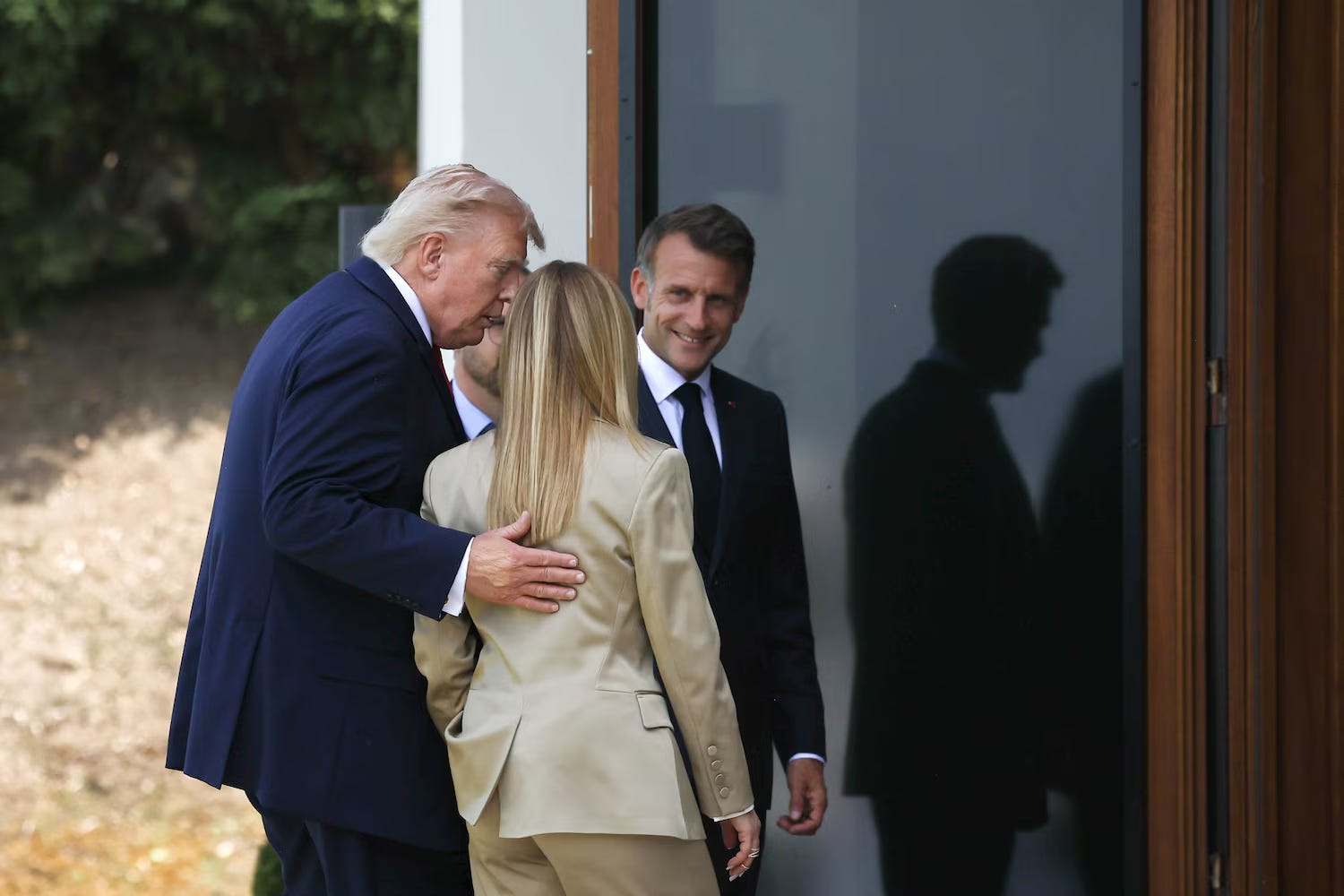
That dynamic is hardly new. It has followed female leaders through history, regardless of ideology, nationality, or profession.
Women in politics have long been expected to navigate standards that their male counterparts rarely face. Male leaders are generally judged on results. Women leaders are judged on results, appearance, personality, likability, tone, ambition, and countless other factors that have little to do with governing.
The Contradiction is Striking.
Society increasingly celebrates women’s success, yet remains fascinated by the idea that successful women are somehow dependent on male approval.
Giorgia Meloni’s political career offers a useful example.
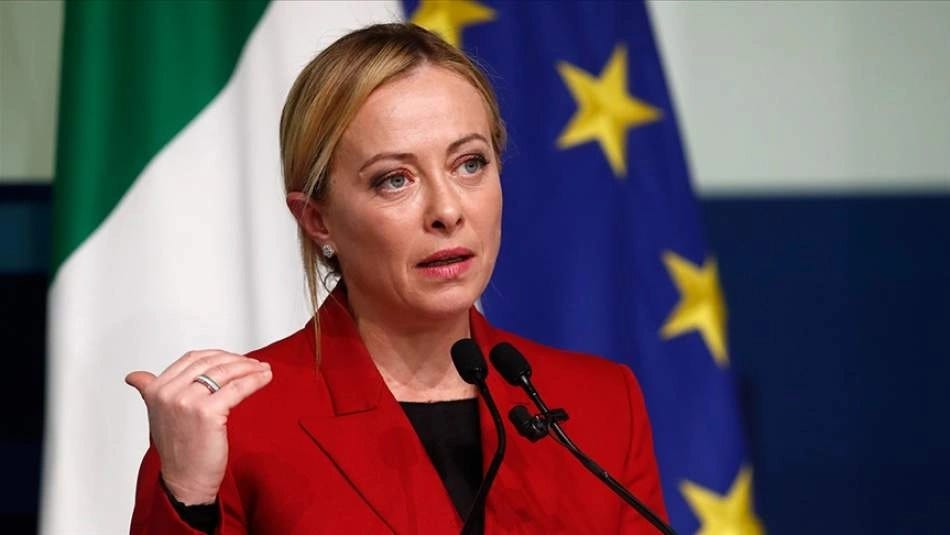
Love her politics or hate them, she has achieved something unprecedented in modern Italian history. As Italy’s first female prime minister, she climbed to the highest office in a country where national politics has historically been dominated by men.
She did not inherit the position.
She did not marry into it.
She won it.
Yet in the recent feud, public discussion quickly shifted away from her record and toward an implication that she was somehow seeking Trump’s attention.
That implication matters because it reflects a broader cultural habit.
When men become powerful, their authority is often assumed.
When women become powerful, their authority is frequently explained.
There must be a reason, a benefactor, a special circumstance, or a hidden dependency that accounts for their success.
The possibility that a woman simply belongs, or have earned a seat at the table remains surprisingly difficult for some men to accept.
Trump’s remarks struck a nerve because they appeared to tap directly into that tradition.
The suggestion that Meloni was “begging” for a photo was not a political criticism. It was a status play.
Its purpose was not to challenge her policies but to reduce her standing.
The message was subtle but unmistakable: she wanted something from him.
He did not want something from her.
He was the prize.
She was the admirer.
That framing may seem insignificant to some observers, but symbols matter in politics.
They shape perceptions of who leads and who follows.
They influence how authority is understood.
And they often reveal assumptions that people would never openly admit.
What makes the episode particularly fascinating is that Meloni is not a politician who fits traditional expectations of female leadership.
She is assertive.
Combative.
Highly disciplined.
A skilled political operator who has built her career by projecting confidence rather than consensus.
Many of the traits she displays are routinely praised in male leaders.
Yet those same traits often provoke discomfort when embodied by women.
This is where the feud moves beyond Trump and Meloni.
Because the underlying question is not whether Trump’s account was accurate or whether Meloni’s response was justified.
The deeper question is why powerful women continue to trigger such intense reactions in the first place.
Part of the answer lies in how power has historically been understood.
Since the beginning of times, leadership was treated as a masculine domain. Men governed countries, ran institutions, controlled wealth, and shaped public life. Women were expected to support power, not possess it.
Although society has changed dramatically, cultural assumptions often move more slowly than laws or institutions.
Women now lead governments, multinational corporations, universities, and global organizations. Yet traces of the old order remain.
Some people still view female authority as unusual.
Others view it as threatening.
And a small but influential group appears determined to challenge it whenever possible.
That challenge rarely takes the form of direct opposition.
Instead, it often appears as mockery, condescension, or attempts to diminish accomplishments.
The strategy is simple: if a woman cannot be defeated, make her appear smaller.
It is a tactic that has been used against female politicians across ideological lines, from conservatives to progressives, from Europe, North America, Asia, to Africa.
The details vary.
The instinct does not.
What is particularly revealing about the Trump-Meloni dispute is that it raises questions about masculinity as much as it does about feminism.
Why does another person’s success feel threatening?
Why does a woman exercising authority provoke a need to establish dominance?
Why do some men appear more comfortable competing against other men than acknowledging women as equals?
The answers are uncomfortable because they touch on insecurity.
Truly confident people rarely need to remind others of their status.
They do not need to announce their superiority.
They do not need to portray successful colleagues as subordinate figures seeking approval.
Their confidence comes from within.
Their achievements speak for themselves.
The need to diminish others often signals the opposite.
It suggests uncertainty.
A fear that respect must be constantly defended rather than naturally earned.
This is why the phrase “strong men don’t need to put down women to make themselves powerful” resonates far beyond this particular controversy.
It challenges a deeply flawed idea about leadership.
The idea that strength requires domination.
The idea that influence is a finite resource.
The idea that elevating women somehow diminishes men.
None of those assumptions are true.
A woman leading a country does not weaken a man.
A woman succeeding in business does not diminish a man.
A woman commanding respect does not take anything away from a man secure in his own worth.
If anything, the opposite is true.
The strongest leaders are often those who feel no need to prove they are the strongest person in the room.
They understand that leadership is not measured by who can humiliate others most effectively.
It is measured by who can inspire confidence, earn trust, and exercise power responsibly.
The Trump-Giorgia Meloni feud will eventually fade from the headlines.
Another controversy will replace it.
Another political dispute will dominate social media.
But the questions raised by this episode are unlikely to disappear.
Because every time a powerful woman is publicly diminished, society reveals something about how it still understands power.
And every time a woman refuses to accept that diminishment, society moves a little closer to understanding power differently.
Not as a hierarchy to be defended.
But as a responsibility to be shared.
The last two sentences says it all. We don't want to lead like men. We bring a better way to lead.
Not as a hierarchy to be defended.
But as a responsibility to be shared.
No surprise here regarding the AMERICAN IDIOT in charge.