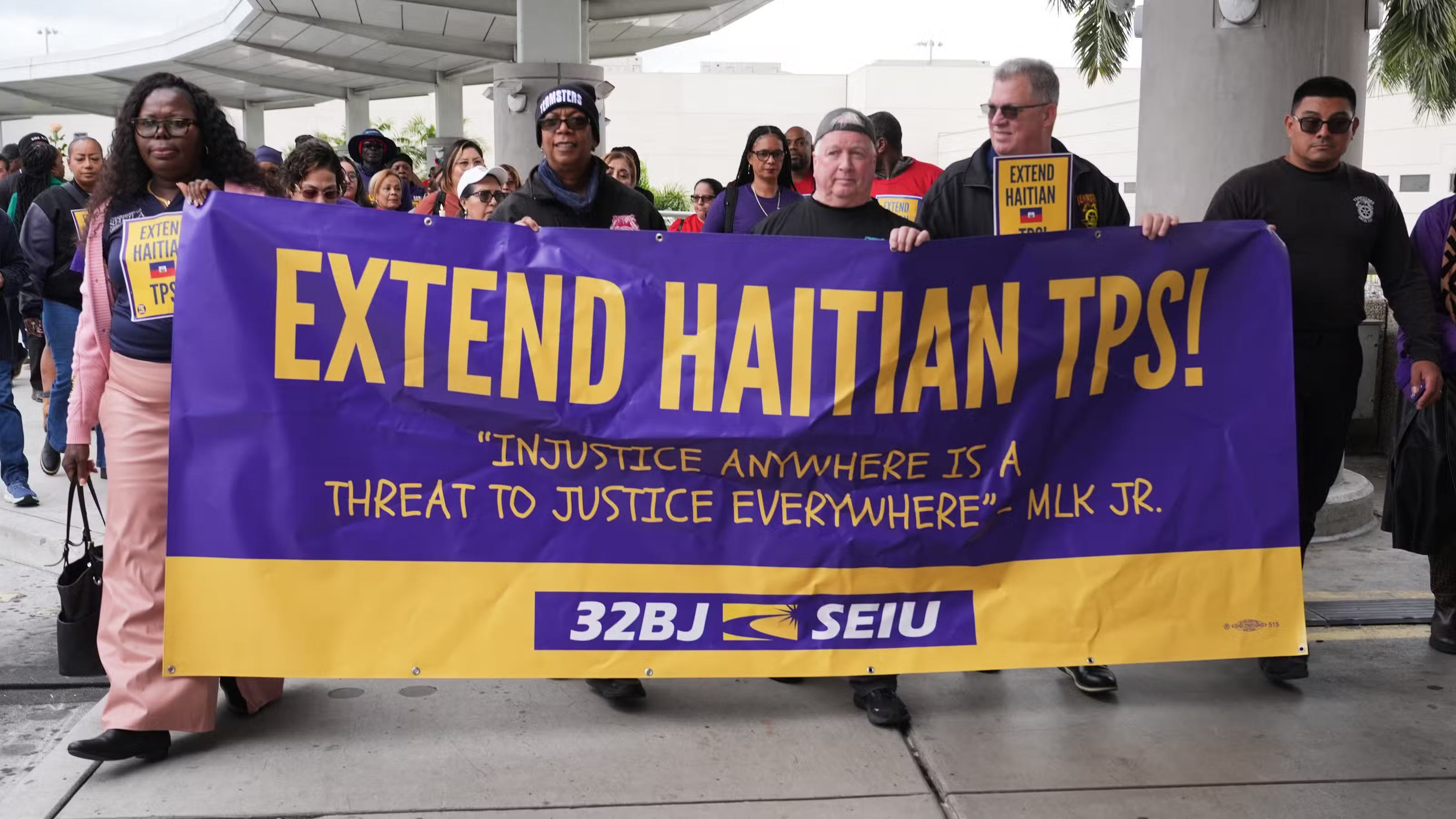
Supreme Court Backs Trump Administration in Ending Protections for Haitian and Syrian Migrants.
The ruling allows the administration to end Temporary Protected Status for hundreds of thousands of Haitians and thousands of Syrians, potentially exposing many to deportation.

WASHINGTON — The U.S. Supreme Court ruled that the Trump administration can move forward with ending Temporary Protected Status (TPS) for hundreds of thousands of Haitian and Syrian immigrants living in the United States, potentially exposing many to deportation proceedings.
In a 6-3 decision divided along ideological lines, the Court sided with the administration’s effort to revoke TPS protections for roughly 350,000 Haitians and 6,000 Syrians. The ruling marks another major victory for the administration’s immigration agenda.
Justice Samuel Alito, writing for the majority, stated that federal courts lacked authority to second-guess decisions made by the Department of Homeland Security regarding TPS designations. He emphasized that the law specifically limits judicial review of determinations involving the extension or termination of TPS protections.
The Court also rejected allegations that the administration’s decision regarding Haiti was motivated by racial discrimination. Alito wrote that statements cited by challengers, including comments made by President Donald Trump about Haitian migrants, were not explicitly racial and did not demonstrate that the policy was based on the race of Haitian people.


Civil rights and refugee advocates sharply criticized the ruling. Derrick Johnson, president and CEO of the NAACP, called the decision a serious setback for Haitian families who have established lives in the United States, arguing that it puts hundreds of thousands of people at risk while overlooking concerns about equal protection under the law.
Krish O’Mara Vignarajah, president and CEO of Global Refuge, described the decision as devastating for families who have lived and worked legally in the country for years. She noted that the Court’s ruling did not determine that Haiti or Syria are safe destinations, but rather concluded that the administration’s decision falls outside the scope of judicial review.
The decision follows earlier Supreme Court rulings that permitted the administration to revoke similar protections for approximately 600,000 Venezuelans. Government attorneys argued that those cases established a legal framework supporting the administration’s authority to terminate TPS designations.
Solicitor General D. John Sauer maintained that former Homeland Security Secretary Kristi Noem’s TPS decisions are not subject to court review. Noem determined that conditions in both Haiti and Syria had improved sufficiently to justify ending their protected status.
The TPS program, created in 1990, grants temporary legal status and work authorization to individuals from countries experiencing armed conflict, natural disasters, or other extraordinary conditions. The protections are typically granted for up to 18 months and can be renewed.
Despite the administration’s assessment, the U.S. State Department continues to advise Americans against traveling to either Haiti or Syria. Haiti remains under a state of emergency and faces widespread violent crime, while the State Department warns that no region of Syria is free from violence.
Individuals who lose TPS protection may become subject to deportation proceedings, although some could pursue other forms of immigration relief, including asylum claims.

Legal challenges to the administration’s actions had previously succeeded in lower courts. A federal judge in Washington ruled earlier this year that the Haiti TPS termination may have been influenced by anti-Haitian and anti-Black bias and found that proper procedures were not followed. The judge cited public statements by both Noem and Trump as evidence supporting those concerns.
Plaintiffs also argued that administration officials relied on inaccurate information regarding consultations with the State Department before ending Haiti’s TPS designation.
In a separate lawsuit involving Syrian nationals, a federal judge in New York sided with TPS recipients and applicants, finding grounds to block the termination. Appeals courts in both cases declined to suspend those lower-court rulings before the Supreme Court stepped in.
Attorneys representing Haitian migrants warned that returning people to Haiti could place lives at risk due to ongoing instability and violence. Lawyers for Syrian plaintiffs similarly argued that regional conflicts and security concerns continue to make conditions unsafe.
The administration has pursued similar actions affecting TPS holders from several other nations, including Afghanistan and Cameroon. According to the National Immigration Forum, approximately 1.3 million people from 17 countries held TPS status as of March 2025.
Separately, the administration has also ended a Biden-era humanitarian parole program that had allowed more than 500,000 migrants from Cuba, Haiti, Nicaragua, and Venezuela to remain in the United States while immigration claims were processed.


Sickening decision
Of course they did, it's all about cruelty.
