


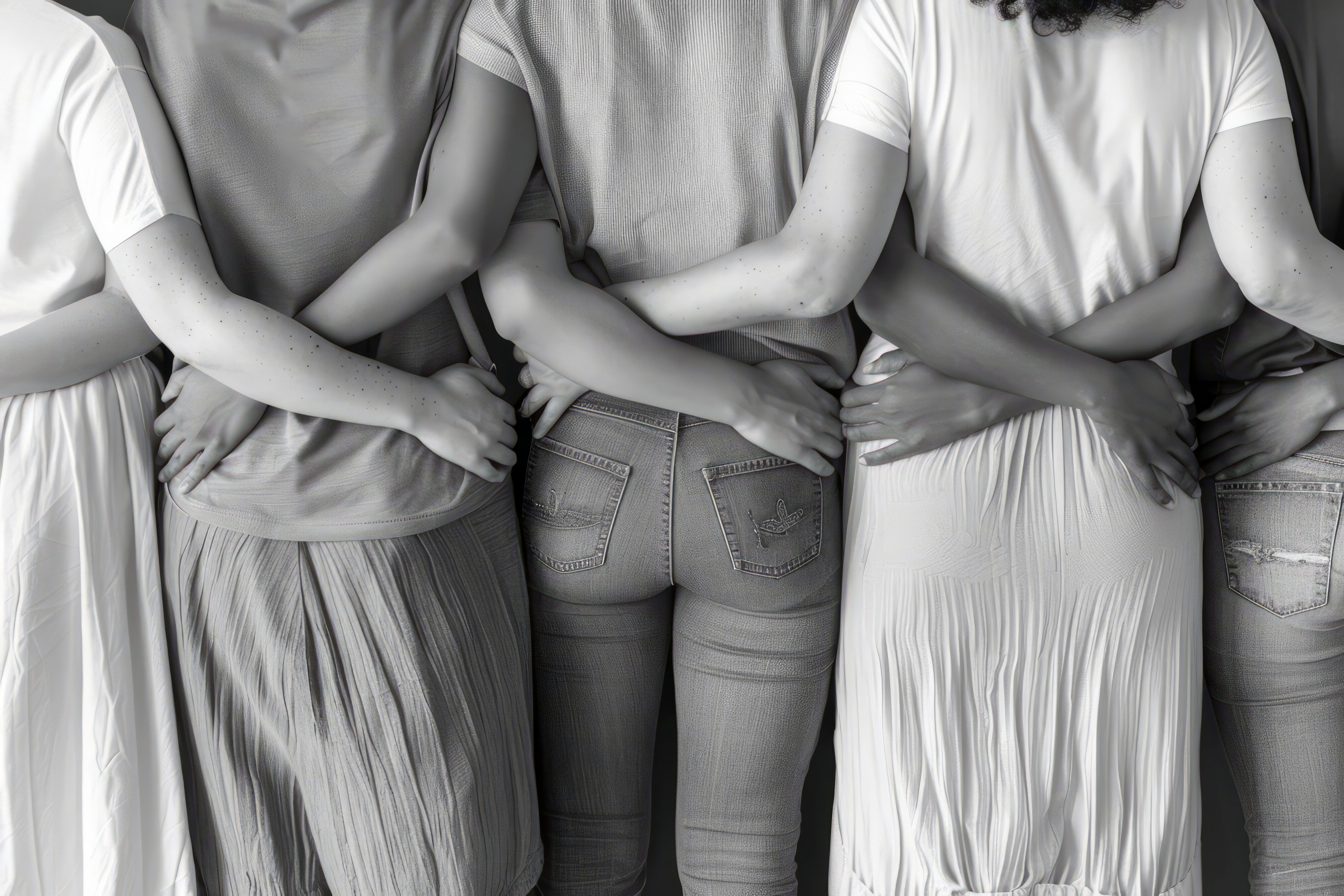
In 1963, standing before the Lincoln Memorial in Washington, Dr. Martin Luther King Jr. reached for the language of banking to describe something much bigger than money. America, he argued, had made a promise to its Black citizens and failed to honor it. He called it a “bad check,” one returned because there were supposedly insufficient funds to pay what had already been promised.
King was speaking specifically about racial injustice in the United States, and that history should not be blurred into another struggle. But the idea behind his metaphor—the enormous distance that can exist between a promise made on paper and a promise experienced in real life—raises a difficult question when we look at the history of women.
What happens when women take their own promises to the counter?
Since the beginning of time, societies have spoken eloquently about the importance of women while simultaneously limiting what women could do. Women are praised as mothers while denied authority over important parts of their own lives. Their labor has helped build economies, yet much of it has been unpaid or unrecognized. Their intelligence is celebrated privately while some universities, professions, and institutions remained closed to them. Their sacrifices have always been expected; their ambitions are often treated with suspicion.
In that sense, women know something about a “bad check”.
The world has too often written one amount in its declarations and paid another in practice.
That is not to say that women everywhere have lived the same history. They haven’t. A wealthy European woman in the nineteenth century, a farmer in West Africa, an Indigenous woman in the Americas, and a woman living in South Asia could have experienced radically different forms of authority, restriction, and independence. There has never been one universal female experience.
But across different periods and societies, a familiar contradiction repeatedly appears: women have always been indispensable to the functioning of society while being excluded from many of the places where society decided who held power.
And that contradiction did not disappear simply because the law eventually changed.
Consider something now regarded as ordinary: a woman voting.
Today, seeing women walk into polling stations attracts little attention in much of the world. Yet women had to organize for decades to secure that right in many countries. The same is true of higher education and professional life. Careers in medicine, law, science, finance and government that young women can now reasonably imagine were once deliberately restricted or culturally discouraged.
That history matters because progress has a peculiar way of making yesterday’s battles invisible.
Once a door has been open long enough, it becomes easy to forget that somebody had to force it open.
Women did.
They organized, wrote, marched, studied, sued, campaigned, built, and are still building businesses. Entered institutions that had not been designed with them in mind. Some challenged governments. Others challenged their families. Many simply refused to accept that the circumstances into which they were born had to determine the boundaries of their lives.
The result is visible everywhere today.
Women run companies. They perform surgery. They lead research laboratories and universities. They build technology startups, report from war zones, fly aircraft, manage investment funds, write legislation and compete at the highest levels of professional sport.
A girl growing up today can see possibilities that would have been unimaginable to many of her great-grandmothers.
That is real progress.
But progress presents its own danger: the temptation to mistake movement for arrival.
The check has not completely cleared.

The modern conversation about women’s equality is more complicated than the old one.
The question is rarely whether women should work, study or lead. In many countries, those arguments have largely been settled in law and mainstream public life.
The harder questions now concern what happens after women enter the room.
Who gets promoted?
Who receives investment?
Whose expertise is assumed?
Who interrupts a career when a child is born or a parent becomes ill?
Who performs the work at home that makes somebody else’s paid work possible?
Who reaches the top—and what did it cost to get there?
These questions cannot be answered with a poster celebrating female empowerment once a year.
They require looking at how women actually live.
Take unpaid care.
Every economy depends on people cooking meals, cleaning homes, raising children and caring for relatives who are sick, elderly or disabled. Without that work, the formal economy could barely function. Yet because much of it happens inside homes and does not produce a salary, it can disappear from the way societies traditionally measure economic contribution.
Women have always perform a disproportionate share of that unpaid work globally.
The consequences follow them into paid employment. A woman who reduces her working hours to care for children may lose income in the present, but the effect can continue through slower career progression, smaller pension contributions and fewer opportunities to build wealth.
No law needs to explicitly prohibit her from succeeding for inequality to emerge.
That is what makes the modern version of the problem harder to see.
The barrier is not always a locked door.
Sometimes it is a thousand small calculations about time, money, expectations and responsibility.
Then there is money


Entrepreneurship is frequently presented as the great escape from traditional workplace structures: have an idea, build something, find investors and create your own future.
Women have long embraced that possibility enthusiastically.
But access to capital remains part of the conversation. Female founders have repeatedly raised concerns about receiving a relatively small share of venture investment, particularly in industries where large amounts of private capital determine which ideas have the chance to grow.
According to theanna.io: Female-led and women-founded startups receive just 1% to 2% of total U.S. venture capital funding in 2026
The significance goes beyond individual entrepreneurs.
Money decides which companies get built. It influences which technologies reach consumers, which medical ideas receive development, which businesses hire hundreds of employees and which founders eventually become investors themselves.
Capital is not simply a reward for success.
It helps determine who gets the opportunity to attempt success in the first place.
This is where the language of empowerment can become uncomfortable.
Telling a woman to “believe in herself” is easy.
Asking whether the systems surrounding her give that belief a reasonable chance of becoming something tangible is harder.
Both matter.
Personal agency matters enormously. Women are not passive characters waiting for institutions to rescue them. History itself disproves that idea. Women have repeatedly created opportunity where little existed.
But determination should not become an excuse for ignoring unnecessary barriers.
A woman can work on her confidence.
She cannot personally rewrite an employment law, create affordable childcare across an entire country or transform an investment industry overnight.

That requires institutions too.
A different conversation about power
There is also something changing beneath the statistics.
Women are increasingly questioning not only whether they can enter traditional structures of power, but whether those structures are the only ones worth entering.
Technology has changed the equation.
A writer can build an audience without first being hired by a major newspaper. An entrepreneur can reach customers without securing shelf space from a national retailer. A teacher can create an educational business from her home. A creator can speak directly to millions of people without a television executive deciding she deserves airtime.
None of this has eliminated inequality. Digital spaces have created their own forms of harassment, exclusion and economic instability.
But they have weakened some of the old gatekeepers.
And that matters.
For much of history, access was controlled by relatively small numbers of institutions. If those institutions said no, there were few alternatives.
Today, women are increasingly capable of building another door.
Perhaps that is one of the most consequential developments in the story of women’s progress.
Not simply being invited into existing institutions.
Creating new ones.
So, What Would it Mean to Finally Honor the Promise?
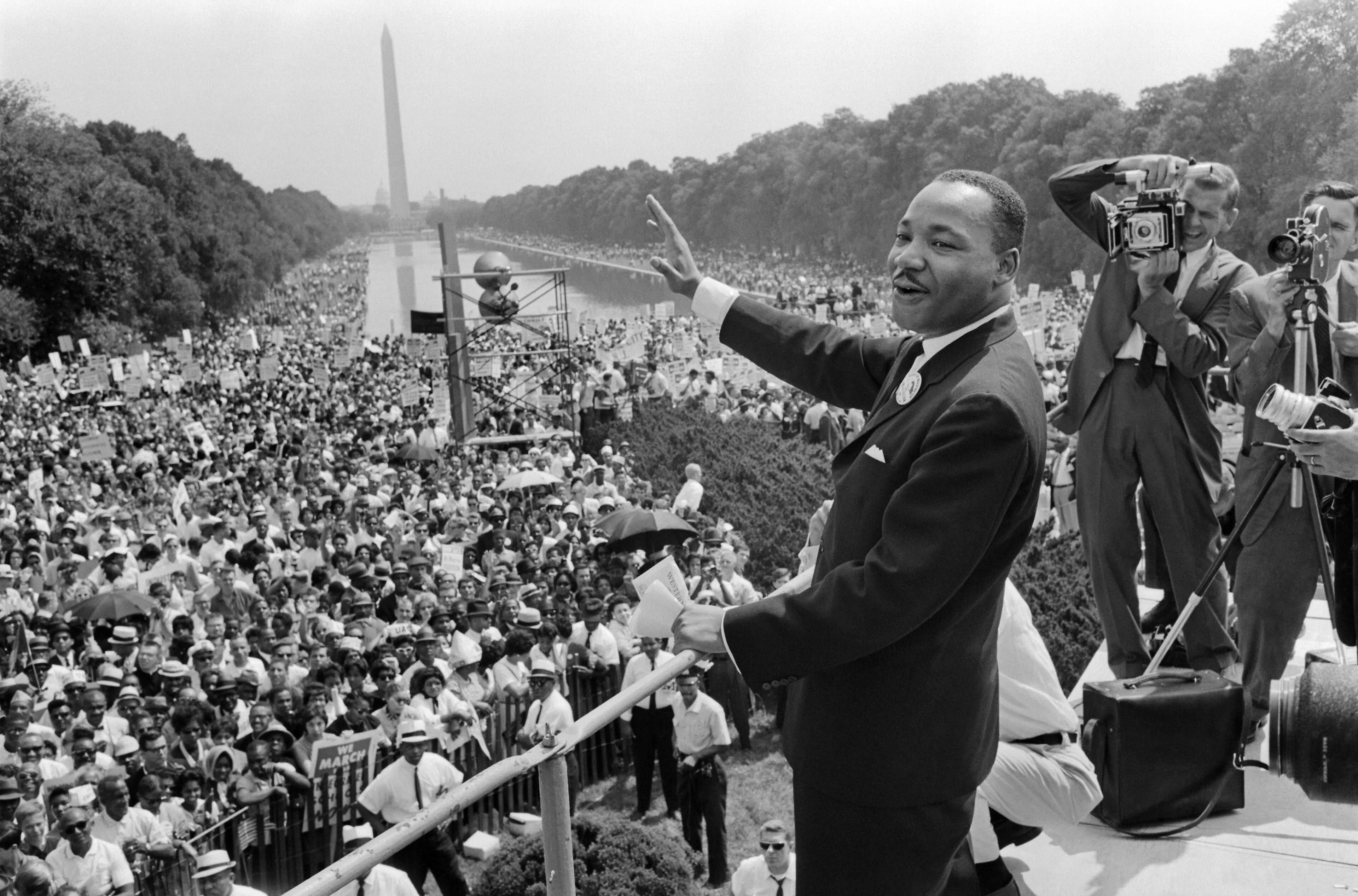
It would not mean that every woman earns the same salary, chooses the same career or experiences the same life.
Equality is not sameness.
Nor does women’s advancement require diminishing men. Opportunity does not work like a pie where one person’s larger portion necessarily leaves somebody else hungry.
The more useful question is simpler: are women able to make meaningful choices about their lives without barriers that exist primarily because they are women?
That is a much harder standard than counting how many inspirational campaigns appear every March.
It asks whether a girl can get an education.
Whether a mother can return to work without motherhood being treated as evidence of diminished ambition.
Whether an entrepreneur with a strong business can reach capital.
Whether a woman can pursue leadership without being required to become a caricature of what leadership once looked like.
And whether the work women perform—paid or unpaid—is recognized for what it contributes.
The story of women over the last century is not primarily a story of victimhood.
It is a story of movement.
Doors that were closed have opened. Laws that once restricted women’s choices have disappeared in many places. Expectations have changed. Millions of women have built lives that previous generations fought to make possible.
That deserves more than a passing acknowledgment.
But history also teaches another lesson: a promise should not be confused with its fulfillment.
The world can say women are equal.
Companies can say women are valued.
Governments can say opportunity belongs to everyone.
Those statements matter.
But eventually, the check reaches the counter.
And that is where rhetoric meets reality.
For too much of history, women have discovered a difference between what was written and what was available to them. The amount promised was equality, opportunities, and recongnition; the amount received was often something less.
That gap has narrowed dramatically.
It has not disappeared.
Perhaps the next chapter of women’s progress will not be defined by another grand declaration. We already have plenty of declarations.
Perhaps it will be defined by something far less glamorous and far more consequential: making the words already written finally match the lives women are actually able to live.
Because after generations of promises, women should not have to keep returning to the counter.