The Sexual Violence Crisis in America’s Political Sphere Is Getting Worse — And We Can No Longer Stay Silent.
Behind the polished image of campaigns and congressional offices, young women and girls working in political spaces continue to report patterns of coercion, boundary violations, and abuse.

Behind the polished image of campaign HQs and congressional offices, young women and girls working in political spaces continue to report patterns of coercion, boundary violations, and abuse enabled by power imbalances and institutional silence.
It usually doesn’t start the way people imagine.
There is no dramatic moment. No immediate alarm. No clear line that is crossed in a way that feels undeniable in real time.
It starts in silence that slowly becomes normal.
Young women join a political campaign or step into congressional offices, thinking they are entering a space of influence, purpose, and ambition. The environment is fast-moving, high-pressure, and hierarchical. Everyone is busy. Everyone is important. Everyone is connected to someone who matters.
At first, it feels like an opportunity.
Then it starts to shift.
A private comment that lands slightly off but is brushed away.
A joke that feels uncomfortable but is met with laughter from everyone else.
A message sent late at night that feels too personal for the context but is framed as “just checking in.”
A meeting that should have been routine, but slowly becomes something they did not agree to walk into alone.
None of it arrives with a clear warning label.
And that is what makes it hard to name.
Because in Capitol Hill or any other political space, power does not always announce itself through force. It often operates through access, dependency, and pressure disguised as mentorship or opportunity.
And once that dynamic is in place, everything becomes harder to refuse.
The staffer knows who controls her reference.
The intern knows who can extend her contract.
The volunteer knows who decides whether she gets a future in the field at all.


So they calculate.
Not because they do not understand what is happening.
But because they understand the consequences of naming it.
This is the part of American political life that rarely makes it into speeches or press releases.
Not because it is hidden in the dark—but because it exists in the open, where it is easier to ignore.
Behind every campaign HQ and every office are layers of junior staff who keep the system running. They are often young, often early in their careers, and often in positions where one person’s influence can determine their entire professional future.
Before You Continue!
If you’ve read this far, then you already know—this work matters.
At The Women Post, we are committed to telling the stories others avoid. To challenge power. To refuse silence when women and girls are the ones being ignored.
But work like this doesn’t continue without support.
If you are still a free subscriber, right now, we’re offering a 40% discount on our annual plan.
If you believe women and girls deserve to be heard—and that power must be held accountable—stand with us.
Upgrade your membership today.
That imbalance is where the danger lives.
And it is not theoretical.
Over the years, multiple accounts from political staffers, interns, and aides across different levels of government have described environments where boundaries were blurred, where discomfort was normalized, and where speaking up felt professionally impossible.
Not every environment. Not every office. Not every leader.
But enough that it cannot be dismissed as isolated.
Because when the same patterns appear across different spaces of power, the issue stops being individual misconduct alone.
It becomes structural.
And that is where America continues to struggle.
A system that runs on silence
The political world is built on relationships, loyalty, and reputation. That creates a unique vulnerability: Women are not just afraid of not being believed—they are afraid of being professionally erased.
In many cases, there is no clear external system to turn to that feels safer than the system where the harm occurred.
So the decision is not justice versus injustice.
It is survival versus risk.
And most women, when faced with that choice, choose survival.
That is how silence becomes embedded not as absence, but as policy without being written down.
It becomes the unspoken rule: don’t make trouble, don’t burn bridges, don’t end your career before it begins.
And the result is predictable.
Behavior that should be challenged is instead absorbed into the culture of “that’s just how it is here.”
When power becomes the shield
In any other context, unwanted conduct is addressed through clear reporting systems and accountability structures.
But in American political environments, those systems are entangled with the same hierarchies that create the risk in the first place.
That is what makes accountability inconsistent.
Because when allegations surface, they do not enter a neutral space.
They enter a political one.
And in that space, outcomes are often shaped by more than just facts. They are shaped by timing, usefulness, and institutional protection.
If someone is expendable, consequences can move quickly.
If someone is valuable, consequences slow down.
And that difference is where trust breaks.
Because it tells people watching from the outside that accountability is not universal.
It is selective.
And selective accountability is not justice—it is management.
The cycle that repeats
Every few months, a new case breaks into public attention. A name is discussed. Allegations are reported. Media coverage intensifies. Social media reacts. Institutions respond under pressure.
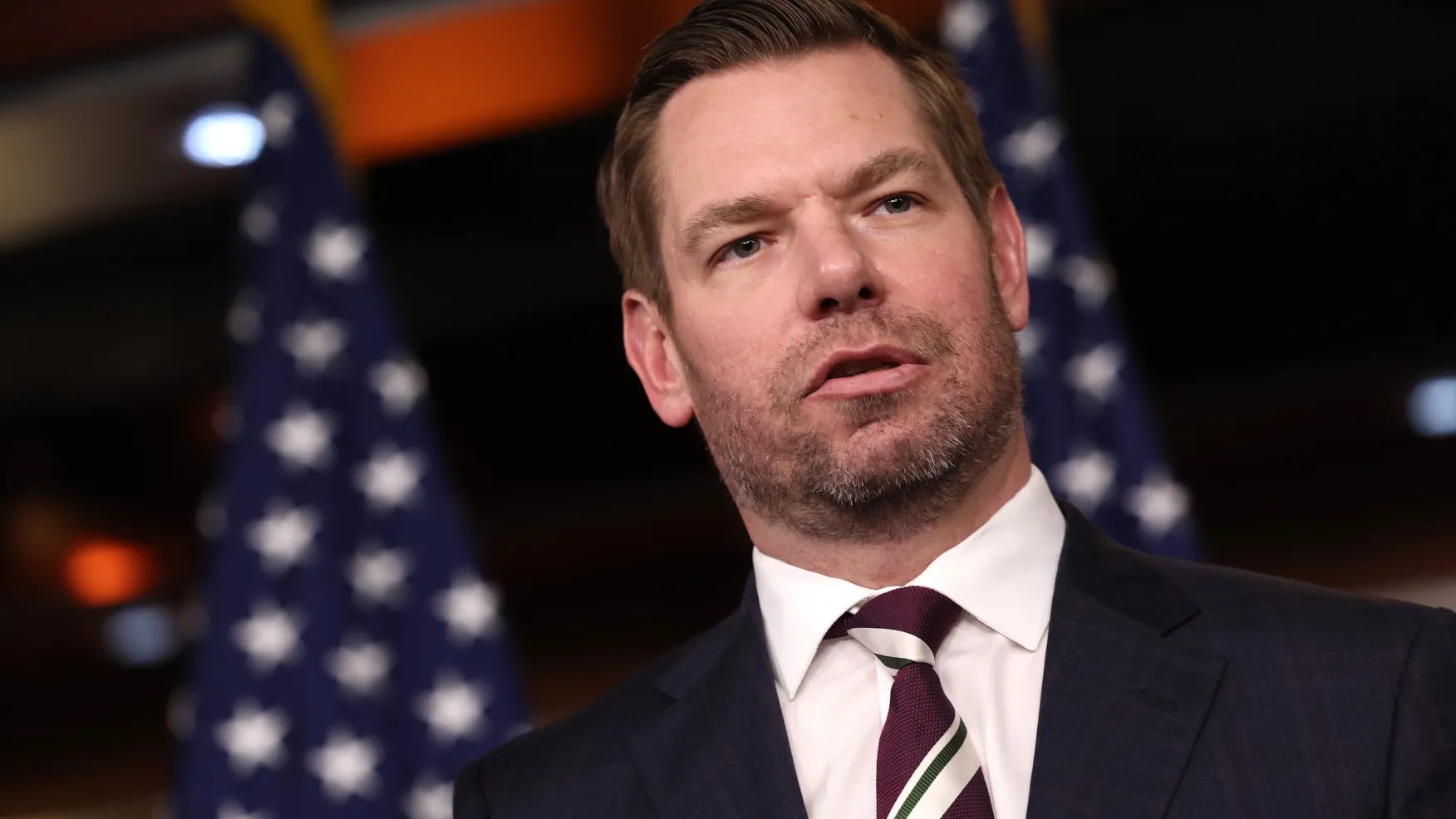
The recent case involving Representative Eric Swalwell, who resigned from Congress following multiple allegations reported in major outlets, is one example of how quickly political careers can collapse once claims reach public and institutional attention. And yet, even as these cases surface, they are often treated as separate events rather than part of a continuing pattern that cuts across campaigns, offices, and institutions at different levels of power.
For a brief moment, the political world is forced to confront uncomfortable questions about behavior and accountability. And then, as attention shifts elsewhere, the cycle begins to close again.
The urgency fades.
The reforms slow.
The silence returns.
Meanwhile, the underlying conditions remain unchanged.
The imbalance of power persists.
The fear of retaliation persists.
The lack of independent reporting mechanisms persists.
And so the next case emerges.
Not as an anomaly—but as repetition.
What this crisis actually is

This is not just about individual misconduct.
It is about environments where misconduct can occur without immediate accountability.
It is about systems that prioritize reputation management over survivor protection.
It is about institutions that are often better equipped to manage fallout than to prevent harm.
And most importantly, it is about the cost borne by women and girls who enter these spaces believing they will be treated as equals, only to discover that equality does not always extend to safety.
Why silence persists
Silence is not passive in these situations. It is active.
It is reinforced through fear of retaliation.
Through uncertainty about being believed.
Through professional dependency.
Through cultural pressure to “move on” or “not make trouble.”
And in many cases, silence is rational.
It is a calculation made in an environment where truth carries risk.
That is what makes this crisis so difficult to confront. It is not maintained only by perpetrators—it is sustained by systems that make speaking out feel like the most dangerous option available.
The cost we don’t measure


When sexual violence of any form is discussed in public discourse, attention often focuses on high-profile cases. But the real scale of the issue exists in what is never publicly reported.
The career paths that quietly end.
The opportunities that are declined without explanation.
The women who leave industries entirely without ever telling their story.
These absences do not appear in headlines.
But they are part of the cost.
And over time, they shape who stays in positions of influence—and who is pushed out before they ever get there.
What accountability would actually require
If this crisis is to be meaningfully addressed, incremental change is not enough.
Real accountability requires structural independence.
It requires reporting systems that are not controlled by the same hierarchies where abuse occurs.
It requires protections that ensure speaking out does not result in professional destruction.
It requires consequences that are consistent, not conditional.
And it requires a cultural shift away from treating allegations as political material, and toward treating them as human harm that demands investigation regardless of context.
Without these changes, the cycle will continue.
The reality we cannot ignore

The most uncomfortable truth is not that sexual violence against women and young girls exists in society.
It is that systems still struggle to consistently confront it when it appears in proximity to power.
And until that changes, women and girls entering these spaces will continue to face a reality shaped not only by individual behavior, but by institutional tolerance.
Here is the hard truth.
This is not a story about isolated events.
It is a story about patterns.
And patterns do not break themselves.
They are broken by pressure, by transparency, and by refusal to accept silence as normal.
Because silence is not neutral.
It is protective.
And for too long, it has protected the wrong things.
Women and girls deserve more than awareness.
They deserve systems that do not require them to risk everything just to be heard.
And until that becomes reality, the crisis will not be in the past tense.
It will be ongoing.
Before You Click Away!
If you’ve read this far, then you already know—this work matters.
At The Women Post, we are committed to telling the stories others avoid. To challenge power. To refuse silence when women and girls are the ones being ignored.
But work like this doesn’t continue without support.
If you are still a free subscriber, right now, we’re offering a 40% discount on our annual plan.
If you believe women and girls deserve to be heard—and that power must be held accountable—stand with us.
Upgrade your membership today.


So sadly accurately reported. The hypocrisy is stunning. Thanks for your coverage.
Hoping you are widely read. We need broad base understanding and information on the discrimination and abuse of women….
