United States of America Flag. Credit: Freepik.com
For over two centuries, the United States was held up as the gold standard of development. The world’s largest economy. The most powerful military. A global leader in innovation, finance, and culture.
But development is no longer measured by wealth and military might alone.
It is measured by outcomes—by whether people can live with dignity, access healthcare without fear of bankruptcy, feed their children, receive a quality education regardless of where they are born, and trust that their government exists to protect them rather than extract from them.
By those standards, the United States is no longer a developed country.
It is a nation with extraordinary wealth and increasingly underdeveloped human conditions—especially when compared to its peers.
Development Is About People, Not Power
Modern definitions of development, used globally, focus on human well-being. Health, education, infrastructure, economic security, and social mobility are the benchmarks. These are the standards by which countries are now judged—not raw GDP, not stock market performance, not billionaire counts.
On paper, the United States looks dominant. In reality, it delivers worse human outcomes than nearly every other developed nation.
That contradiction is no longer defensible.
Thanks for reading The Women Post! This post is public, so feel free to share it.
In developed countries, healthcare is treated as a public good. It is not conditional. It is not tied to employment. It is not rationed by income.
In the United States, healthcare is a commodity.
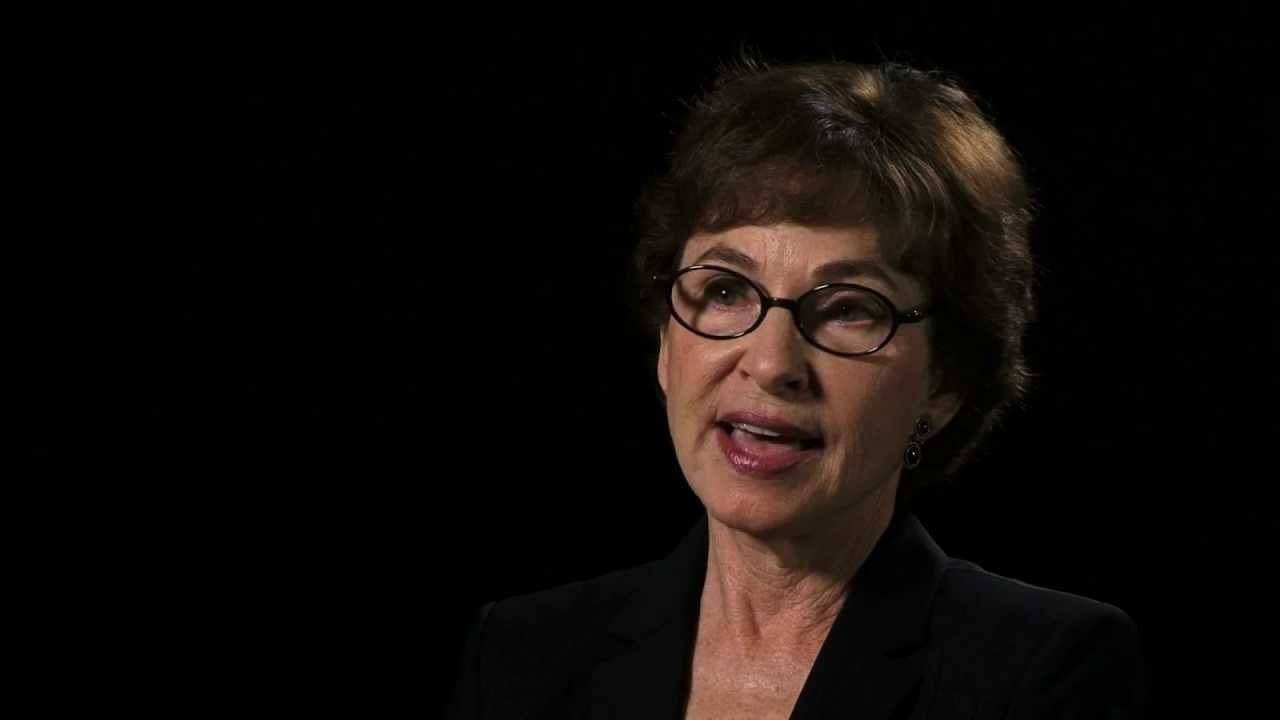
“We certainly are in a health care crisis. If we had set out to design the worst system that we could imagine, we couldn’t have imagined one as bad as we have.”
Marcia Angell, MD – former Editor-in-Chief of The New England Journal of Medicine
Millions, mostly Women, LGBTQ+, and Black and Brown communities, remain uninsured or underinsured. Preventive care is delayed or avoided altogether. Medical debt is so common that it has become normalized. Families routinely face impossible choices between treatment and financial ruin.
Maternal mortality in the U.S. is not only higher than in peer nations—it is rising. Infant mortality remains stubbornly elevated. Outcomes for Black and Brown women mirror those seen in developing countries, a reality that should be impossible in a so-called wealthiest nation on earth.
No developed country allows people to die because they cannot afford care.
The U.S. does. Repeatedly.
That alone disqualifies it from the moral and functional definition of development.
Poverty and Hunger: A Policy Choice, Not an Accident
Credit: The New York Times
In truly developed societies, hunger is treated as a national failure. When food insecurity rises, governments respond swiftly, aggressively, and without moral judgment.
In the United States, hunger is treated as a personal flaw.
Tens of millions of Americans experience food insecurity, including millions of children. Single mothers are disproportionately affected. Entire communities rely on food banks, school meal programs, and informal networks to survive.
This is not the result of scarcity. It is the result of policy.
The U.S. produces more than enough food. It has more than enough money. What it lacks is the political will to ensure that no child goes hungry.
In developing countries, hunger is often linked to instability or limited resources. In the U.S., it is the outcome of deliberate neglect.
An American flag hangs in a classroom as students work on laptops in Newlon Elementary School, Aug. 25, 2020 in Denver.David Zalubowski/AP, FILE
Education is one of the clearest markers of development. In developed countries, access to quality education is not dependent on the state or the street where one is born. Schools are publicly funded, nationally supported, and broadly consistent.
The United States does the opposite.
Public schools are funded through local property taxes, guaranteeing inequality from the start. Children born into low-income or rural communities attend underfunded schools with fewer resources, larger class sizes, outdated materials, and lower outcomes.
Higher education, once a pathway to mobility, has become a debt trap. Student loans now shape life decisions for decades, delaying home ownership, family formation, and financial stability.
When education reinforces inequality instead of reducing it, a society is not developing—it is calcifying.
That is the American reality.
Infrastructure: Decay Hidden by Familiarity
Law enforcement and members of the National Transportation Safety Board investigate the scene where a pedestrian bridge collapsed a few days after it was built over SW 8th Street, allowing people to bypass the busy street to reach Florida International University on March 16, 2018, in Miami. Joe Raedle/Getty Images
In many developing countries, infrastructure collapse is a visible and widely recognized phenomenon. In the United States, it has been normalized.
Bridges fail.
Water systems poison communities.
Power grids collapse during predictable weather events.
Public transportation is inadequate or nonexistent in vast areas of the country.
What most people do not see on TV or in the News is the fact that some cities live with unsafe water. Rural communities lack reliable internet. Aging roads and rail systems slow commerce and endanger lives.
This is not what development looks like.
Developed nations invest continuously in maintenance and modernization. The U.S. waits for a catastrophe, then debates whether fixing the problem is “too expensive.”
That mindset belongs to underdeveloped systems, not advanced ones.
Thanks for reading The Women Post! This post is public, so feel free to share it.
One of the most damning indicators of underdevelopment is declining life expectancy.
In developed countries, people live longer over time. Medical advances, preventive care, and public health investments drive steady improvement.
In the United States, life expectancy has declined.
Preventable deaths are increasing. Chronic illness is widespread. Maternal mortality is rising. Mental health crises go untreated. Addiction ravages communities without adequate support.
A society that grows richer while its people die younger is not developing—it is failing.
Inequality: Two Nations Under One Flag
The United States no longer functions as a single country.
It operates as two.
One America enjoys private healthcare, elite education, safe neighborhoods, political influence, and economic insulation.
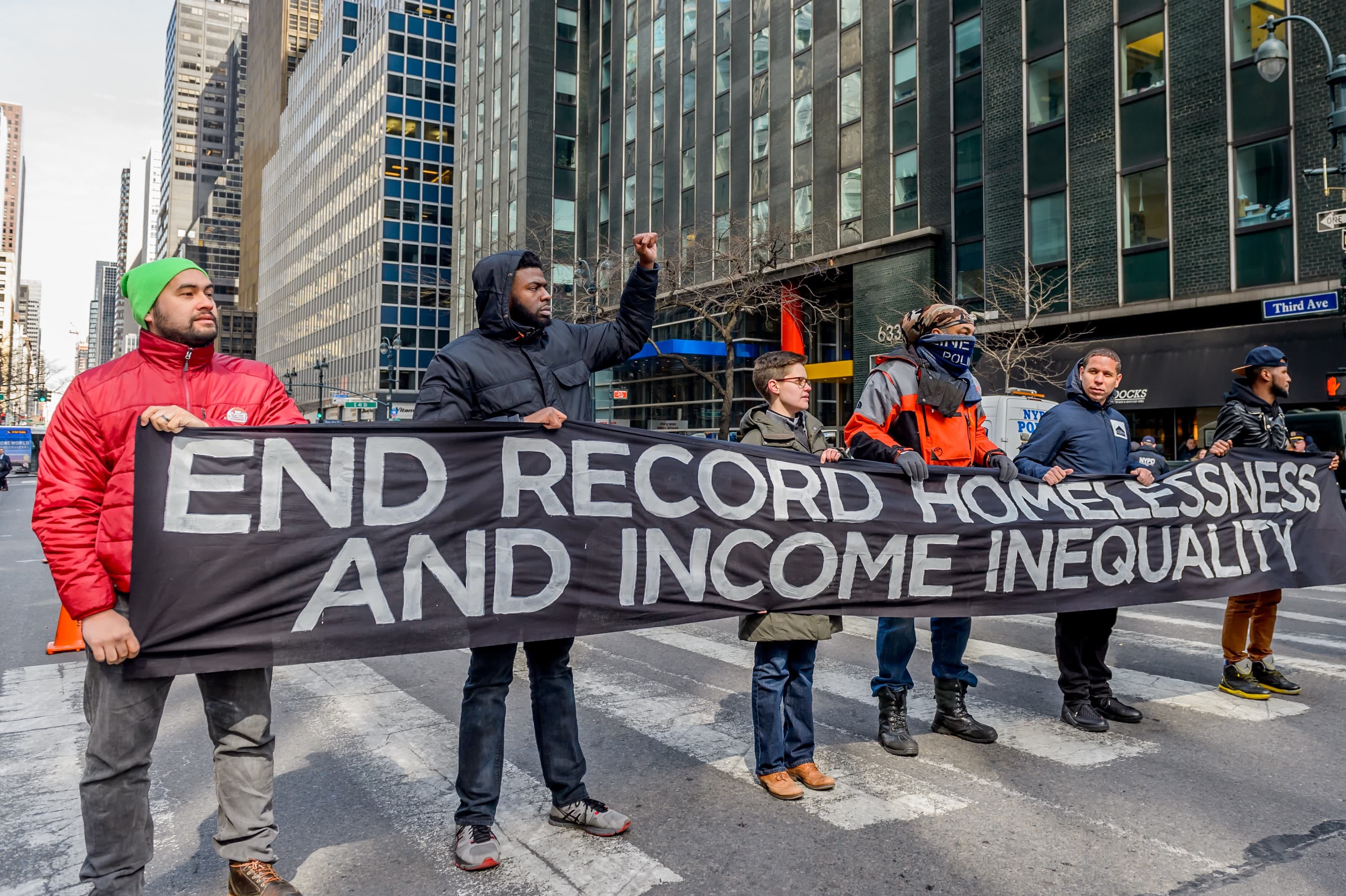
The other lives with precarity—one medical emergency away from ruin, one missed paycheck away from homelessness, one crisis away from collapse.
This level of inequality is characteristic of underdeveloped economies, where growth is concentrated at the top while the majority stagnates or declines.
In the U.S., inequality is not a side effect. It is a design feature.
And it is incompatible with genuine development.
Governance Without Accountability
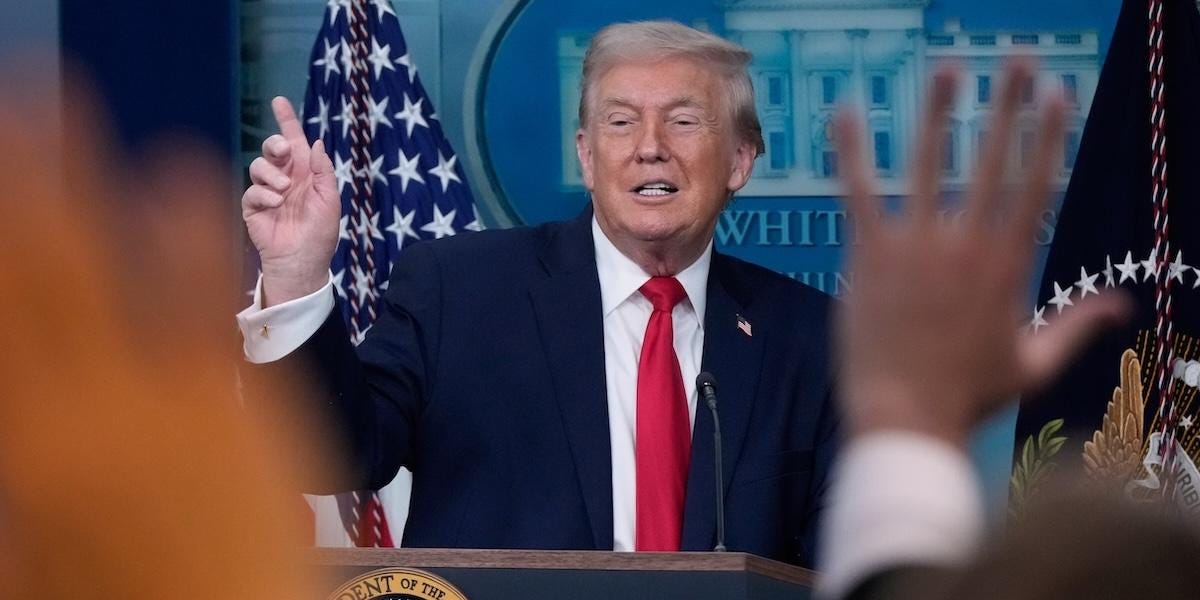
Donald Trump gave a speech and answered questions on Tuesday. (Photo: TT)
Underdeveloped countries are often described as suffering from weak governance. But weakness does not always mean incapacity. Sometimes it means unwillingness.
The U.S. has immense capacity. What it lacks is political alignment with public well-being.
Social programs are underfunded by choice. Public institutions are deliberately weakened. Corporate interests shape policy more than human needs. Long-term planning is sacrificed for short-term profit.
Basic necessities—healthcare, housing, food, education—are politicized rather than guaranteed.
This pattern mirrors underdeveloped systems where elites thrive while the public sphere deteriorates.
The difference is that the U.S. has no excuse.
The Myth of American Development
United States of America Flag. Credit: Freepik.com
The greatest illusion sustaining this system is the belief that the United States is still a fully developed nation simply because it once was.
But development is not permanent.
It must be maintained. Protected. Renewed.
When a country stops investing in its people, when it accepts preventable suffering as normal, when it treats survival as a privilege instead of a right, it begins to slide backward—regardless of how wealthy it appears.
For the United States at 250, that slide is well underway.
Thanks for reading The Women Post! This post is public, so feel free to share it.
The United States is not poor. It is not incapable. It is not lacking resources.
What it lacks is commitment to human dignity.
By global human development standards, the U.S. increasingly resembles an underdeveloped country with advanced technology—a nation where wealth exists without security, innovation without care, and power without responsibility.
A truly developed country ensures that:
No one dies because they are poor
No child goes hungry
No education is determined by ZIP code
No healthcare is rationed by employment
No infrastructure failure is accepted as normal
No one is dehumanized due to their immigration status.
By those standards, the United States is not falling behind.
It has already failed—and until it confronts that reality, it will continue to decline, not because it cannot do better, but because it has chosen not to.









Thank you for this post! It needed to be said.
Well said! It is such a sad truth.