
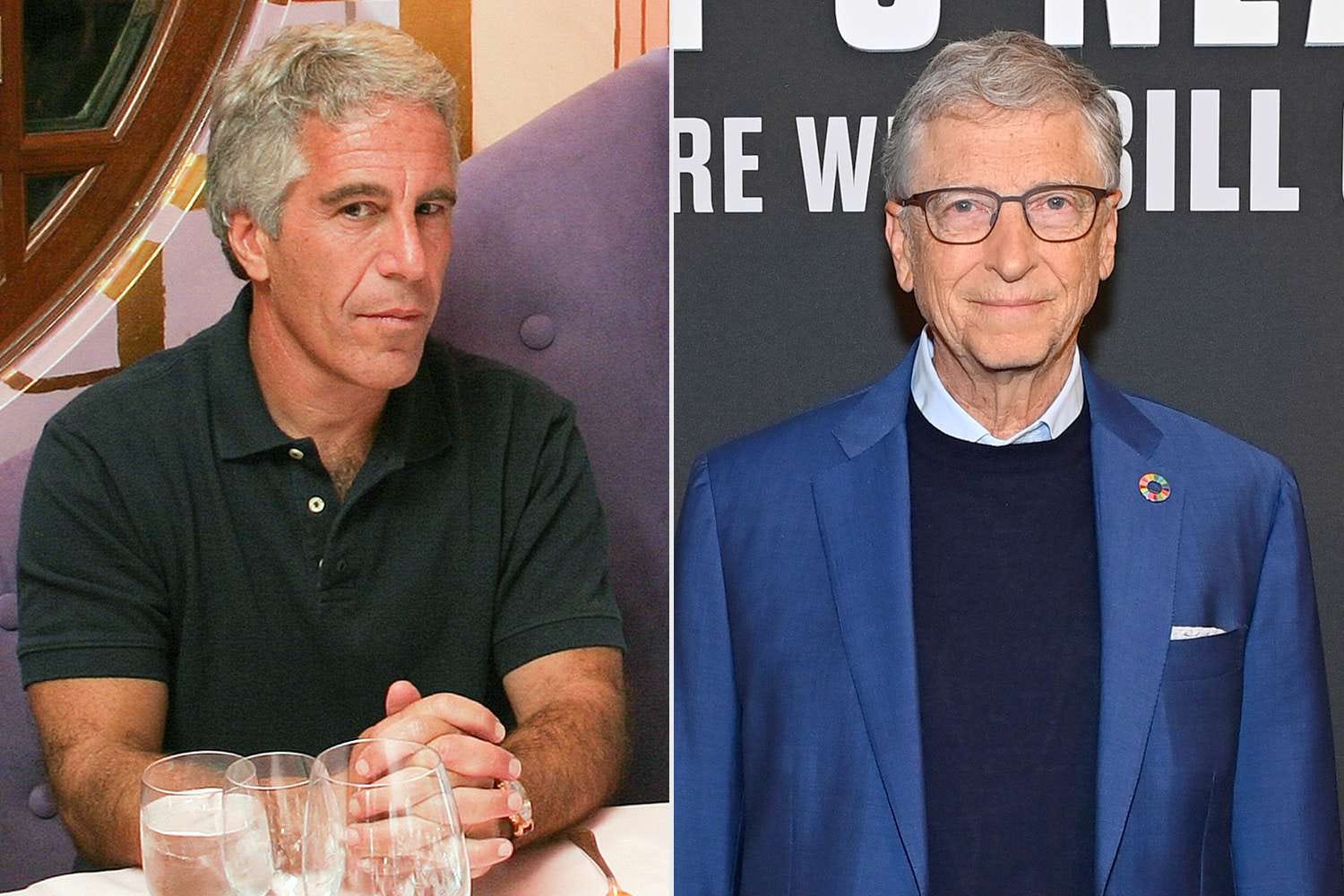
The Untouchable: Bill Gates, Tech Billionaire and Philanthropist — But Beneath the High Profile Lies a Sexual Predator
How Bill Gates’ Ties to Jeffrey Epstein Raise Urgent Questions About Power, Privilege, and Accountability
For decades, Bill Gates has stood as one of the most recognized figures on Earth — a visionary in technology and a billionaire philanthropist whose foundation’s work reaches across the globe. But beneath the polished public image, recent revelations have forced a reckoning over the nature of his associations, particularly with one of the most reviled figures of the 21st century: the convicted sex offender Jeffrey Epstein. The release of millions of pages of government documents has sparked new scrutiny, renewed outrage, and legitimate questions that Gates, despite his wealth and influence, cannot continue to evade.
The Epstein Files and a Billionaire’s Name

In late January and early this month, the U.S. Department of Justice released millions of pages of documents connected to the Jeffrey Epstein investigation, per federal law designed to enhance transparency. Among the trove of emails, photographs, and correspondence were references to some of the world’s most powerful men, including Bill Gates.
While the presence of names in the files does not, on its own, constitute evidence of criminal behavior, these disclosures have reinforced public concern over why such a powerful philanthropist would engage with someone like Jeffrey Epstein, who was already a convicted sex offender — a man who procured minors, ran sex trafficking operations, and exploited the powerless for decades.
In response to the emerging files, Gates’ team has repeatedly denied any inappropriate conduct, decrying certain claims as “false” and “absurd.” Yet the denials raise as many questions as they attempt to settle.
What’s Known: Meetings, Dinners, and Regret
The earliest known interactions between Gates and Epstein date back to around 2011, years after Jeffrey Epstein had already pleaded guilty to facilitating prostitution involving a minor. Multiple news outlets reported that the two met on several occasions, including dinners and visits at Epstein’s Manhattan townhouse — interactions Gates later described as a “huge mistake.”
During a 2021 interview with CNN, Gates acknowledged he had met with Epstein “several times” and said the motivation was fundraising—hoping Epstein’s connections could support global health initiatives championed by the Bill & Melinda Gates Foundation. But when the promised benefits failed to materialize, Gates said he ended the relationship and regretted giving Jeffrey Epstein any credibility.
The meetings were controversial not just because Epstein was already a convicted sex offender, but because Gates is the face of a foundation that has spent billions on health, including the protection and well-being of women and children — the very demographic Jeffrey Epstein preyed upon.
Lurking Allegations and Epstein’s Claims
Among the newly released files were draft emails that included accusations by Jeffrey Epstein suggesting Gates had contracted a sexually transmitted infection and sought to cover it up by asking for antibiotics to be delivered to his then-wife, Melinda French Gates, without her knowledge. Gates’ spokesperson has called these claims “absurd and completely false,” and there is no evidence that they were ever acted upon.
Still, the fact that such allegations appear at all in government-released materials underscores the tangled nature of the relationship between Jeffrey Epstein and those in powerful circles. Whether fabricated by Epstein himself or rooted in real interactions, these fragments warrant more thorough answers from Gates — not dismissive one-liners.
Melinda French Gates: A Voice of Accountability

Perhaps the most striking development in this saga is the response from Melinda French Gates, Gates’ ex-wife and co-founder of the philanthropic foundation. In a recent interview on NPR’s “Wild Card” podcast, French Gates expressed deep emotional discomfort at the resurfacing of Epstein-linked emails, linking them to painful moments in her marriage and calling for those involved — including Bill Gates — to answer outstanding questions.
Her remarks carry weight because she was not just a spouse but a partner in the foundation’s mission, and because she has been vocal in distancing her work from any association with Jeffrey Epstein. Her comments underscore that the issue isn’t simply about social interactions — it’s about accountability, transparency, and the moral responsibility of public figures whose decisions have global impact.
Why Gates Must Answer Questions Publicly
Gates’ defenders argue that Jeffrey Epstein attempted to ingratiate himself with wealthy elites and that simply meeting someone — even a despicable person — does not equate to complicity in their crimes. But this defense misses the larger point: reputational proximity to Epstein gave legitimacy to a man whose life was built on exploitation and abuse.
By choosing to meet with Jeffrey Epstein after his conviction, Gates lent, even if unintentionally, a veneer of acceptability to someone whose name alone should have been toxic. That decision was not made in private; it was a choice by one of the most recognizable figures of our age. A billionaire who could have chosen to sever all ties to Jeffrey Epstein instead opted for dinners and extended conversations.
The public deserves to know:

What conversations occurred during these meetings?
Why did Bill Gates believe Jeffrey Epstein could secure philanthropic funds despite his criminal history?
What due diligence, if any, did Bill Gates and his advisers conduct before engaging with Jeffrey Epstein?
Did Jeffrey Epstein attempt to leverage information against Bill Gates, as some accounts suggest?
These aren’t fringe questions — they’re fundamentals of transparency that a public philanthropist owes the world.
A Pattern of Elite Protection?
The Gates-Epstein relationship is not an isolated example of wealthy elites associating with Jeffrey Epstein long after his conviction. Newly disclosed DOJ files show that Jeffrey Epstein continued to cultivate connections within Silicon Valley and beyond, attending dinners and events alongside other influential figures.
This pattern reveals a broader problem: powerful people are shielded by networks that normalize their behavior and insulate them from consequences. If Bill Gates can deflect scrutiny with a few statements and continue his philanthropic work undisturbed, what does that say about accountability in elite circles?
The Broader Implications
The implications go beyond Bill Gates as an individual. They touch on deep issues of justice, privilege, and institutional transparency. When leaders of immense wealth engage — willingly or naively — with convicted abusers, they contribute to a culture where accountability is negotiable, and reputation can be managed rather than earned.
For survivors of Jeffrey Epstein’s crimes, these revelations reopen wounds and serve as a reminder that abusers and their enablers can operate above consequences for years. For the public, it raises the question: Why should those with wealth be exempt from the same rigorous examination and accountability demanded of others?
And finally, for Bill Gates himself, the question is blunt: Will he answer the outstanding concerns with specificity and sincerity — or will he continue to offer generalized regrets?
A Moment for Real Answers
Bill Gates may be untouchable in terms of wealth and influence, but the court of public accountability is not something that can be bought or dismissed with a publicist’s statement. The revelations from the Jeffrey Epstein files, alongside personal testimony from someone as close as Melinda French Gates, make clear that there are unanswered questions that no amount of denial can erase.
At this crossroads, Bill Gates must choose transparency over obfuscation, full disclosure over defensive denial. Not just for his legacy — but for the broader principle that no individual, no matter how influential, should be left without scrutiny when serious questions remain about their judgment and associations.


Strong piece. The elite network protection angle is what doesn't get enough attention. Gates claims it was fundraising but the timing of those meetings after Epstein's conviction shows incredibly poor judgment at minimum. What bothers me most is how these relationships get minimized as "networking" when similar associations would bury anyone without that level of wealth and influence.
I knew Bill was a freak on the low you can see it in his eyes