The War After the War: How PTSD Is Devastating Women and Girls in War-Zone Camps.
War does not end when bombs stop falling. For many women, it never does.

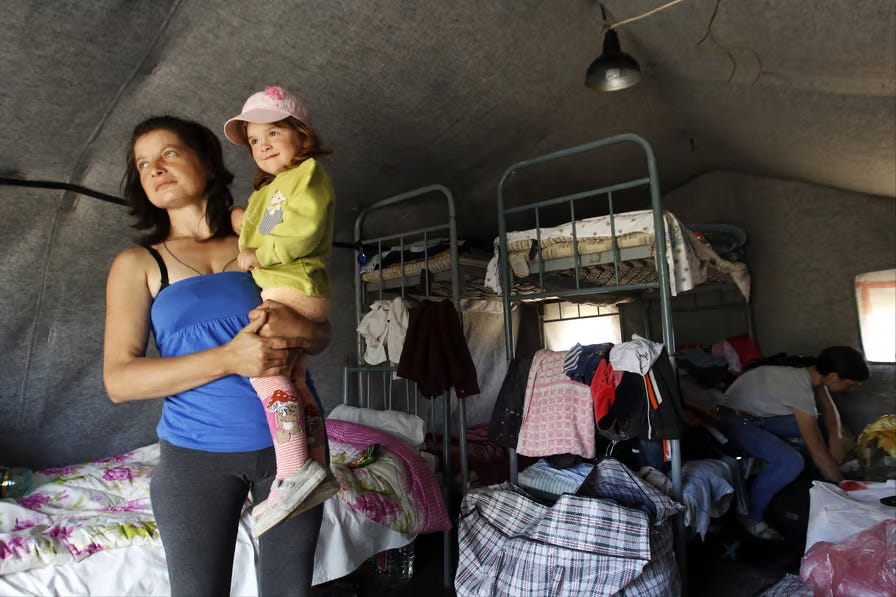
In sprawling camps built from tarps, salvaged wood, and thin sheets of metal, the nights are long and restless. The air carries the echoes of things most people will never hear—explosions, screams, the sound of homes collapsing in seconds. Even in relative safety, sleep rarely comes easily.
The Women Post spoke with two women living in war zone displacement camps. Their names have been changed to protect their safety. Their stories, however, are painfully real.
What follows is not just a testimony of survival. It is a glimpse into the invisible war women continue to fight every day: the war inside their minds.
“I Wake Up Thinking the Bombs Are Coming Back”
Olesia is 34 years old. Before the war, she worked as a teacher in a small community school. Today, she lives in a crowded tent with her two children.
The first thing she tells us is that she rarely sleeps.
“Every night,” she says quietly, “I wake up thinking the bombs are coming back.”
Her hands tremble slightly as she speaks.
“I hear loud sounds in my dreams. Even when there are no planes, I hear them. I hear explosions. I see my street again.”
Olesia describes the night her neighborhood was destroyed.
“It was late. My children were sleeping. Then the sky lit up, and everything started shaking. I grabbed them and ran outside. The buildings were collapsing. People were screaming.”
She pauses.
“I never saw my neighbor again. She was trapped inside.”
Help us amplify these women’s voices.
Share this story. Talk about it. Bring attention to the invisible wounds of war that women and children carry every day.
Because awareness is the first step toward change.
For months afterward, Olesia says she could barely speak about what happened. In the camp, survival required moving forward quickly: finding food, water, and safety for her children.
But trauma does not disappear simply because life demands resilience.
“Sometimes I forget where I am,” she says. “A loud noise happens, and my body reacts before my mind understands.”
Her heart races. Her breathing shortens. She begins to shake.
“I know it’s not happening again,” she says. “But my body thinks it is.”
“My Daughter Thinks I Am Always Afraid”

Across cities, 38-year-old Anastasia sits with her children inside her shelter. Her daughter, who is 15 years old, and her siblings play on mobile phones, while the younger one plays with a water bottle.
Anastasia’s voice is calm, but her eyes reveal exhaustion.
“I used to be very strong,” she tells us. “People came to me for help.”
Before the war, Anastasia ran a small clothing shop with her sister. Now, she struggles with something she cannot easily explain to her child.
“My daughter asks me why I am always afraid.”
Anastasia describes constant anxiety that never fully leaves.
“When people shout, or when trucks drive by loudly, my body freezes,” she says. “I feel like danger is everywhere.”
She describes another symptom common among people living with severe trauma: hypervigilance.
“In the camp, I cannot relax,” she says. “Even when things are quiet, I feel like something bad is about to happen.”
Anastasia says the nights are the hardest.
“I close my eyes and see the road where we escaped,” she tells us. “There were people everywhere, running. I saw injured people. I saw things no one should see.”
Sometimes, she says, she wakes up crying.
Her daughter has begun to notice.
“She asks me, ‘Mama, why are you crying when you sleep?’”
Layla looks down.
“I don’t know how to answer her.”
Help us amplify these women’s voices.
Share this story. Talk about it. Bring attention to the invisible wounds of war that women and children carry every day.
Because awareness is the first step toward change.
The Silent Crisis Inside War Zones

While the world often focuses on the physical destruction of war—bombed cities, shattered infrastructure, displaced populations—another crisis unfolds quietly: the psychological devastation.
Mental health experts describe post-traumatic stress disorder (PTSD) as one of the most widespread yet underreported consequences of armed conflict.
For women in displacement camps, the risk is even higher.
They often carry multiple burdens at once:
Surviving violence
Protecting children
Coping with loss
And navigating uncertainty about the future.
Many have witnessed death. Many have lost homes, relatives, or livelihoods.
Yet mental health services in camps are scarce or nonexistent.
Olesia says she has never spoken with a psychologist.
“There are doctors sometimes for injuries,” she says. “But for the mind… there is nothing.”
Anastasia echoes the same reality.
“In the camp, people think you must stay strong,” she says. “But sometimes strength feels impossible.”
When Trauma Shapes the Future
The long-term effects of untreated trauma can be devastating.
Women suffering from PTSD often experience:
Chronic anxiety
Nightmares and flashbacks
Emotional numbness
Difficulty trusting others
Physical symptoms like heart palpitations and insomnia
For mothers, the impact can extend to their children.
“Sometimes I become angry quickly,” Olesia admits. “Then I feel guilty because my children did nothing wrong.”
She worries constantly about what the future holds for them.
“I want them to grow up without fear,” she says. “But how can I teach them that when I am still afraid?”
Anastasia shares the same concern.
“My daughter was three when the war started,” she explains. “She doesn’t remember our home. The camp is the only world she knows.”
That thought weighs heavily on her.
“I don’t want this life to be normal for her.”
Help us amplify these women’s voices.
Share this story. Talk about it. Bring attention to the invisible wounds of war that women and children carry every day.
Because awareness is the first step toward change.
Hope in Small Moments
Despite everything they have endured, both women speak about hope—not as something certain, but as something they are trying to hold onto.
Olesia says her children keep her going.
“When they laugh, it reminds me that life still exists,” she says softly.
Anastasia dreams of reopening her clothing shop one day.
“I want my daughter to see me working again,” she says. “I want her to see that life can rebuild.”
Both women say the most painful part of their experience is feeling forgotten by the world.
“Sometimes we feel invisible,” Mariam says.
Why Their Voices Matter
Stories like Mariam’s and Anastasia’s rarely make international headlines. War reporting often focuses on frontlines, military strategy, and political negotiations.


But the human aftermath—the silent suffering of women and children—continues long after the cameras leave.
Trauma does not end with ceasefires.
For millions of women across war zones, the psychological scars of conflict shape daily life for years, sometimes decades.
Listening to these voices is not simply an act of compassion.
It is an act of responsibility.
Before You Click Away!
At The Women Post, we believe stories like these must be heard.
Mariam and Anastasia are not statistics. They are mothers, survivors, and witnesses to a crisis that the world too often ignores.
Their struggle with trauma represents the reality faced by countless women living in war zones or refugee camps across the globe.
If their voices moved you, we ask you to do something simple but powerful:
Help us amplify them.
Share this story. Talk about it. Bring attention to the invisible wounds of war that women carry every day.
Because awareness is the first step toward change.
And for women like Mariam and Anastasia, being heard can mean the difference between being forgotten and finally being seen.


