
The World Cup Collides with Reality: The Problems Worrying National Teams
Shootings, immigration restrictions, crowd concerns, and warnings about dangerous wildlife are fueling doubts in the final countdown to the tournament.
The United States is once again raising the curtain on a major sporting spectacle. Giant stadiums, cities packed with fans, national teams spread across the country, and an organizational machine designed to impress the world. But just days before kickoff, the perfect picture many imagined is beginning to show cracks—not because of the organization itself, but because of everything surrounding the sport.
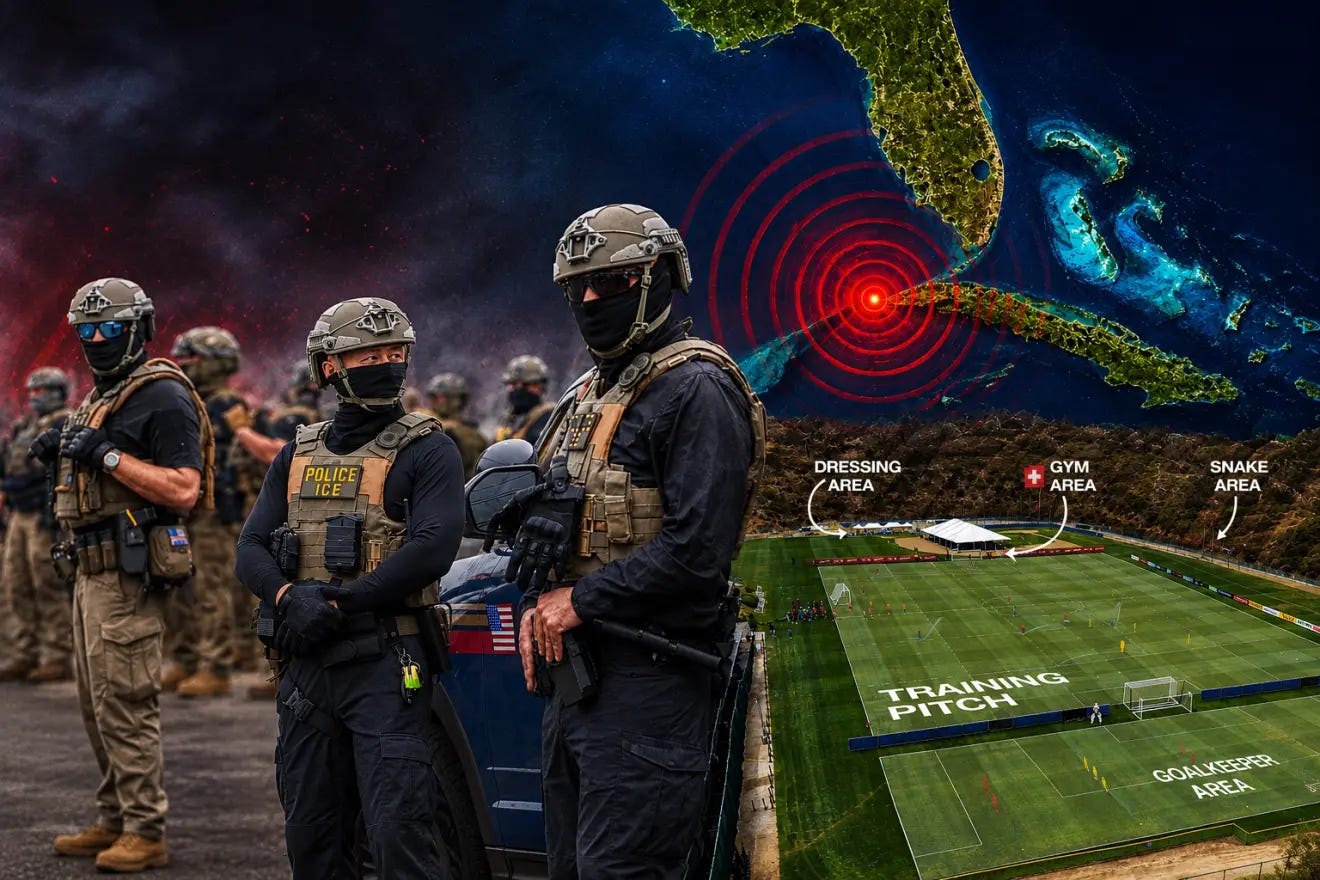
The preparations of several national teams have been marked by incidents and setbacks ranging from warnings about venomous snakes to immigration issues, venue changes, complaints about training grounds, a shooting near England’s base in Kansas City, and a 6.1-magnitude earthquake felt in Florida. Not all of these incidents are equally serious, and some have been amplified by headlines that are more alarmist than accurate. Together, however, they paint a somewhat uncomfortable picture. Organizing a World Cup across three countries, with vast distances and vastly different contexts, also means navigating complex challenges.
Warnings Beyond Football
The most striking case is that of Switzerland. The national team was alerted to the presence of rattlesnakes near its training grounds in San Diego, specifically in an area marked as a “snake zone” adjacent to its facilities. The image shared by the Swiss team—a map of the training area—perfectly encapsulates a contrast that has surprised many observers.
Norway has also received warnings about dangerous wildlife at its training camp in North Carolina, including snakes, lizards, and alligators. Again, rather than an emergency, it appears to be a sensible precaution for European footballers arriving in an unfamiliar ecosystem. Nevertheless, it has contributed to the perception of a less controlled environment than many expected.
More serious concerns have emerged on the logistical and political front for Iran. The Iranian national team moved its base from Arizona to Tijuana, Mexico, amid tensions surrounding visas and entry restrictions in the United States. The Department of Homeland Security later clarified that players would be permitted to enter the United States the day before each match, dismissing reports that they would have to enter and leave on the same day. Even so, the situation remains delicate. Some staff members reportedly encountered visa issues, and the Iranian federation has cited obstacles affecting its supporters.
“The United States doesn’t want Iran to stay overnight in the United States,” said Claudia Sheinbaum, President of Mexico.
An Incident That Raises Alarms
Japan, for its part, decided to change its training grounds in Mexico after several complaints about the condition of the pitch. Players reported an uneven surface, patches of dirt, and conditions they considered unsuitable for World Cup preparation.
But the concerns do not end there. England has been associated with some of the most controversial headlines before the tournament has even kicked off.
In Kansas City, nine people were injured in a shooting near the area where the team has established its World Cup base. However, local police emphasized that the incident did not occur at a World Cup venue or at facilities directly connected to the tournament. Furthermore, the English squad was not in the area at the time, as it was in Florida.
Florida also felt the effects of a 6.1-magnitude earthquake west of Cuba. The USGS confirmed the quake and described it as the strongest in the region in nearly 150 years. The tremor was felt in Cuba, Mexico, and parts of Florida. While no tsunami warning was issued and no major damage was initially reported, the event added yet another source of concern to preparations already under intense media scrutiny.


