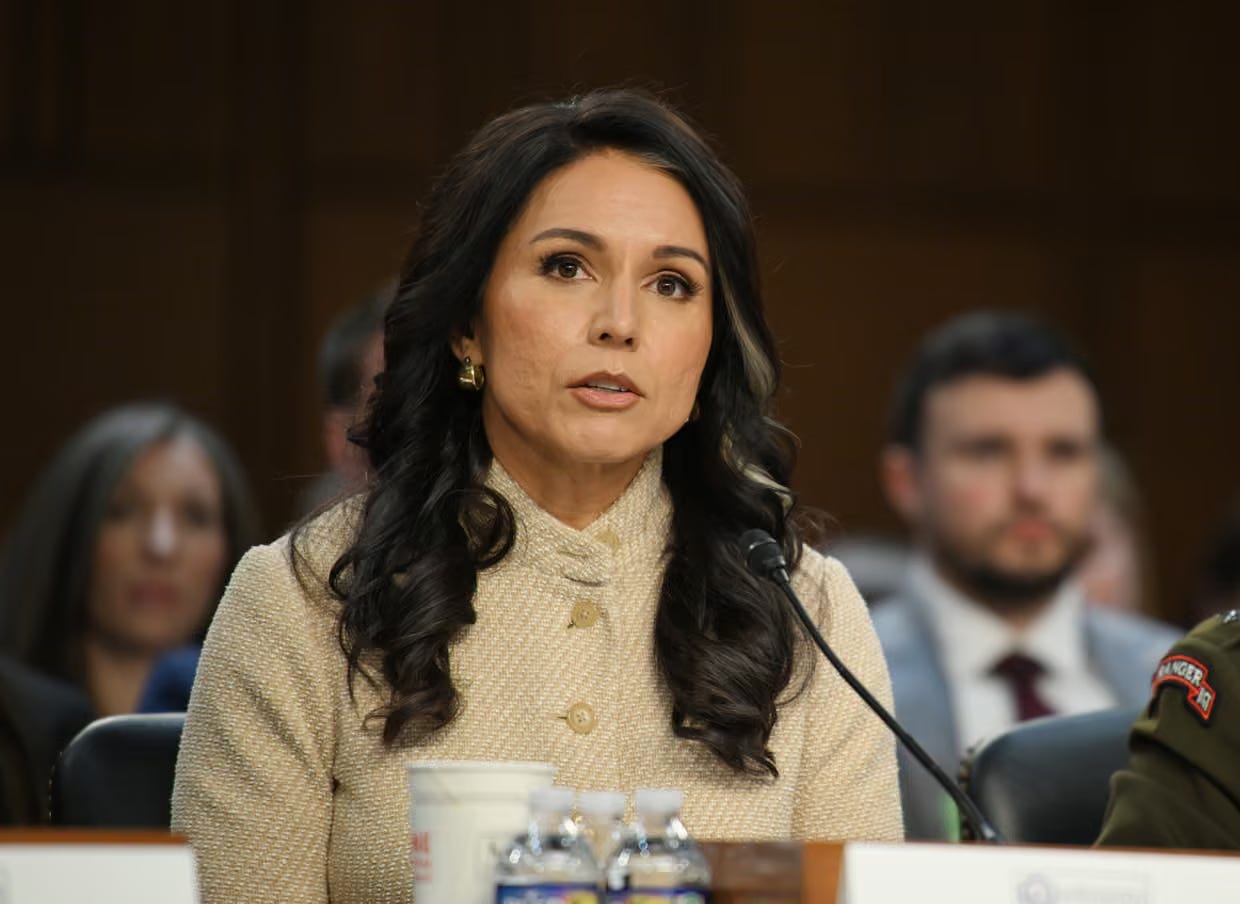
Tulsi Gabbard on Capitol Hill in Washington DC on 18 March. Photograph: Annabelle Gordon/UPI/Shutterstock.
Tulsi Gabbard’s time as director of national intelligence is coming to an abrupt end after a controversial and often turbulent tenure in the Trump administration. The former Democratic congresswoman announced that she will step down from her position on June 30, closing a chapter marked by internal disputes, political controversy, and growing questions about her influence within the administration.
In a letter addressed to President Donald Trump, Gabbard acknowledged the work completed during her tenure while suggesting that challenges remain ahead.
The Women Post is a reader-supported publication. To receive new posts and support our work, consider becoming a free or paid subscriber.
“While we have made significant progress, I recognize there is still important work to be done,” she wrote.
Although the departure was publicly framed as voluntary, reports suggest the reality may be more complicated. According to Reuters, citing a source familiar with the matter, the White House effectively pushed Gabbard out of the role. Fox News, which first reported the departure, pointed to a serious health issue affecting Gabbard’s husband as a contributing factor.
Behind the scenes, however, discussions about her future reportedly had been underway for weeks. Sources familiar with administration conversations said Trump had been consulting cabinet members about whether Gabbard should remain in the position.
Despite those reports, Trump publicly praised her service.
“Unfortunately, after having done a great job, Tulsi Gabbard will be leaving the Administration on June 30,” Trump wrote on Truth Social.
He added that Gabbard had performed “an incredible job” and would be missed, and announced that Aaron Lukas, the principal deputy director of national intelligence, would serve as acting DNI following her departure.
Influence Appeared to Fade During Key Foreign Policy Decisions
Questions about Gabbard’s standing inside the administration intensified last year as major foreign policy decisions unfolded without her apparent involvement.
One of the clearest examples came when Trump backed Israel’s military action against Iran before authorizing U.S. strikes against Iranian nuclear facilities. The move directly contradicted testimony Gabbard had previously given to Congress, where she argued that Iran was not actively pursuing a nuclear weapon.
Trump publicly dismissed that assessment, declaring that he did not care what she had said and bluntly labeling her conclusions as incorrect.
The episode was widely viewed as a public rebuke of the nation’s top intelligence official and fueled speculation that her influence within the administration had diminished significantly.
In the aftermath, Gabbard appeared eager to realign herself with Trump’s political priorities. She drew national attention after accusing former President Barack Obama and several senior national security officials of participating in what she described as a “treasonous conspiracy” related to investigations into Russian interference in the 2016 election.
Obama strongly rejected those claims, which critics argued aligned closely with Trump’s long-running efforts to target political opponents and challenge the legitimacy of investigations into his campaign.
Political Controversies Followed Her Throughout Her Tenure
Gabbard’s tenure became increasingly controversial as she expanded her public profile beyond traditional intelligence matters.
Democrats sharply criticized her involvement in an FBI operation focused on ballots from the 2020 presidential election. Critics argued that the appearance blurred the line between intelligence responsibilities and domestic political disputes.
At the same time, reports suggested she was being excluded from several significant national security decisions.
She was notably absent from discussions surrounding the capture of Venezuelan President Nicolás Maduro earlier this year. Likewise, she played little visible role in the administration’s renewed military actions against Iran, raising further questions about her standing among Trump’s senior advisers.
For many observers, those developments reinforced concerns that had existed since her nomination.
Critics Long Questioned Her Qualifications
When Trump selected Gabbard for the intelligence position following his 2024 election victory, the choice immediately generated controversy.
Opponents pointed to her past statements regarding Russia’s invasion of Ukraine, arguing that some of her comments echoed narratives promoted by the Kremlin. Others highlighted her 2017 meeting with former Syrian leader Bashar al-Assad, during which she argued that Syria was not an enemy of the United States.
Those concerns resurfaced repeatedly throughout her time in office.
Former Secretary of State Hillary Clinton had previously suggested that Gabbard was being “groomed” by Russian interests, an accusation Gabbard strongly denied.
Nevertheless, skepticism from national security experts and lawmakers never fully disappeared.
Reaction from Democratic lawmakers was swift following news of Gabbard’s resignation.
Senator Mark Warner, vice chair of the Senate Intelligence Committee, expressed sympathy for Gabbard’s family while emphasizing the importance of restoring confidence in the intelligence community.
Warner said the next intelligence chief must ensure that the office remains guided by facts, independence, and adherence to the rule of law.
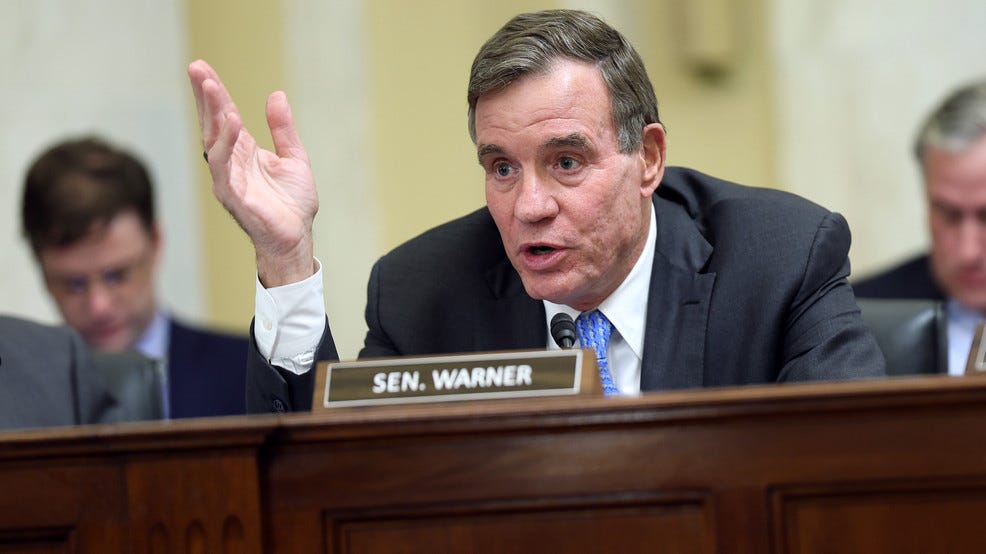
WASHINGTON, DC - NOVEMBER 14: U.S. Sen. Mark Warner (D-VA) delivers remarks during a Rules Committee hearing at the Russell Senate Office Building on November 14, 2023, in Washington.
“The next DNI must be committed to restoring trust in the office, protecting the integrity of our intelligence, and ensuring our nation’s intelligence professionals can speak truth to power, without fear or interference,” he said.
Senator Adam Schiff was even more critical.
While wishing Gabbard’s husband a speedy recovery, Schiff argued that her resignation itself represented her most significant contribution to national security.
According to Schiff, Gabbard politicized intelligence operations, weakened key institutions, and promoted unsupported claims regarding election fraud.
He warned that future intelligence leaders must place national security above loyalty to any president.
Gabbard’s exit also continues a pattern of high-profile departures involving women in Trump’s cabinet.
She becomes the fourth woman to leave the administration in just over two months.
Her departure follows the removal of Kristi Noem from her role as homeland security secretary in March, the firing of Attorney General Pam Bondi in April, and the resignation of Labor Secretary Lori Chavez-DeRemer later that same month.
The series of exits has fueled renewed questions about instability within the administration’s senior ranks.
Supporters Defend Her Legacy
Despite intense criticism from opponents, Gabbard’s supporters argue that she brought significant change to the intelligence community.
The Office of the Director of National Intelligence credited her with undertaking reforms that previous intelligence chiefs had avoided.
ODNI spokesperson Olivia Coleman praised Gabbard’s leadership, describing her tenure as a major challenge to what supporters often call the “deep state.”
Among the accomplishments cited by her office were the revocation of security clearances from individuals viewed by supporters as politically motivated actors and the release of long-classified documents related to the assassinations of John F. Kennedy, Robert F. Kennedy, and Martin Luther King Jr.
Whether viewed as a reformer or a deeply polarizing figure, Gabbard leaves office after a tenure that generated fierce debate over the role of intelligence agencies, presidential loyalty, and the future direction of American national security policy. Her departure closes one of the most controversial chapters in the Trump administration’s intelligence leadership.
The Women Post is a reader-supported publication. To receive new posts and support our work, consider becoming a free or paid subscriber.