Two Powerful Earthquakes in Venezuela Kill at Least 164, Injure Nearly 1,000
Rescue efforts under way as death toll expected to rise; residents urged to remain outside fearing aftershocks.

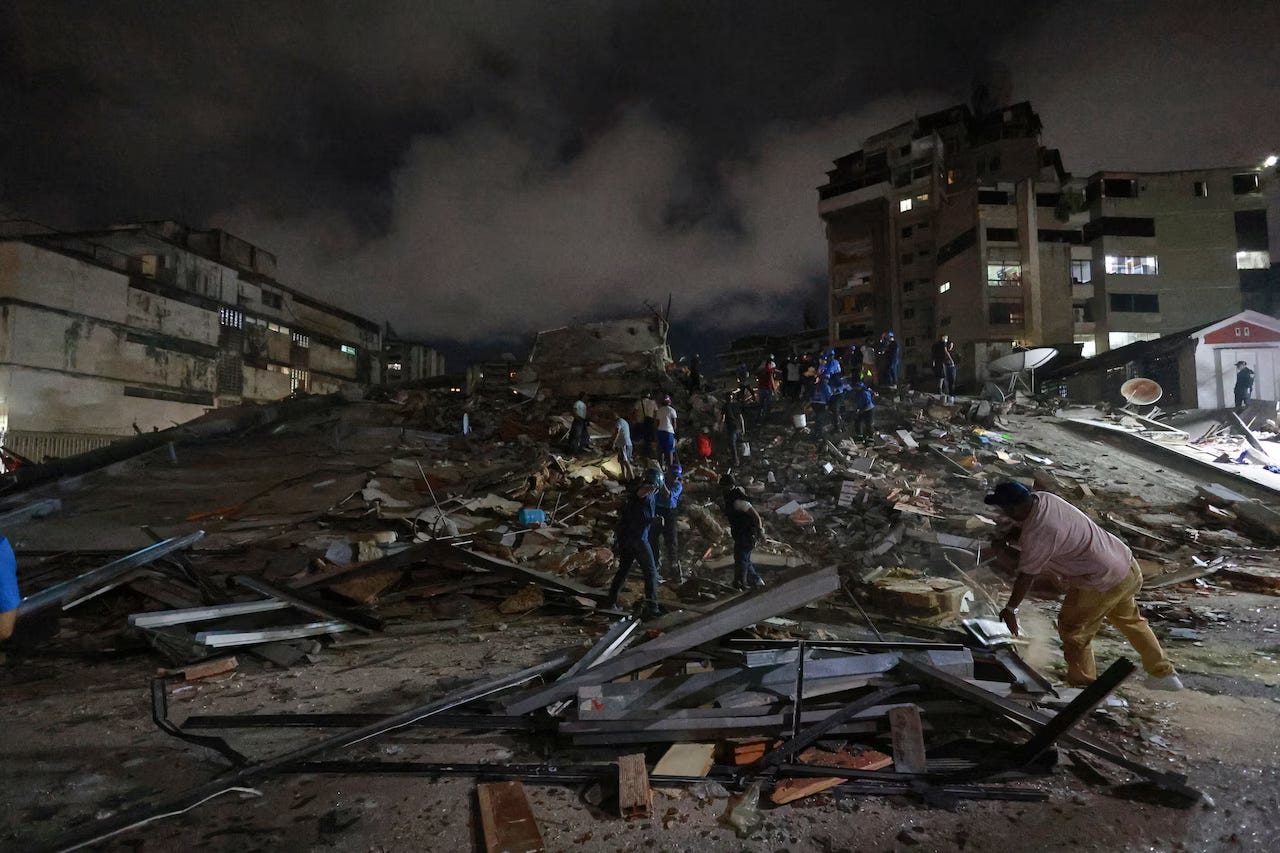
Venezuela is facing one of the deadliest natural disasters in its modern history after two massive earthquakes struck the country within seconds of each other, killing at least 164 people and injuring nearly 1,000 more. The devastating twin tremors left entire neighborhoods in ruins, collapsed buildings across the capital, Caracas, and sent terrified residents fleeing into the streets as rescue teams raced against time to find survivors trapped beneath mountains of concrete and steel.
The powerful seismic event unfolded on Wednesday evening when a magnitude 7.2 earthquake struck northern Venezuela. Less than a minute later, a stronger magnitude 7.5 quake followed, creating a rare and destructive double impact that amplified devastation across the region. The earthquakes were among the strongest ever recorded in the South American nation and were felt hundreds of kilometers away.
As darkness fell over the country, scenes of chaos, panic, and heartbreak emerged. Families searched desperately for missing loved ones. Hospitals struggled to accommodate waves of injured residents. Emergency workers worked through the night under dangerous conditions, digging through rubble while aftershocks continued to shake already weakened structures.
A City Shaken to Its Core


Caracas, Venezuela’s capital and largest city, suffered some of the most severe damage. Numerous residential and commercial buildings collapsed, while roads cracked and critical infrastructure sustained significant damage. Witnesses described hearing loud rumbling noises moments before the ground began violently shaking.
Many residents initially believed the first quake had ended, only to be hit seconds later by the second, more powerful tremor. The brief gap between the earthquakes gave little time for people to react, turning what might have been a manageable emergency into a catastrophic disaster.
Videos shared by residents showed buildings swaying, walls crumbling, and clouds of dust filling city streets. At Simón Bolívar International Airport, passengers ran for safety as parts of the structure suffered damage, forcing authorities to suspend operations indefinitely. Public transportation networks, including metro and rail services, were also disrupted as officials assessed structural risks.
For many survivors, the terror of the moment remains unforgettable.
People described hearing screams echo through apartment buildings as residents rushed downstairs. Others recounted watching nearby structures collapse before their eyes. Many families spent the night outdoors, fearing powerful aftershocks could trigger additional collapses.
Rising Death Toll Fuels Fears

Authorities confirmed that at least 164 people have died and 971 others have been injured. However, officials warned that the death toll is expected to rise as rescue operations continue and emergency teams reach some of the hardest-hit areas.
Particularly concerning is the situation in the coastal state of La Guaira, which has been described by officials as one of the worst-affected regions. Entire communities suffered extensive structural damage, and communication difficulties have complicated efforts to assess the full scale of the tragedy.
Thousands of people remain unaccounted for, fueling fears that many could still be trapped beneath collapsed buildings. Search-and-rescue teams have deployed heavy equipment, trained dogs, and emergency personnel to locate survivors. Yet rescuers acknowledge that every passing hour reduces the chances of finding people alive.
Emergency workers have repeatedly appealed for patience and cooperation as they navigate damaged roads, unstable structures, and ongoing aftershocks.
State of Emergency Declared
In response to the crisis, Venezuela’s leadership declared a nationwide state of emergency and mobilized government agencies to coordinate rescue and recovery efforts. Schools have been closed, non-essential public services suspended, and emergency shelters established to house thousands displaced by the disaster.
Authorities also announced emergency funding for reconstruction efforts, recognizing that recovery could take months or even years. The government has prioritized restoring electricity, water services, telecommunications, and transportation links in affected regions.
Officials urged residents to avoid entering damaged buildings until engineers complete safety inspections. Many structures remain at risk of collapse due to aftershocks and weakened foundations.
The state of emergency reflects the enormous challenge facing Venezuela as it attempts to manage both the immediate humanitarian crisis and the long-term rebuilding process.
Why the Earthquakes Were So Destructive?


According to seismic experts, the disaster was intensified by the unusual nature of the earthquake sequence. Rather than a single major earthquake followed by smaller aftershocks, Venezuela experienced what scientists call a seismic doublet—two powerful earthquakes occurring within seconds of one another.
This phenomenon can dramatically increase damage because structures weakened by the first earthquake may collapse during the second. Buildings that might otherwise survive one major tremor often fail when subjected to repeated intense shaking.
The United States Geological Survey classified the event as extremely severe and warned that widespread destruction was likely. Experts noted that portions of Venezuela contain older buildings that were not designed to withstand earthquakes of this magnitude, increasing vulnerability in densely populated urban areas.
The earthquakes also generated concerns about landslides, soil liquefaction, and infrastructure failures. Although a tsunami alert was briefly issued, it was later canceled after authorities determined the threat had passed.
Stories of Survival and Loss
Behind every casualty statistic lies a personal tragedy.
Across Venezuela, families have been torn apart by the disaster. Parents continue searching for missing children. Elderly residents remain trapped in damaged neighborhoods. Rescue crews report hearing voices from beneath collapsed buildings, providing moments of hope amid overwhelming devastation.
Community members have joined rescue efforts, forming human chains to clear debris and deliver supplies. Volunteers have distributed food, water, blankets, and medical aid to displaced residents sheltering in parks, schools, and public spaces.
Many survivors described feeling powerless as buildings crumbled around them. Others recounted miraculous escapes, emerging from collapsed structures with only minor injuries.
Yet for countless families, the reality has been devastating. Loved ones remain missing, homes have been destroyed, and entire communities now face an uncertain future.
International Community Offers Support
As news of the catastrophe spread across the globe, governments and humanitarian organizations offered assistance to Venezuela. Several countries pledged emergency aid, rescue teams, medical supplies, and technical expertise to support relief operations.
International organizations are closely monitoring the situation and preparing additional humanitarian assistance. Medical teams are expected to help local hospitals manage the influx of injured patients, while disaster specialists will assist in damage assessments and recovery planning.
The scale of the disaster has prompted calls for international solidarity, with leaders emphasizing the need for a coordinated response to address both immediate and long-term challenges.
The Long Road Ahead
Even after rescue operations conclude, Venezuela faces an immense recovery effort.


Thousands of homes have been damaged or destroyed. Critical infrastructure requires extensive repairs. Businesses have suffered major losses, and many families now face displacement. Rebuilding entire neighborhoods will require substantial financial resources and sustained commitment from both national and international partners.
Experts warn that psychological recovery may take even longer. Survivors must cope with trauma, grief, and uncertainty while attempting to rebuild their lives. Children who witnessed buildings collapsing and families being separated may require long-term emotional support.
For now, the focus remains on saving lives.
Rescuers continue to work around the clock, refusing to abandon hope that survivors may still be found beneath the rubble. Their determination has become a symbol of resilience for a nation confronting one of the darkest moments in its recent history.
As dawn breaks over damaged cities and shattered communities, Venezuela mourns those lost while holding onto hope for those still missing. The twin earthquakes have left deep scars across the country, but they have also revealed extraordinary acts of courage, compassion, and solidarity.
The coming days will determine the true scale of the disaster. Yet one fact is already clear: Venezuela has been forever changed by the powerful earthquakes that struck without warning, leaving behind a trail of destruction, grief, and a nation determined to rebuild.


