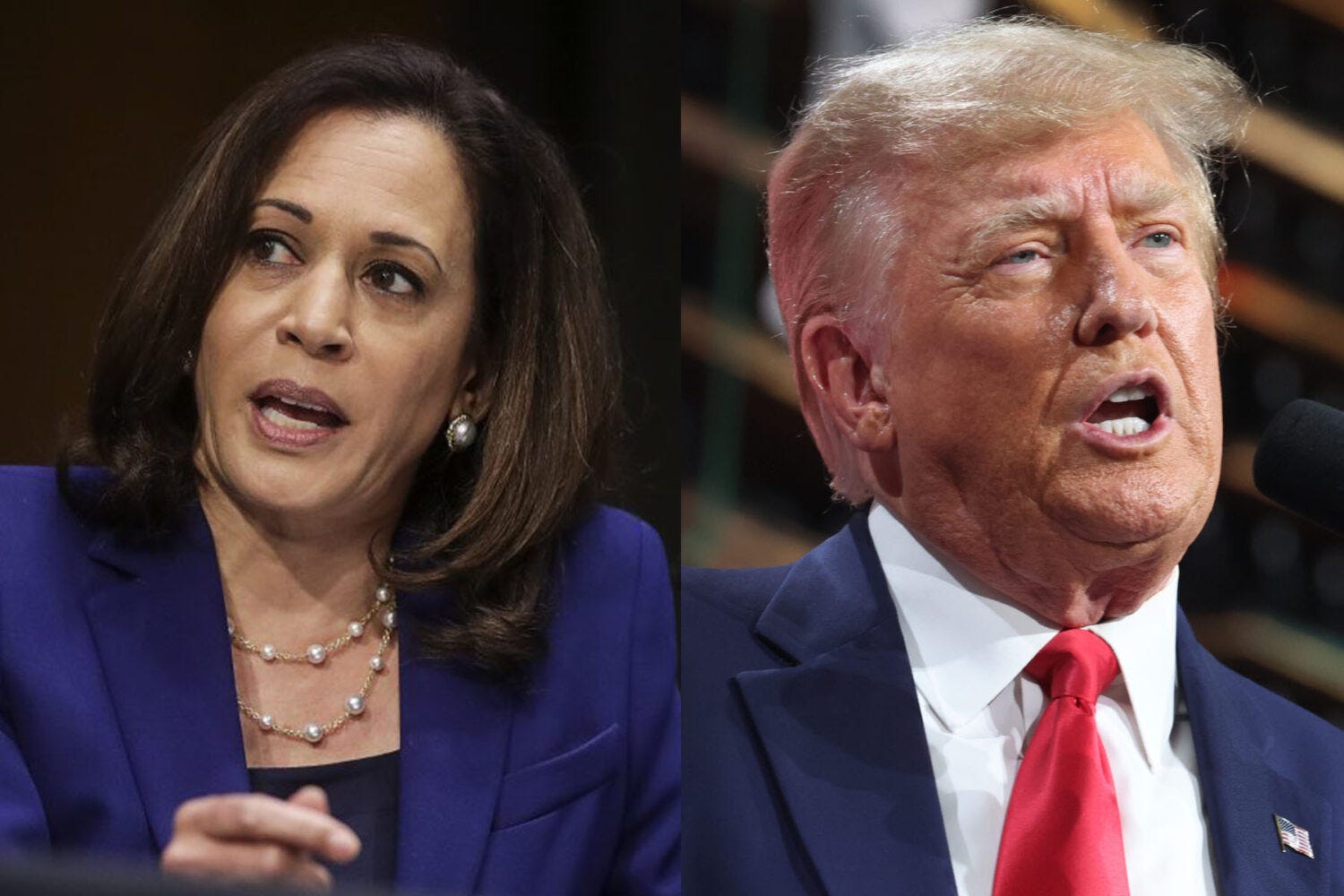
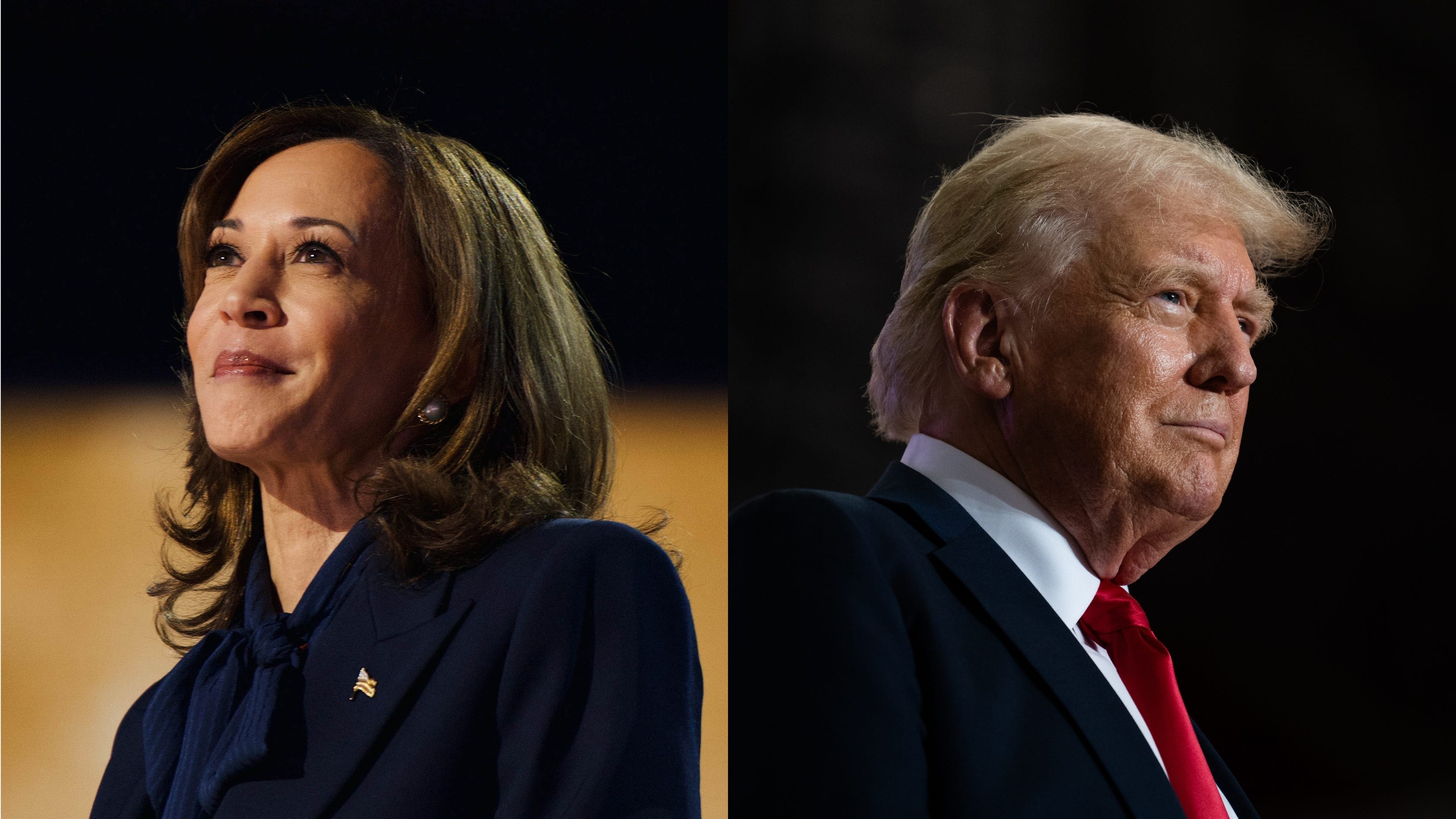
Left: Vice President Kamala Harris delivers a speech as she accepts the party’s nomination to be its presidential candidate at the Democratic National Convention at the United Center on Aug. 22, 2024. Right: U.S. Republican Presidential nominee former President Donald Trump arrives to speak during a rally at Herb Brooks National Hockey Center on July 27, 2024, in St Cloud, Minnesota. Grace Widyatmadja/NPR; Stephen Maturen/Getty Images
During her presidential campaign, Vice President Kamala Harris made a series of warnings about Donald Trump that many critics at the time dismissed as political exaggeration. But one warning stood out above the rest—clear, direct, and unsettling:
Trump’s leadership style could lead the United States into a war with Iran, a war, according to aggregated data collected by HRANA, that has murdered at least 1551 civilians, including 236 children.
At the time, it sounded like a campaign argument. Today, it feels like a question worth revisiting with fresh eyes.
While running for president, Vice President Kamala Harris consistently framed Trump as a leader who governed through impulse rather than strategy. In speeches, interviews, and debates, she painted a picture of a presidency driven by escalation, not diplomacy.
Her argument wasn’t abstract—it was specific.
She warned that Trump’s approach to foreign policy, particularly in the Middle East, was dangerously unpredictable. She pointed to his withdrawal from international agreements, his willingness to use military threats, and his pattern of personalizing global conflicts.
Iran, she suggested, was the most likely flashpoint.
Harris argued that under Trump, tensions with Iran would not just rise—they could spiral into open conflict. She emphasized that diplomacy was being replaced with brinkmanship, and that the consequences of that shift could be catastrophic.
At the time, her critics accused her of fearmongering. Supporters, however, saw it as a sober assessment of risk.
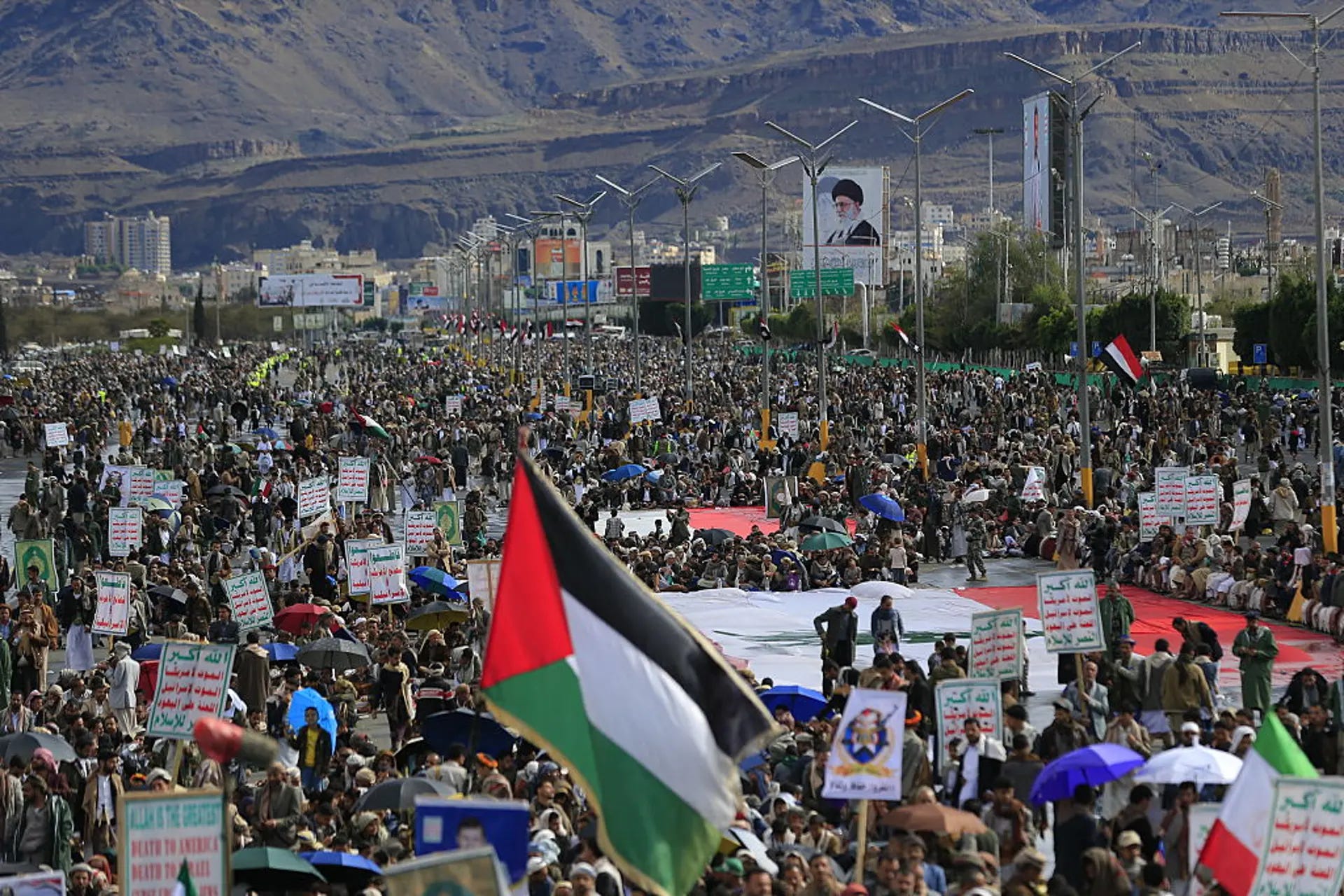
A Palestinian flag is raised as Houthis rally in solidarity with Iran and Lebanon, amid the US-Israeli war with Iran, in the Yemeni capital Sanaa on March 27, 2026. Mohammed Huwais—AFP via Getty Images
Harris didn’t choose Iran at random.
She understood that Iran represented one of the most volatile geopolitical fault lines in the world. Any misstep there wouldn’t stay contained—it would ripple across the Middle East and beyond.
Her concern was that Trump’s approach—maximum pressure, minimal diplomacy—created a situation where:
Tensions were constantly high
Communication channels were weak or nonexistent
Military confrontation became more likely with each escalation
In that kind of environment, a single decision—or miscalculation—could ignite a broader conflict.
That was the scenario she warned about.
Critics vs. Reality
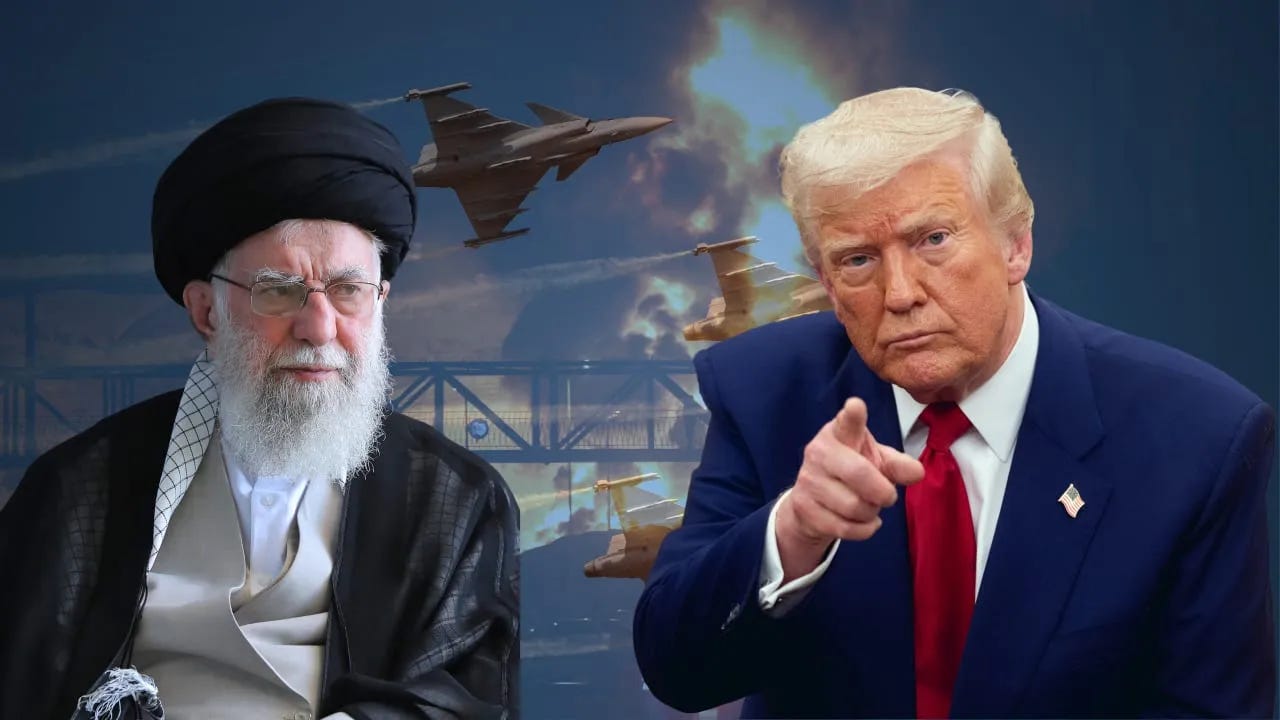
L to R: Iran Ayatollah Ali Khamenei, US President Donald Trump, against backdrop of respective flags and missile strikes.(photo credit: ILLUSTRATION, REUTERS/Majid Asgaripour/WANA 2, Shutterstock/noamgalai, Getty Images/Iranian Leader’s Press Office - Handout)
At the time, many of Harris’s critics argued that Trump’s aggressive stance actually prevented war. They claimed that his unpredictability acted as a deterrent—that adversaries like Iran would avoid conflict precisely because they couldn’t predict his response.
This idea—often described as “peace through strength”—became a central defense of Trump’s foreign policy.
Thanks for reading The Women Post! This post is public, so feel free to share it.
She argued that unpredictability doesn’t just deter enemies—it also increases the risk of miscalculation. And when nuclear ambitions, regional alliances, and military forces are all in play, miscalculation isn’t just dangerous.
It’s potentially catastrophic.
A Question of Leadership
At its core, Harris’s warning was about leadership style.
She contrasted her approach—coalition-building, diplomacy, measured decision-making—with what she described as Trump’s impulsive and confrontational style.
The Iran question became a symbol of that contrast.
Would the U.S. pursue stability through alliances and negotiation?
Or risk conflict through pressure and escalation?
Harris made it clear which path she believed Trump was on.
Looking at Today Through That Lens
Now, as tensions with Iran continue to dominate global headlines, Harris’s campaign warnings feel less like political messaging and more like a framework for understanding current events.
Even without a formal declaration of war, the dynamics she described back then are visible:
Persistent escalation cycles
Fragile or absent diplomatic channels
A constant risk of conflict breaking out
Whether one believes we are at the edge of a long war or already in a form of it, the underlying concern remains the same: how easily things can spiral.
This isn’t just about Kamala Harris being right or wrong.
It’s about how we evaluate leadership—and the risks that come with it.
Campaign warnings are often dismissed as politics. But sometimes, they are early signals of deeper truths about how leaders think, act, and make decisions under pressure.
Harris’s warning about Iran was ultimately a warning about consequences.
About what can happen when power is paired with unpredictability.
When strategy is replaced with instinct.
When escalation becomes the default.
Final Thought
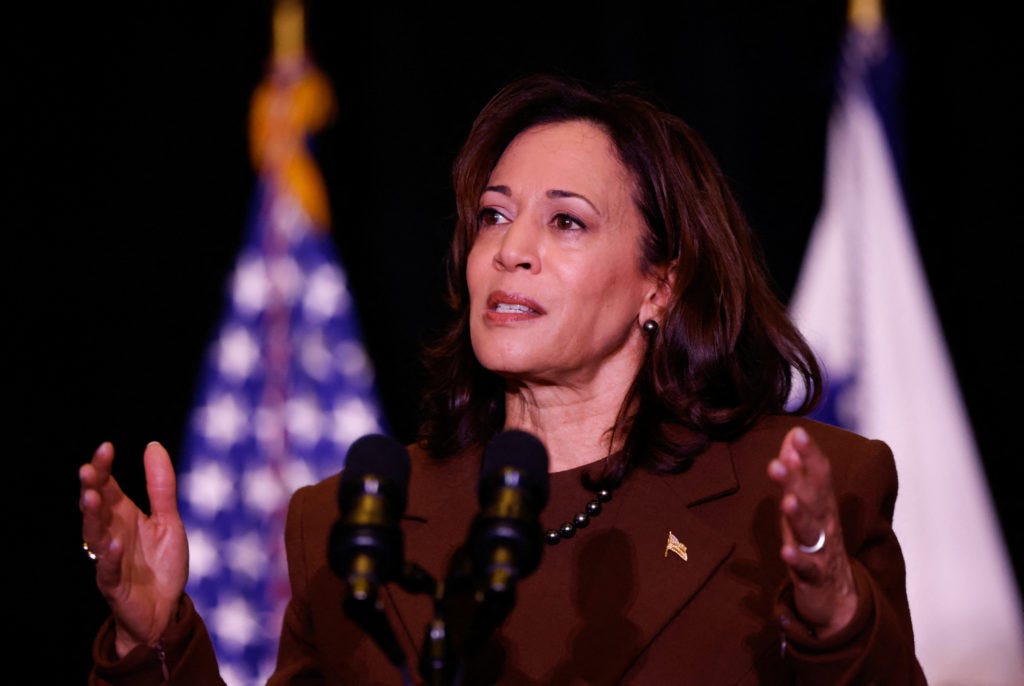
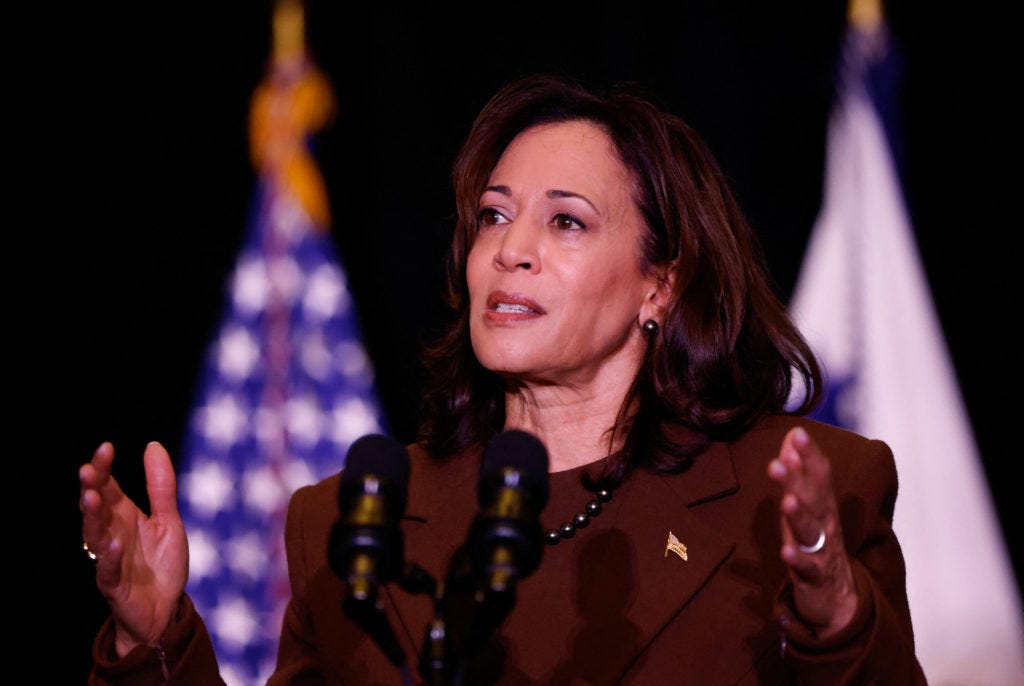
Vice President Kamala Harris, speaking at the DNC Convention, 2024.
When Kamala Harris stood on the campaign trail and warned that Donald Trump could lead the United States into a war with Iran, many didn’t take it seriously.
Today, that warning feels harder to dismiss.
Not because it was dramatic—but because it was specific.
And in a world where tensions remain high and the stakes are global, the question lingers:
Was she trying to win an election—or trying to warn us?
I am 82. I still have hopes of living long enough to once again see someone that I can respect in the White House. And I think Kamala would have done a good job as President - measured, calm, willing and able both to seek advice and to use the best of what she received.






I am 82. I still have hopes of living long enough to once again see someone that I can respect in the White House. And I think Kamala would have done a good job as President - measured, calm, willing and able both to seek advice and to use the best of what she received.
She was preaching to the choir. We have watched this unfold and knew long before it happened