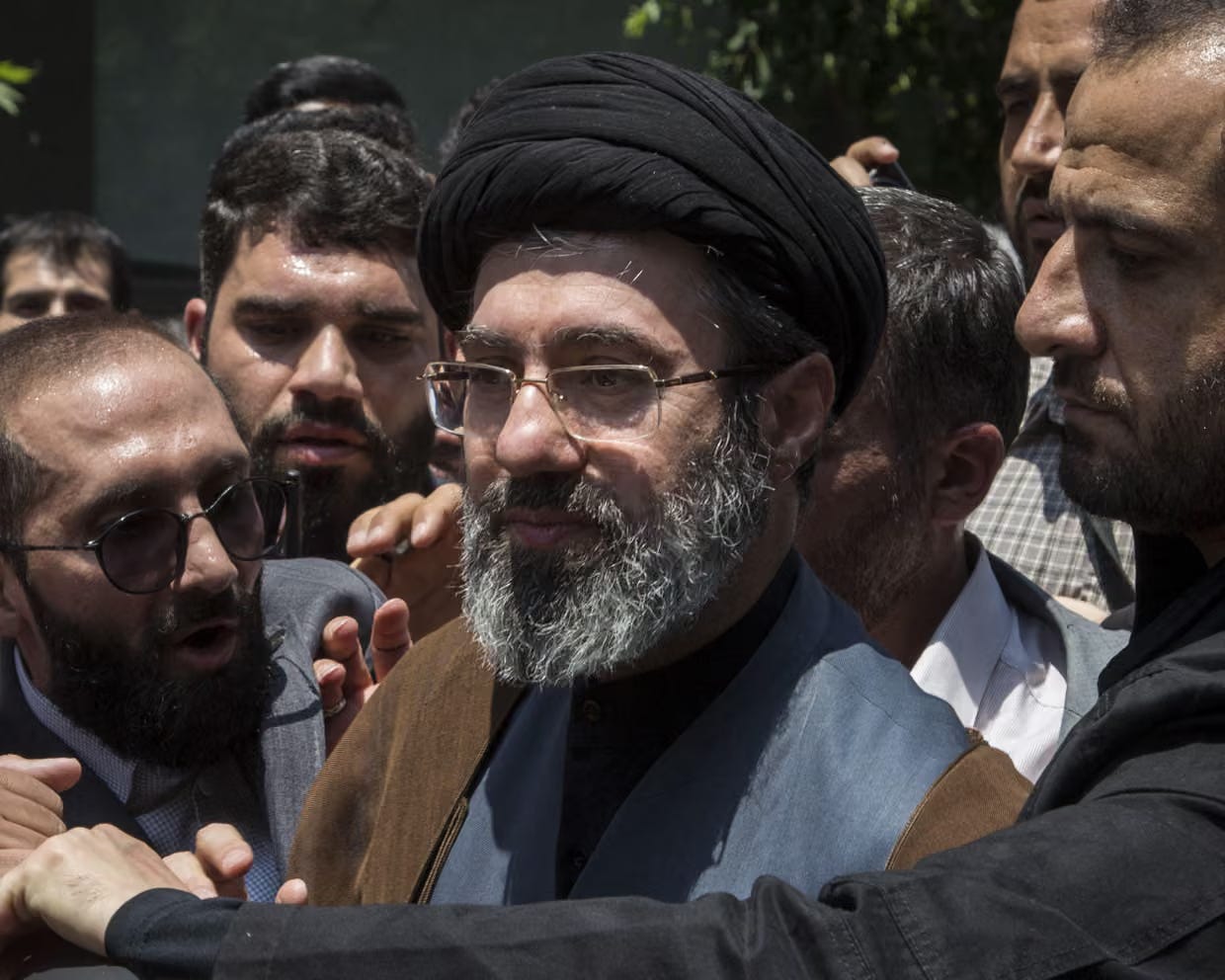
Who is Mojtaba Khamenei? Iran’s New Supreme Leader Emerges in the Shadow of War.
Mojtaba Khamenei has succeeded his father, Ayatollah Ali Khamenei, who was assassinated in joint US-Israel attacks a Week ago. But who is He really?

Iran has entered one of the most uncertain and dangerous chapters in its modern history. Following the assassination of long-time Supreme Leader Ali Khamenei in a devastating military strike reportedly carried out by the United States and Israel, a new figure has stepped into the center of Iran’s political system: his son, Mojtaba Khamenei.
State media in Tehran confirmed that Mojtaba Khamenei, a powerful but often unseen figure within the Islamic Republic’s leadership, has been selected as Iran’s new supreme leader. The decision came swiftly after the attack that killed his father and several members of the family, signaling an urgent effort by Iran’s ruling establishment to stabilize the country during a moment of national crisis.
At 56 years old, Mojtaba now assumes one of the most powerful positions in the Middle East — leading a nation under bombardment and navigating a conflict that could reshape the region.
A Rapid Decision by Iran’s Clerical Leadership

The announcement was made after a vote by the powerful Assembly of Experts, the clerical body responsible for selecting Iran’s supreme leader.
The 88-member council released a statement urging unity across the country and calling on Iranians to support Mojtaba Khamenei’s leadership.
According to state media, the decision was made with what officials described as a “decisive vote,” suggesting that Iran’s ruling clerics quickly rallied behind the younger Khamenei in order to avoid a power vacuum.
The council also issued a call to academics, religious scholars, and political elites to publicly pledge their loyalty to the new leader, emphasizing the importance of national unity as the country faces escalating military attacks.
The speed of the appointment suggests Iran’s leadership wanted to send a clear message both domestically and internationally: the system of power created after the Iranian Revolution remains intact.
Surviving the Strike

The attack that killed Ali Khamenei was one of the most dramatic moments in the history of the Islamic Republic.
Reports indicate that his Tehran compound was struck during a coordinated assault as the United States and Israel launched a large-scale military campaign against Iranian targets.
In addition to the supreme leader himself, the strike reportedly killed Mojtaba’s mother, his wife, and one of his sisters.
Mojtaba Khamenei survived because he was not present at the compound when the attack occurred.
The deaths have sent shockwaves through Iran’s political system, removing a leader who had dominated the country’s politics for more than three decades.
Ali Khamenei had ruled Iran since 1989, following the death of revolutionary leader Ruhollah Khomeini. Over those years, he consolidated enormous authority, shaping Iran’s domestic policies and its confrontational relationship with the West.
His sudden death left the nation facing a dangerous leadership transition at the very moment war broke out.
A Powerful Insider
Despite never holding elected office, Mojtaba Khamenei has long been considered one of the most influential figures within Iran’s ruling elite.

For years, political insiders and analysts described him as a key gatekeeper within his father’s inner circle. He developed strong relationships with senior clerics, political figures, and security commanders who helped maintain the Islamic Republic’s power structure.
Perhaps most importantly, he cultivated deep ties with the Islamic Revolutionary Guard Corps, the military organization that plays a central role in Iran’s defense and political influence.
The IRGC oversees vast military forces and intelligence networks and has become one of the most powerful institutions inside the country.
These relationships helped position Mojtaba as a potential successor long before his father’s death.
Over the past decade, speculation about a possible leadership transition grew steadily, particularly as Ali Khamenei aged and questions emerged about the future of the Islamic Republic.
The Prospect of a Political Dynasty
The elevation of Mojtaba Khamenei has revived a long-standing debate within Iran: whether the country’s leadership risks evolving into a dynastic system.
Some critics argue that the succession of a son to replace his father contradicts the revolutionary ideals that brought down the monarchy of Mohammad Reza Pahlavi in 1979.
The Islamic Republic was created in part as a rejection of hereditary rule. Yet the emergence of Mojtaba Khamenei at the top of the system has led some observers to draw uncomfortable parallels with the monarchy that once ruled the country.
Iran’s leadership has never publicly embraced the idea of hereditary succession. Mojtaba himself has avoided discussing the topic, maintaining an extremely low public profile for much of his life.
Still, the reality of the transition is difficult to ignore: a son has now replaced his father as the most powerful figure in the state.
A Leader Few Iranians Know
One of the most unusual aspects of Mojtaba Khamenei’s rise is how little the public knows about him.
Unlike many senior clerics, he rarely appears in public. He does not regularly deliver sermons, lead Friday prayers, or give major speeches.
In fact, many Iranians know his name but have never heard his voice.
This quiet approach allowed him to work largely behind the scenes, building influence within political and security circles without drawing widespread public attention.
For years, he operated as a shadow figure in Iranian politics — powerful but largely invisible.
Now, that hidden influence has suddenly become a public responsibility.
Accusations From the Opposition

Mojtaba Khamenei has also faced accusations from critics who claim he played a role in suppressing political dissent.
Opposition groups and reformist politicians have linked his name to the violent response against demonstrations during the Iranian Green Movement in 2009.
The protests erupted after the controversial reelection of former president Mahmoud Ahmadinejad, which many Iranians believed was fraudulent.
Demonstrators flooded the streets demanding political reform and new elections. The government responded with a sweeping crackdown.
Security forces, including the Basij militia linked to the Revolutionary Guard, moved aggressively to disperse crowds and arrest activists.
Critics claimed Mojtaba used his connections within the security apparatus to help coordinate the response.
Iranian authorities have consistently rejected those allegations and maintain that the protests were fueled by foreign interference.
The Role of the Basij
The Basij militia, a paramilitary organization closely aligned with the IRGC, has remained central to Iran’s strategy for controlling unrest.
Over the years it has been deployed repeatedly during nationwide demonstrations.
Human rights organizations say the group played a major role in recent crackdowns on protests across the country.
Earlier this year, the United Nations and several international watchdog groups reported that thousands of people were killed during violent confrontations between demonstrators and security forces.
Iranian officials dispute those claims and insist the unrest was organized by hostile foreign powers seeking to destabilize the country.
War-Forged Connections
Mojtaba Khamenei’s relationships with Iran’s security institutions date back to his youth.
During the 1980s, he served in the Habib Battalion during the brutal Iran-Iraq War.
The conflict shaped an entire generation of Iranian political and military leaders.
Many of the men who fought in the war later rose to positions of power within Iran’s intelligence and defense institutions.
These wartime relationships helped form the network of allies that would later support Mojtaba’s rise within the establishment.
Wealth, Sanctions, and Controversy
Beyond politics, Mojtaba Khamenei has also been linked to allegations of vast financial influence.
Western governments have placed him under sanctions, accusing him of benefiting from networks tied to Iran’s political and economic elite.
Investigations by international media outlets claim he may control access to enormous financial resources through intermediaries and associates.
Some reports suggest billions of dollars have been moved through these networks over the years, although direct documentation linking him to specific transactions remains limited.
A particularly controversial case involved Iranian businessman Ali Ansari and the now-collapsed Bank Ayandeh.
The bank’s collapse, blamed on massive insider loans and unsustainable debt, worsened Iran’s economic problems and contributed to rising inflation.
Neither Mojtaba Khamenei nor Ansari has publicly addressed the allegations linking them.
Questions Over Religious Authority
Another issue surrounding Mojtaba Khamenei’s leadership is his religious rank.
He currently holds the title of hojatoleslam, which is considered a mid-level clerical position rather than the more prestigious rank of Ayatollah.
Traditionally, Iran’s supreme leader has been expected to hold higher religious authority.
However, precedent suggests this obstacle may not be decisive.
When Ali Khamenei became the supreme leader in 1989, he did not initially hold the rank of ayatollah either.
Iran’s leadership amended the legal framework at the time to allow him to assume the role.
A similar solution could be applied again.
A Nation in Darkness

As Mojtaba Khamenei takes power, Iran is confronting not only political upheaval but also a rapidly escalating war.
Airstrikes continue to hit targets across the country as the United States and Israel intensify their military campaign.
At the same time, the Iranian government has imposed a nationwide internet blackout and strict controls on information.
The blackout has made it extremely difficult for people inside the country to communicate with the outside world or verify reports about the conflict.
In the midst of these extraordinary circumstances, Iran’s new supreme leader begins his rule.
Whether Mojtaba Khamenei can consolidate power, maintain stability, and navigate the unfolding war may determine not only the future of Iran — but the balance of power across the Middle East itself.


